Twitter Value Proposition: A Practical Guide for Creators
Author:

You've got 8,000 followers, your posts collect steady impressions, and your inbox is still quiet. Replies are shallow, profile visits rarely become follows, and no serious buyer can explain what you help people do. The usual advice is to post more, chase trends, or rewrite your hook. That misses the core problem.
Your profile lacks a clear Twitter value proposition. On X, your bio, pinned post, and recent content need to make different promises that support the same position. A stranger should understand who you serve, what they'll get, why they should trust you, and what kind of conversation they'll find in your feed.
This guide gives you the definition, the four building blocks, practical profile rewrites, templates, and an X-native testing loop. It's for creators, founders, and marketers who want the platform and their personal brand pulling in the same direction.
Table of Contents
Why Most X Profiles Do Not Convert
A creator can have an active audience and still have a broken profile. The common pattern is easy to spot: the account posts regularly, earns attention around individual ideas, and attracts profile visits, but the visitor sees a vague bio, an abandoned pinned post, and a feed that changes topic every few posts.
That visitor doesn't have enough context to act. They may enjoy one post, but they can't tell whether following the account will consistently help them. The problem isn't always reach. Reach without a clear promise creates curiosity, not conversion.
Take a design creator whose bio says, “Designer. Building in public. Thoughts on creativity.” Their posts alternate between interface screenshots, personal updates, productivity opinions, and links to tools. Nothing is technically wrong, but the profile gives every visitor a different answer to the question, “Why should I follow?”
A sharper version might say, “I help early-stage teams build calmer, clearer product interfaces. Weekly design-system teardowns and practical UI decisions.” The first bio describes a person. The second describes a useful destination.
The missing alignment
Your profile has several visible elements, but visitors process them as a single decision. The bio establishes relevance, the pinned post demonstrates substance, and the recent feed confirms what the account repeatedly delivers.
If those elements disagree, the visitor has to do the positioning work for you. Most won't. Use this guide to writing a stronger Twitter bio as a focused bio reference, but don't treat the bio as the whole profile.
Practical rule: Every profile element should answer a different question, not repeat the same slogan.
A founder might promise practical growth advice in the bio, pin a product announcement, and publish only motivational quotes. A marketer might claim fintech expertise, pin a conference photo, and post generic marketing tips. Both accounts create a gap between the promise and the evidence.
The fix isn't “post more.” It's positioning the profile as a system. You'll define the audience, promise, proof, and format, then assign each part to the right profile slot. After that, you'll test whether the profile earns quality replies, profile clicks, and follows from visitors.
This approach suits creators building authority, founders attracting customers and talent, and marketers developing a recognizable point of view. The platform should reinforce your personal brand, not compete with it.
What a Twitter Value Proposition Means
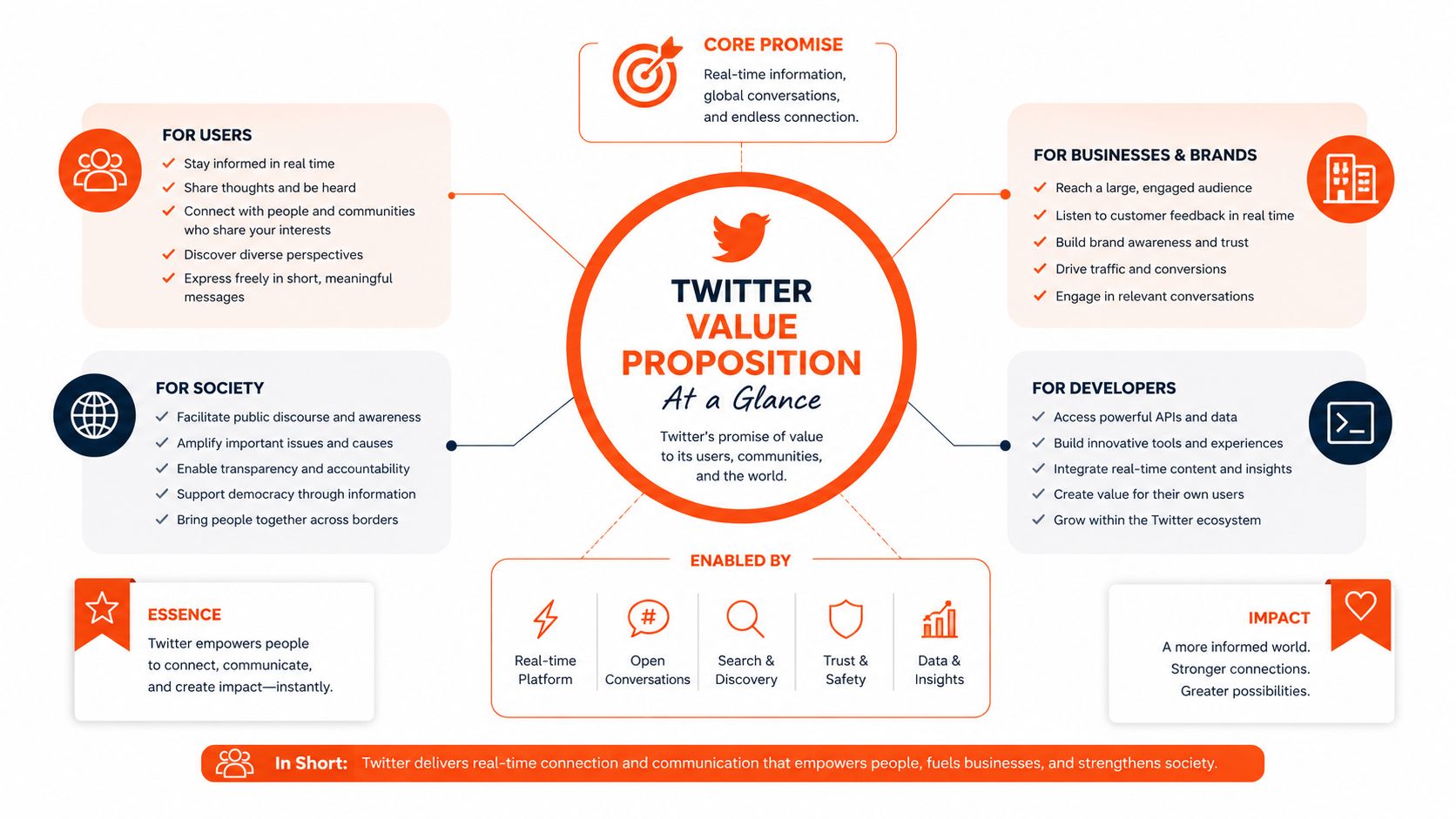
A stranger lands on your X profile between meetings and gives it only a few seconds. Your value proposition must answer three questions immediately: who you help, what you share, and why following is worth returning for. It is a working promise, not a mission statement, credential list, or personality summary.
A strong profile makes the customer, benefit, evidence, and delivery pattern easy to recognize. “Interesting things inside” gives visitors no reason to stop. Clear positioning does.
Audience
Name the person who gains from following you. “People interested in business” is too broad to guide your posts. “Indie hackers validating their first SaaS idea” sets an editorial boundary and gives the right visitor an immediate point of recognition.
Diagnostic: Could your ideal follower identify themselves in your bio without asking what you mean?
Specificity does not block adjacent audiences. It gives your profile a primary reader, which makes your choices sharper. That focus supports building a personal brand for creators because expertise becomes easier to recognize over time.
Promise
State the recurring benefit. You might help followers make better product decisions, write more clearly, build practical sales systems, or understand a particular market.
“Sharing lessons” describes your activity, not the value delivered. “Weekly teardown of onboarding flows for SaaS teams” tells visitors what they will receive and gives you a repeatable content direction.
Diagnostic: Can you complete “Follow me if you want…” with a concrete outcome?
Proof
Proof makes the promise believable. Use experience, original analysis, documented experiments, useful artifacts, or a distinctive point of view. Keep the bio focused. Put your strongest evidence in the pinned post and recent content, where visitors can inspect the work.
Diagnostic: Does the profile show evidence of doing the work, or only claims about doing it?
A founder might pin a product lesson drawn from building. A marketer might pin a sharp industry breakdown. A creator might pin a thread that demonstrates a method. Each example proves the promised value through an artifact instead of repeating a slogan.
Format
Format tells visitors how the promise appears in the feed. Choose a repeatable pattern, such as short teardown posts, opinionated analysis, build-in-public notes, visual tutorials, or concise frameworks. Consistency lets followers recognize the account before they read the name.
Diagnostic: If someone read your latest posts without your name attached, would they recognize the pattern?
A persuasive value proposition connects audience, promise, proof, and format. Audience creates relevance, promise creates desire, proof reduces doubt, and format gives followers a reason to return. Treat those four elements as inputs to the three profile slots, then refine the wording and publishing pattern using X-native signals such as profile clicks, quality replies, and follows.
The Profile as a Three-Slot System
Most profile advice treats the account as one block of copy. That's a mistake. The profile works better as three connected slots, each with a separate job.
Slot one, the bio
The bio should establish audience and promise quickly. Your name field can clarify your role or category, while the bio gives the visitor a reason to care.
Weak:
“Founder | Product | Growth | Thoughts”
Stronger:
“Helping indie hackers turn useful products into repeatable businesses. Product lessons, launch notes, and honest experiments.”
The stronger version identifies the audience, suggests the benefit, and previews the content. It doesn't attempt to list every interest.
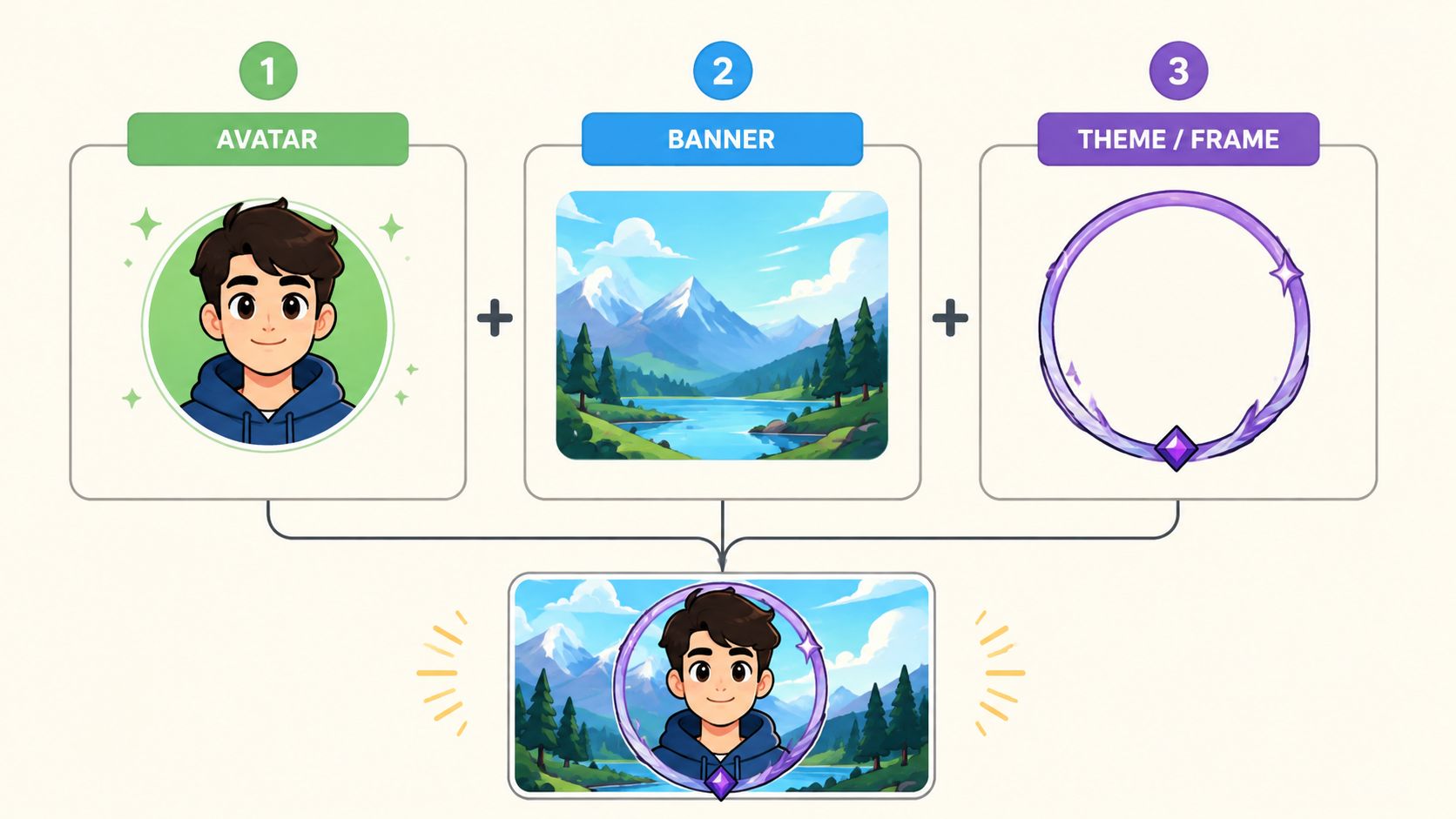
Your avatar should be recognizable at small size. Your header should reinforce the same position rather than introduce a second identity. If the bio speaks to SaaS founders but the banner promotes unrelated lifestyle content, the profile loses coherence before the visitor reaches the pinned post.
Slot two, the pinned tweet
The pinned post is your proof artifact. It should make the promise tangible, not repeat your bio.
A generic pinned post says, “Welcome to my account. I post about marketing.” A useful pinned post might start a teardown, show a framework, explain a product decision, or point to a practical resource. The visitor should learn something before deciding to follow.
For example:
Hook: “Most SaaS onboarding fails before the user sees the product.”
Body: Explain the three decisions you inspect first, with a short example.
Ask: “Follow for weekly onboarding teardowns.”
The pinned post also demonstrates your format. A person who promises concise product analysis should pin concise product analysis, not a personal announcement with no transferable value.
Slot three, the recent posts
Your latest posts prove whether the promise is real. Treat the feed as a pattern, not a pile of updates. If your profile promises design-system education, your recent posts should repeatedly show decisions, examples, critiques, and lessons from that domain.
Audit your profile in under five minutes:
Read the bio alone: Write down the audience and promised benefit.
Open the pinned post: Identify the proof it provides.
Scan recent posts: Name the recurring format and topic.
Remove contradictions: Flag posts that attract the wrong expectation.
Rewrite one slot: Change only the weakest element.
The handle and name help people find and categorize you. The avatar and header create recognition. The bio earns relevance, the pinned post earns trust, and the recent feed earns expectation. That division keeps the profile from trying to say everything everywhere.
Three Micro-Examples You Can Pattern-Match
The framework stays constant while the wording changes. These three personas show how different professionals can assign audience, promise, proof, and format without turning the profile into a crowded sales page.
Creator teaching design systems
Value proposition: “I help product designers build scalable interfaces without turning every decision into a meeting.”
Bio: “Design systems for product teams. I share practical UI teardowns, component decisions, and lessons from shipping.”
Pinned topic: A teardown of a familiar interface, showing where inconsistent components create friction and how to simplify the system.
Repeatable format: One interface problem, one design principle, one visual or concrete fix. The creator should avoid broad creativity quotes because they attract an audience that may not care about systems work.
SaaS founder selling to indie hackers
Value proposition: “I help indie hackers validate, launch, and improve small software products without hiding behind endless planning.”
Bio: “Building software for indie hackers. Sharing product experiments, launch mistakes, and practical ways to find useful demand.”
Pinned topic: A transparent product decision, including what the founder believed, what users did instead, and what changed afterward.
Repeatable format: Short build notes followed by a decision, an observation, and the next action. The founder's proof comes from showing work, not claiming expertise.
For more copy structures, use these Twitter post templates for 2026 as raw material, then adapt them to the audience you want.
B2B marketer building fintech authority
Value proposition: “I translate complex fintech positioning into clear messages that buyers and sales teams can use.”
Bio: “B2B fintech marketing and positioning. I break down category narratives, customer language, and campaigns that make complex products easier to understand.”
Pinned topic: A practical analysis of a fintech landing page or campaign, with the positioning problem, the missed opportunity, and a revised message.
Repeatable format: One market observation, one messaging implication, and one example of improved wording. This pattern establishes authority through interpretation rather than generic marketing commentary.
The slot jobs don't change. The audience, promise, proof, and format do.
Templates and Before-and-After Rewrites
Good positioning becomes useful when you can write it quickly. Use these templates as starting points, then replace every placeholder with language your target follower uses.
Bio templates by persona
Persona | Template | Sample Filled |
|---|---|---|
Creator | I help [audience] achieve [outcome] through [method]. Sharing [format]. | I help product designers build clearer interfaces through practical systems. Sharing UI teardowns and component decisions. |
Founder | Building [product] for [audience]. Sharing [proof or process] so you can [benefit]. | Building analytics for indie SaaS teams. Sharing launch experiments so you can find useful demand sooner. |
Marketer | I help [audience] improve [business outcome]. Writing about [specific subject], with lessons from [proof]. | I help fintech teams clarify their positioning. Writing about buyer language and category strategy from real campaign work. |
The creator template leads with the transformation. The founder template uses the building process as proof. The marketer template connects expertise to a business outcome.
Pinned tweet template
Use a simple three-part structure:
Hook: Name a costly mistake, surprising distinction, or specific problem.
Body: Give the reader a useful explanation, example, or short framework.
Ask: Tell the right reader what to do next, usually follow, reply, or read the next resource.
Before:
“Thoughts on AI | DM to collab”
After:
“I help early-stage SaaS founders fix activation. I've taken three products to $1M ARR, and I write weekly teardowns of the onboarding decisions that turn new users into active users. Follow for practical growth analysis.”
The before version gives no audience, outcome, proof, or recurring format. The after version makes all four visible, while keeping the language direct.
Three quick rewrites
Creator before: “Designer sharing inspiration.”
Creator after: “I help junior product designers make stronger interface decisions. Weekly teardowns, practical prompts, and annotated examples.”
Founder before: “Building in public. SaaS. Coffee.”
Founder after: “Building workflow software for small agencies. Sharing customer interviews, product bets, and what changes after launch.”
Marketer before: “Marketing thoughts and random opinions.”
Marketer after: “I help B2B teams turn complex products into clear positioning. Posting message teardowns, buyer-language notes, and campaign lessons.”
Don't add proof you can't support. A specific but accurate process claim is stronger than an inflated credential. Your pinned post can carry the deeper evidence, while the bio stays easy to scan.
How to Test Your Value Proposition With X Metrics
A value proposition isn't validated by how polished it sounds. It's validated by what visitors do after encountering your content. X gives you several signals, but they answer different questions.

Read the funnel in order
Impressions tell you whether the promise is being surfaced. Low impressions can indicate weak topic selection, poor timing, or insufficient participation in relevant conversations. They don't prove that the profile converts.
Engagements show whether the post creates an immediate response. Likes are a weak interpretation signal on their own. Replies, saves, shares, and meaningful conversation reveal more about whether the idea gives people something to discuss or use.
Profile clicks show whether the post creates enough curiosity to inspect the account. If a post gets attention but few profile visits, the content may be entertaining without connecting to a durable identity.
Follows from profile visitors test the combined strength of the bio, pinned post, and recent feed. This is the clearest profile-level signal because it measures whether the visitor understood the promise and wanted more.
Reply quality tests whether your format attracts the right audience. A short reply from a potential customer or informed peer can be more valuable than a large volume of low-context reactions.
For deeper measurement workflows, review these Twitter analytics tools, then keep your test focused rather than adding every available dashboard.
Run one-slot experiments
Change one element at a time. Rewrite the bio while leaving the pinned post and content pattern stable. Then change the pinned post while keeping the bio unchanged. If you change all three simultaneously, you won't know which decision influenced the result.
A practical weekly test looks like this:
Choose one hypothesis: “A more specific audience statement will increase qualified profile actions.”
Change one slot: Rewrite only the bio.
Hold the change: Give the account enough normal publishing activity to produce a useful comparison.
Compare intent signals: Prioritize profile clicks, follows from visitors, and reply quality over raw impressions.
Record the lesson: Keep the winning wording and test the next weakness.
The question isn't “Did this post go viral?” It's “Did the right person understand what this account is for?”
Timing and conversation quality still matter. A 2026 analysis of 8.7 million posts found Tuesday at 9 a.m. was the strongest overall posting slot, with Wednesday morning close behind, according to Buffer's X posting-time analysis. Use timing to create a fairer test, but don't confuse distribution with positioning.
A Weekly Iteration Loop That Compounds
Reserve a focused weekly review for the profile, not just the content calendar. Start by checking which posts generated profile visits, which replies attracted relevant people, and whether new visitors followed after reading the pinned post.
Then audit one slot. Rewrite one bio line, replace one pinned artifact, or remove one content pattern that attracts the wrong audience. Keep the change isolated so the next review produces a usable lesson.
A practical 60-minute loop looks like this:
Review signals: Compare impressions, profile clicks, follows, and reply quality.
Select one weakness: Don't redesign the entire account.
Rewrite one asset: Improve the bio, pinned post, or recurring format.
Plan local timing: Midweek mornings often perform well, but map sends to the audience's city rather than copying one universal schedule. Sprout Social's X timing guidance emphasizes Tuesday through Thursday afternoon windows, while the earlier Buffer analysis identifies Tuesday morning as the top overall slot.
Document the result: Record the wording, audience, format, and response.
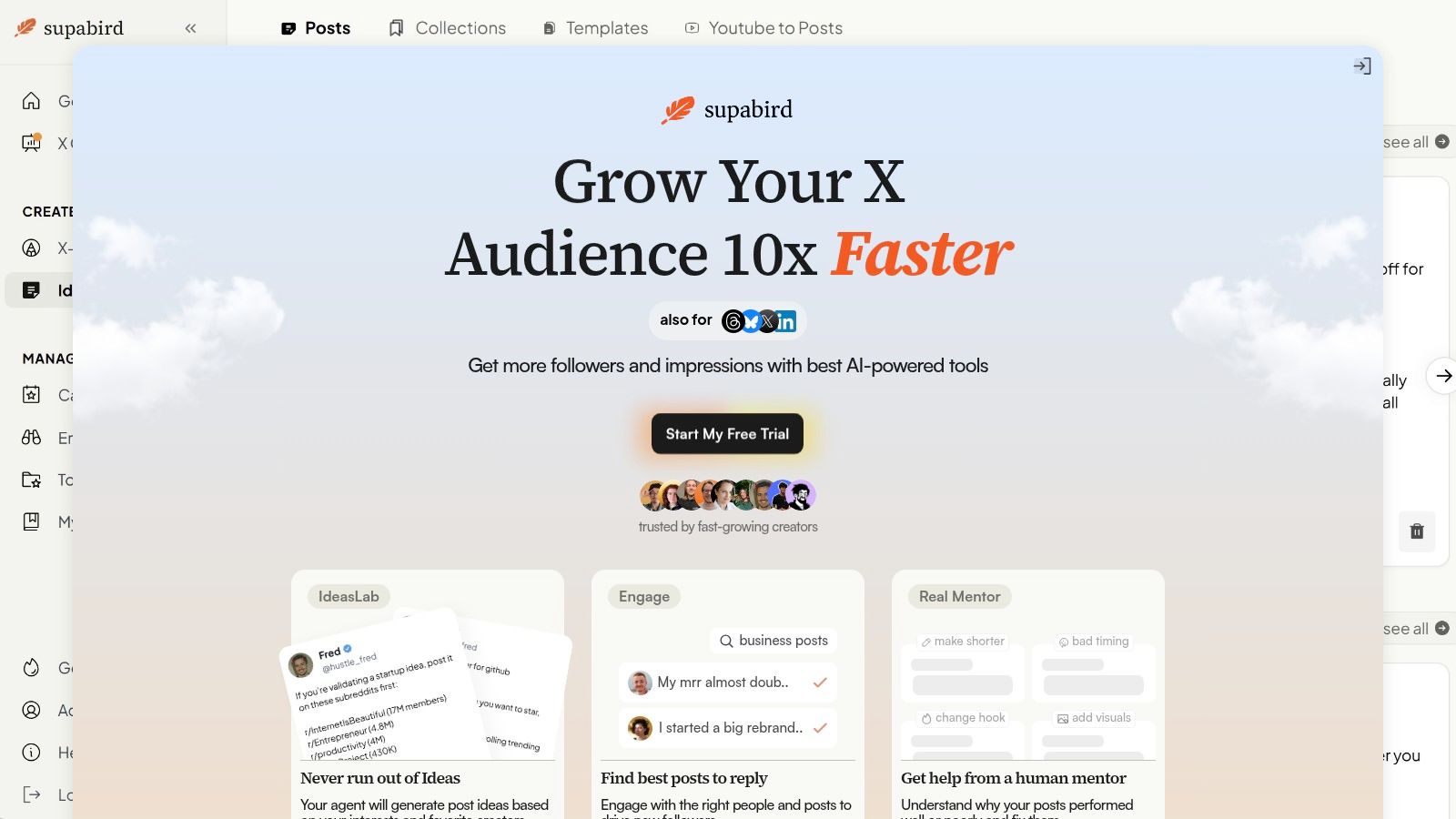
Tools can support the operating rhythm. SupaBird combines an Ideas Lab, Engage module, X-GPT rewriting, scheduling, analytics, and X Coach features for generating ideas, identifying conversations, adapting drafts, and planning posts across local time zones. Use it as a workflow layer, alongside your own judgment, so the profile promise remains specific rather than machine-generated filler.
The pinned post deserves priority because it is the highest-impact proof slot. A bio can earn attention, but the pinned artifact turns that attention into a concrete reason to follow. Build the weekly workflow around improving that handoff, then use this content production workflow to keep the publishing system consistent.
SupaBird helps creators, founders, and marketers generate X ideas, rewrite drafts into repeatable formats, find relevant posts to reply to, and schedule content around audience time zones. Visit SupaBird, audit your three profile slots, and use the workflow to turn a vague account into a clear, testable value proposition.

The Reply Guy Strategy: A Growth Guide for X

Why New X Accounts Get Less Reach

ClimbX Review (2026): Features, Pricing, Pros and Cons

How Developer Startups Build a Brand on X Before Launch

30-Day Starting Plan for New X (Twitter) Accounts

How Often Should You Tweet for Maximum Growth?

What Should Your First 10 Tweets Be About?

How to Run X for Ten Clients: The Agency Workflow

How to write a bio that gets people to follow you
