Startup Social Media Marketing: A Playbook for 2026

Most startup teams are running social media like a guilt-driven chore. One post goes to LinkedIn, another gets cross-posted to X, someone remembers Instagram, nobody touches comments for two days, and then the whole thing gets labeled “not working.”
That's usually not a channel problem. It's an execution problem.
Social media matters too much for startups to treat it like leftover marketing. 58% of consumers discover new businesses through social media, and brands that put more than 20% of their marketing budget into social see a 33% higher ROI, according to Sprinklr's social media marketing statistics. For a startup, that makes social one of the few places where awareness, trust, and customer acquisition can happen in the same feed.
The mistake is trying to win everywhere at once. Lean teams don't need more platforms. They need one sharp point of view, one or two channels they can maintain, and a system that turns scattered effort into repeatable output.
Table of Contents
The Startup Social Media Trap and How to Escape It
The trap is simple. Founders hear they need to “show up consistently,” so they spread effort across every major platform. The result is thin content, inconsistent posting, weak replies, and no real signal about what's working.
That approach burns time because each platform rewards depth, not presence. X rewards sharp opinions and conversation. LinkedIn rewards clarity and professional framing. Short-form video rewards speed, editing, and strong visual payoff in the first seconds. A startup that posts mediocre versions of the same idea everywhere usually ends up invisible everywhere.
What the trap looks like in practice
A resource-strapped team usually falls into one of these patterns:
Platform sprawl. The company opens accounts on every network, but none get enough attention to build momentum.
Announcement addiction. Most posts are product updates, feature drops, or “we're excited to share” copy that nobody outside the company cares about.
No reply workflow. The team publishes, logs off, and misses the conversations that turn impressions into trust.
Random bursts. A week of heavy activity gets followed by silence.
Practical rule: If a team can't post, reply, and review performance on a platform for the next month, that platform shouldn't be active yet.
Social media is still high-stakes for startups because buyers discover companies there, judge responsiveness there, and often decide whether the team feels credible there. Teams that need a more focused X-specific operating model can study approaches like this Twitter growth service breakdown for founders.
The way out
The escape is depth over breadth.
That means choosing a narrow audience, a distinct point of view, one or two hero channels, and a content workflow that doesn't depend on inspiration. Startup social media marketing works when it behaves more like product development: clear constraints, repeated tests, fast feedback, and disciplined iteration.
Find Your Angle and Choose Your Battlefield
Most startup content fails before the first post. Not because the writing is terrible, but because the company has no angle.
A startup without an angle sounds like every other startup. It posts “tips,” “updates,” and “insights” that could belong to any SaaS tool, agency, marketplace, or AI wrapper. People don't follow vague competence. They follow a specific lens.
Pick an angle before picking content
A strong angle is the combination of market position and voice. It answers one question fast: why should this company's account exist?
Here are a few angles that work better than generic “thought leadership”:
The builder angle. Share what's being shipped, what broke, what got cut, and why.
The operator angle. Teach systems, workflows, and hard trade-offs from actual execution.
The contrarian angle. Challenge common advice with a clearer model.
The category translator angle. Make a technical or crowded market easier to understand.
For startup social media marketing, the strongest accounts usually commit to one of these instead of mixing all four every week.
Stop trying to be everywhere
Lean teams need to ignore most generic social advice. Startup-focused guidance recommends putting 80% of effort into two core platforms, which is why concentrated execution beats broad but weak coverage for small teams, as noted by Startup Grind's guidance on building a startup social media strategy.
That trade-off matters. Every extra platform adds format changes, creative changes, audience expectations, comment management, and analytics review. More channels don't just add work. They dilute judgment.
A simple decision table helps:
Situation | Better choice |
|---|---|
Founder-led SaaS, technical audience, active online peers | X as a hero channel |
B2B startup selling into operators, recruiters, consultants, execs | LinkedIn as a hero channel |
Product is visual, demo-friendly, consumer-facing | Short-form video platform plus one text platform |
Team has one marketer and no design support | One primary channel, one secondary repost channel |
Why X is often the best starting point
For founders, indie hackers, and SaaS teams, X has unusual advantage. It combines distribution, networking, market research, customer feedback, hiring visibility, and brand building in one place.
A founder can post a lesson, reply to bigger accounts, test positioning, and watch which claims earn pushback in a single day. That feedback loop is hard to match elsewhere.
The best hero channel is the one where the team can sound sharp, respond fast, and publish without friction.
X also rewards unfinished thinking more than polished corporate messaging. That helps startups because they usually have more insight than design budget. A plain-text post with a strong argument can outperform a polished brand graphic if the idea is better.
Design Your Content Engine and Posting Cadence
A startup doesn't need a content calendar filled with random ideas. It needs a content engine. That means a small set of repeatable themes, a realistic cadence, and a workflow that keeps the pipeline full even when the team is busy shipping product.
The easiest way to fail is to improvise every post from scratch.
Build three to five repeatable pillars
Teams that follow the 80/20 rule, with most content focused on value and a smaller share focused on promotion, see stronger engagement. The same guidance also shows that consistent posting, such as three times weekly, produces better retention than bursts of daily activity followed by silence. Those benchmarks are included in the verified data provided for this article.
A practical setup for startup social media marketing looks like this:
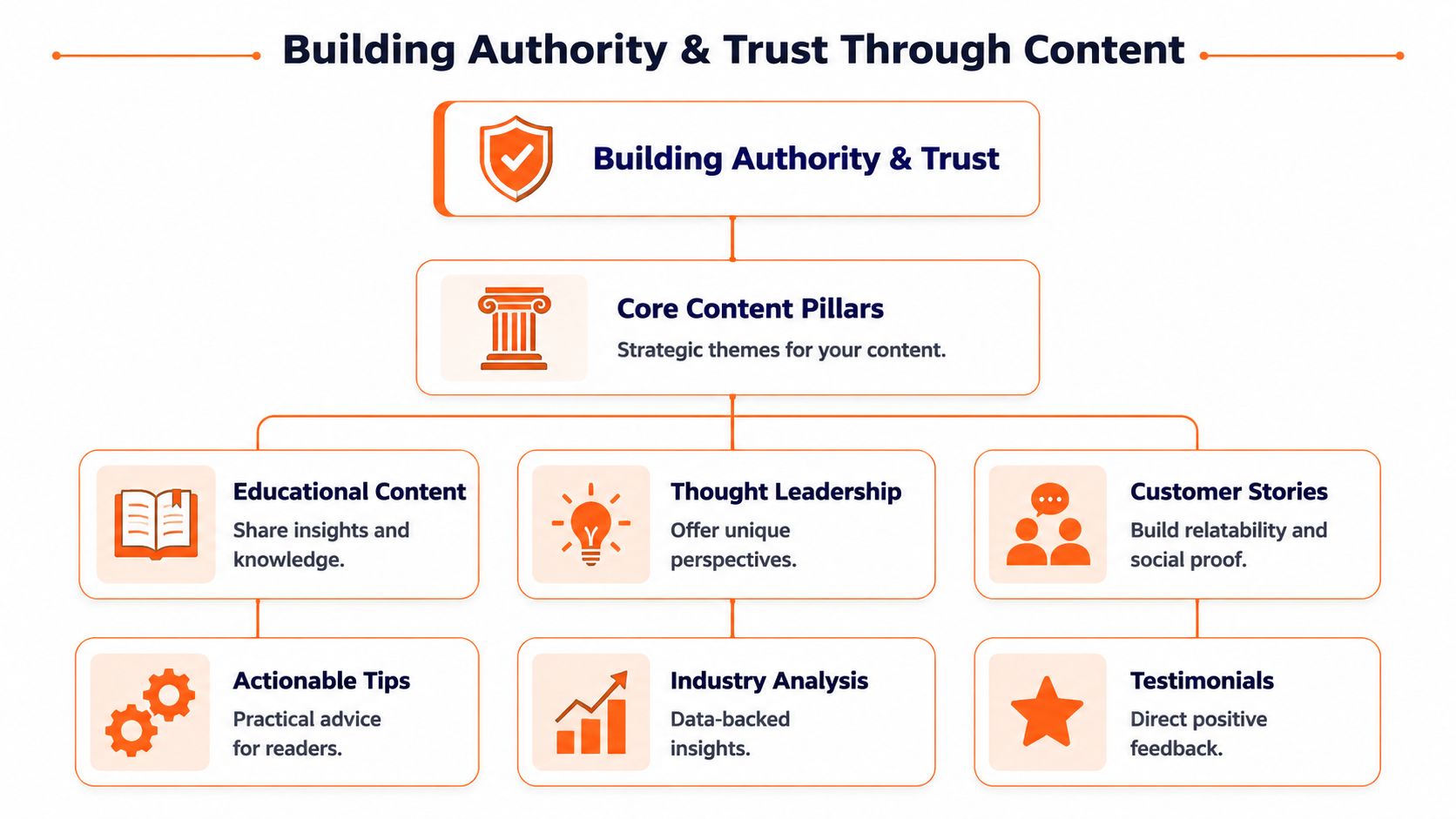
Educational content. Teach the audience something specific about the problem space.
Product content. Show the product in action, but anchor it in a user problem.
Build-in-public content. Share lessons, decisions, mistakes, and iterations.
Industry analysis. React to market shifts, bad advice, or common misconceptions.
Customer voice. Turn recurring objections, questions, and success moments into posts.
Three to five pillars are enough. More than that and the team starts hiding weak focus behind fake variety.
Set a cadence the team can keep
Most startups post too often for one week and then disappear. That hurts more than posting less often with discipline.
A better rhythm is simple:
Pick fixed weekly slots for publishing.
Batch ideas once a week instead of waiting for inspiration.
Write ahead so product fires don't kill the content plan.
Reserve time for replies after publishing.
If the team wants a structured calendar instead of a spreadsheet mess, smart scheduling slots for social posting show one way to lock posting windows in advance.
A lightweight weekly publishing mix could look like this:
Day | Post type | Goal |
|---|---|---|
Monday | Sharp lesson or opinion | Reach and authority |
Wednesday | Product workflow or demo | Consideration |
Friday | Build-in-public reflection | Trust and personality |
Use AI to remove blank-page friction
AI shouldn't replace judgment. It should remove low-value effort.
The best use of AI in startup social media marketing is operational. It helps teams generate topic variations, reframe rough drafts, repurpose notes into posts, and keep a content queue alive. That's especially useful when the founder has real ideas but no time to polish each one.
Useful applications include:
Idea expansion from one raw thought into several post angles
Hook rewrites to make a post clearer or more direct
Thread drafting from product notes or meeting transcripts
Repurposing short videos, support tickets, and customer calls into text posts
Some teams use Notion, ChatGPT, and a scheduler stitched together. Others use specialized tools. One option is SupaBird, which includes an ideas lab, X-focused drafting, and scheduling for teams that want a tighter X workflow.
Teams comparing workflows may also find Taja AI insights on social media strategy useful because the piece focuses on how AI fits into planning and execution rather than treating it like magic.
Create Content That Builds Authority and Trust
Good startup content doesn't read like a press release. It reads like someone learned something expensive and decided to save other people the pain.
That shift matters because authority isn't built by sounding formal. It's built by being specific, useful, and clear enough that the audience can apply the idea immediately.
Turn bland updates into useful stories
Most weak posts die because they lead with company-centric language.
Compare these:
Weak version
“We're excited to launch a new analytics dashboard for users.”
Better version “Most startup dashboards bury the one number a founder needs. This update puts that signal first, so teams can make faster decisions without digging through tabs.”
The second version gives the audience a problem, a point of view, and a reason to care. It also hints at product value without sounding desperate for applause.
A few reliable rewrites help:
From feature to friction. Start with the annoyance, then show the fix.
From announcement to lesson. Explain what the team learned while building it.
From claim to evidence. Use screenshots, workflows, or examples instead of adjectives.
For teams that need stronger openers, this guide on writing social hooks is useful because hooks are usually where startup posts fail.
Use video as raw material, not a separate campaign
Video isn't optional anymore. 91% of businesses use video in marketing, and 44% of users prefer short-form video when learning about new products, according to DSMN8's social media marketing statistics.
For startups, the practical move is to stop treating video and text as separate content programs. One short product walkthrough can become:
a native short-form video
a text thread breaking down the workflow
a single-post opinion on the mistake the product fixes
a customer onboarding asset
a reply asset sent to prospects asking similar questions
That repurposing model saves time and keeps messaging aligned.
Lean on formats that reduce guesswork
Founders often think originality means inventing a new format every week. It doesn't. Consistency in structure makes content easier to produce and easier to read.
A few durable formats work well on X:
Format | When to use it | Example opening |
|---|---|---|
Contrarian post | Challenging common startup advice | “Most startups don't need more channels. They need one channel they can actually own.” |
Mini-thread | Breaking down a lesson | “Three mistakes early-stage teams make with social content” |
Build note | Sharing product or growth learning | “A change looked small on paper, but it changed how users reached the core action” |
Customer question post | Turning objections into content | “A common question from buyers is whether this replaces or supports their current workflow” |
For teams writing across formats, this guide for engaging agency content is a useful companion because it focuses on making content more readable and audience-aware.
Write the post so a stranger can understand it without already caring about the company.
Amplify Your Reach with Engagement and Experiments
A strong post published into silence is still weak distribution.
Most startups underinvest in the part after publishing. They assume reach comes from posting more, when a large part of reach comes from joining the right conversations, replying well, and learning what the audience trusts.
Treat replies like distribution
Replies are one of the fastest ways to earn attention on X because they place the startup in an active conversation instead of waiting for the feed to bless a standalone post.
The mistake is replying with empty agreement. “Great point” doesn't build anything. Good replies add one of three things:
A sharper example
A respectful disagreement
A practical extension of the original point
That makes the account visible to people who already care about the topic.
For teams that want a more systematic reply workflow, SupaBird Engage for faster X replies shows how to surface relevant posts instead of manually hunting for them.
Track trust signals, not just audience size
Follower count is easy to watch and easy to misunderstand.
Research highlighted in a peer-reviewed study on social media marketing success factors points to customer support, platform trust, secure data sharing, and perceived value as meaningful drivers of social media marketing success. For startups, that means the scoreboard can't stop at reach.
Better signals include:
Reply quality. Are real prospects asking useful questions?
DM intent. Are inbound messages about real problems, pricing, or fit?
Sales call mentions. Do prospects reference posts during conversations?
Support responsiveness. Does social feel like a place where the company shows up?
If the account is gaining followers but losing credibility, the content strategy isn't working.
Run small experiments with one variable at a time
Social testing doesn't need a giant framework. It needs discipline.
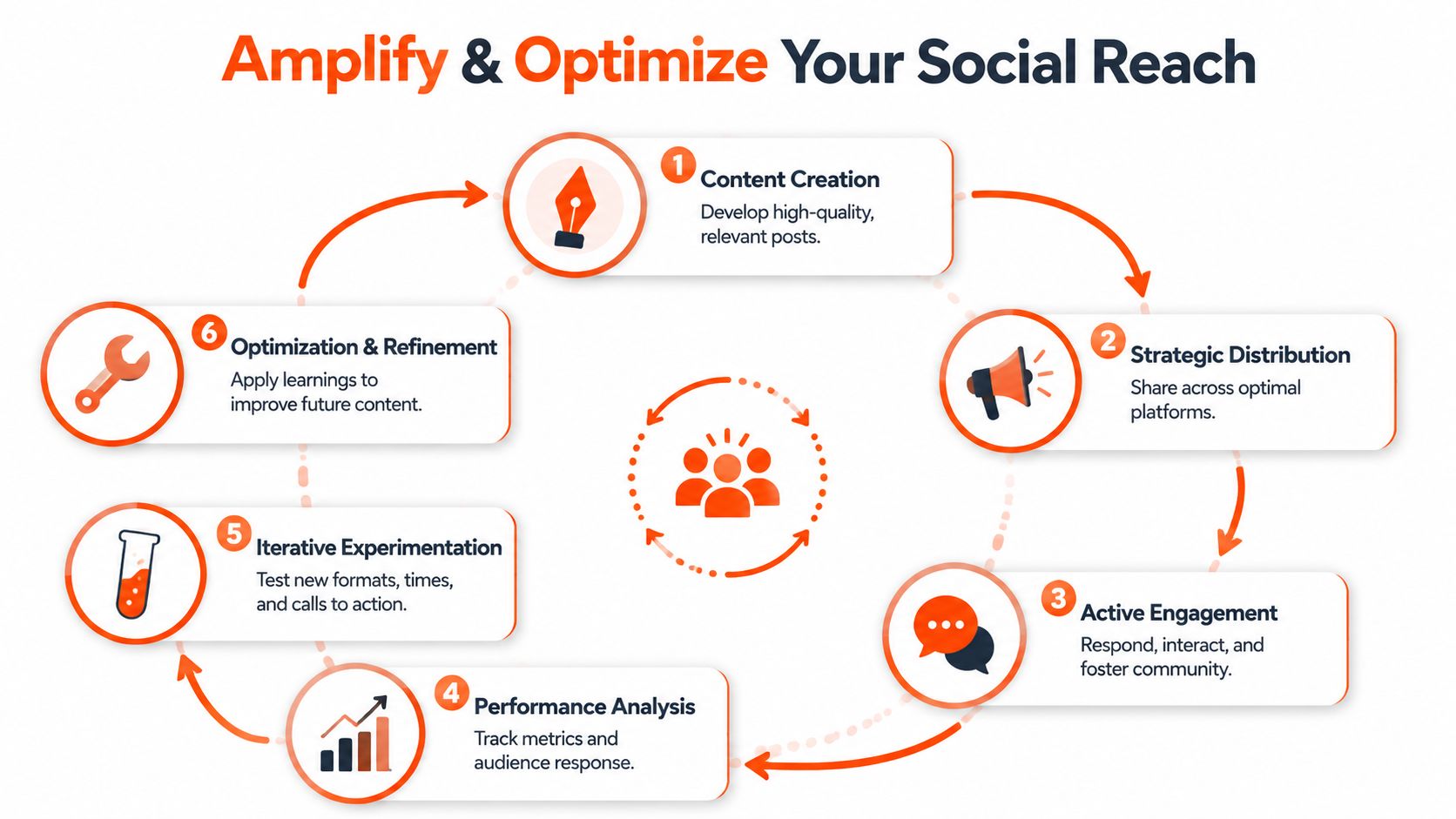
A simple experiment loop works:
Choose one variable. Hook, format, topic, or posting time.
Keep the rest stable so the team can read the result.
Run the variation several times before drawing conclusions.
Save winners into a playbook and kill weak patterns fast.
Examples of useful tests:
A blunt opening versus a curiosity-led opening
A plain-text post versus the same idea framed as a short thread
A direct product lesson versus a broader market lesson
A founder voice versus a neutral brand voice
This kind of testing does more for startup social media marketing than chasing vanity spikes. It produces a clearer sense of what earns attention and what earns trust, which aren't always the same thing.
Your 30-Day Startup Social Media Launch Plan
A startup doesn't need a six-month content strategy deck. It needs a month of disciplined execution.
The first 30 days should prove three things: the team can publish consistently, the message is sharp enough to attract the right people, and the workflow doesn't collapse when product work gets busy.
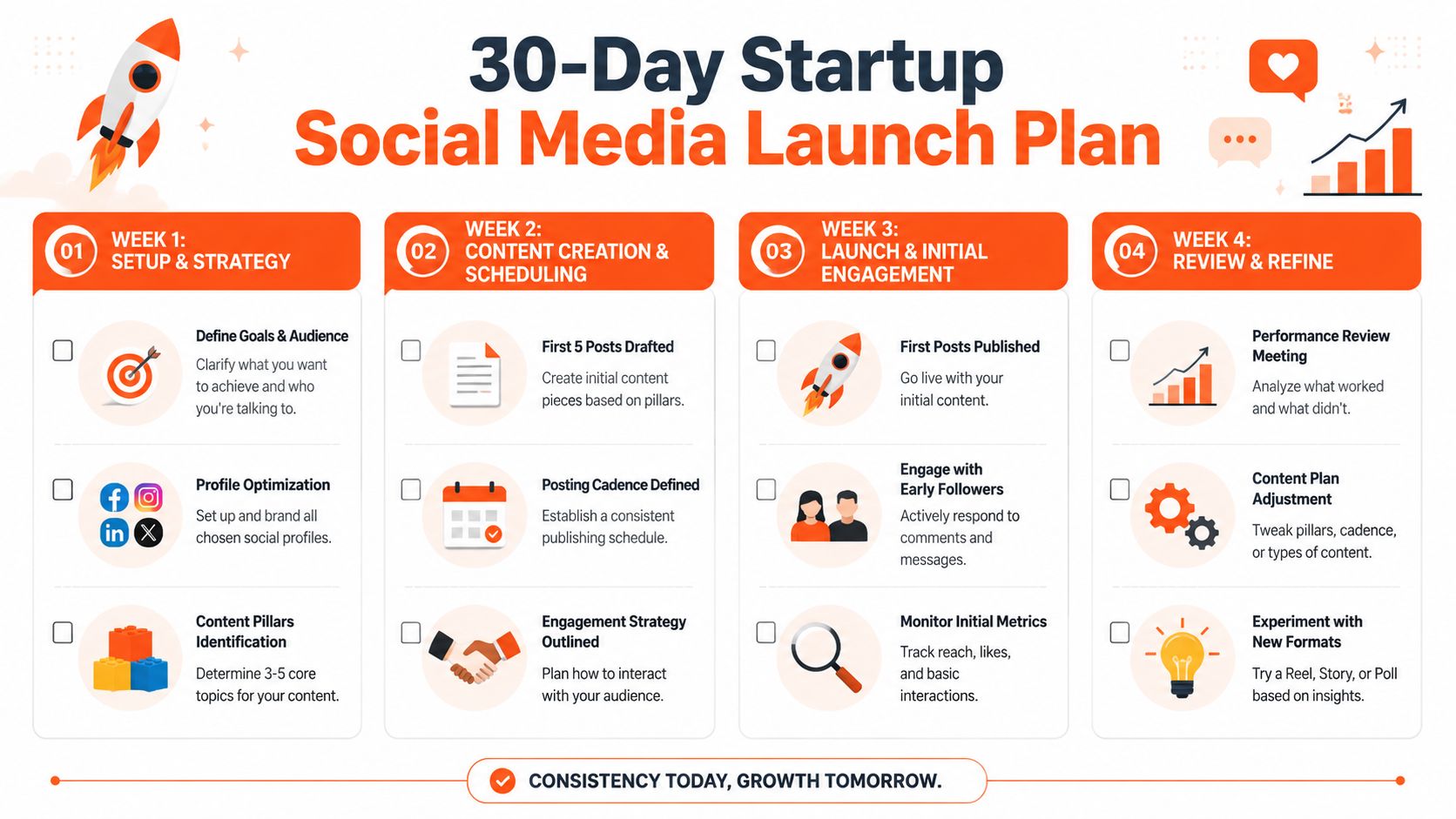
Early planning is easier with a visual checklist.
A minimal tool stack
Keep the stack lean:
One hero channel. Usually X for founder-led tech startups.
One writing workspace. Notion, Google Docs, or any tool the team already uses.
One scheduling workflow. Native if simple, specialized if volume grows.
One analytics review habit. Even a weekly manual review works if it happens consistently.
One optional secondary channel for reposting adapted versions of strong ideas.
If the startup also wants to adapt lessons for short-form video later, mastering TikTok marketing strategies is a useful follow-on read for platform-specific changes.
A quick video can help teams align before launch:
Week 1 setup and strategy
Use the first week to make decisions, not content.
Define the audience. Pick one primary buyer or community.
Choose the angle. Builder, operator, contrarian, or translator.
Select hero channels. One primary, one optional secondary.
Tighten profiles. Bio, banner, pinned post, and links should all say the same thing.
A messy profile weakens even strong posts. People check the profile before they trust the account.
Week 2 content creation and scheduling
This week is for building inventory.
Draft the first batch from the chosen pillars. Write enough posts to avoid daily panic, then place them into a publishing calendar. The team should also prepare a short list of accounts to engage with regularly, including customers, peers, media voices, and adjacent creators.
A simple batch might include:
Two educational posts
One product story
One contrarian opinion
One founder or build reflection
Week 3 launch and active engagement
Publishing starts here, but posting isn't the main job. Paying attention is.
The team should publish on schedule, monitor replies, answer questions quickly, and spend time in relevant conversations. If LinkedIn is one of your core channels, use LinkedIn social listening to find brand mentions, competitor discussions, and buyer-intent posts before the conversation goes cold. This is also the week to collect useful language from comments and DMs. These insights can become future hooks, objections, and content topics.
Week 4 review and refinement
By the fourth week, patterns usually start to show.
Review which topics earned replies, which posts attracted the right people, which hooks fell flat, and which conversations turned into demos, trials, or useful feedback. Then tighten the system. Keep the pillars that are producing signal. Drop the formats that feel clever but don't move anything.
Startup social media marketing gets easier when the team stops guessing and starts building a repeatable loop.
SupaBird fits this kind of focused workflow for teams treating X as a hero channel. It combines idea generation, drafting, engagement support, and scheduling in one place, which helps founders and lean marketers keep a steady publishing rhythm without managing a pile of separate tools.

Digital Product Launch Strategy

Best Twitter Growth Service for Creators in 2026

From X to Every Platform: Repurpose Without Flopping

How to Get Cited by Grok: Winning X’s AI Search in 2026

5 X (Twitter) Growth Metrics Every Serious Creator Should Track — and How to Get the Data
Best Twitter (X) Scheduling Tools in 2026

Best X (Twitter) Growth Tools in 2026

Twitter Growth Hacking Tips 2026
How to Get More Followers on X (Twitter) in 2026
