
On X, packaging decides who gets seen. Strong ideas lose every day because the post format does not earn the click, the pause, or the reply inside a feed shaped by roughly 500 million tweets per day.
That reality changes how founders should study examples of tweets. A good tweet is not just clever writing. It is a compact distribution asset. It can function like a headline, a sales hook, a proof point, a conversation starter, or the first step in a funnel.
I have seen the same pattern across founder-led accounts. Random posting creates occasional spikes. Structured posting creates recognizable signals that audiences learn to trust and engage with.
That is the standard this guide uses.
Instead of giving you a pile of screenshots and calling it inspiration, this article breaks down 10 tweet types that keep showing up in high-performing accounts, why each one works, where it fails, and how to adapt it without sounding like a template. If your hooks are weak, start with this guide on writing stronger tweet hooks.
The strongest tweet examples usually handle one of three jobs. They win attention fast, create useful interaction, or push the reader toward a clear next step. The formats that matter most to founders do at least two of those at once.
The goal is not to copy viral posts. The goal is to build a repeatable system you can use for launches, audience growth, customer research, and demand generation.
Table of Contents
1. The Hook-Story-Payoff Format
A strong HSP tweet feels simple when it's done well. The opening line creates tension, the middle makes the reader care, and the payoff gives the reader something worth stealing, saving, or replying to.
This format works especially well for founders because it turns lived experience into authority. Instead of saying “growth takes patience,” a founder can post something like: “The first launch flopped. The second got polite interest. The third worked because the message finally matched the buyer's problem.” That lands harder than abstract advice.
Why it works
The hook has to do the heavy lifting fast. The first line should create a gap the audience wants closed, and these practical hook-writing patterns are useful because they force specificity instead of filler.
The middle section is where weak examples of tweets usually collapse. Many accounts jump from bold opening to tidy lesson with no believable tension in between. The better version includes friction, uncertainty, or a mistaken assumption.
Practical rule: If the story doesn't expose a false belief, the payoff will sound obvious.
A useful founder-friendly pattern looks like this:
Hook: Make a sharp claim or unexpected confession.
Story: Show the bad decision, wrong assumption, or turning point.
Payoff: End with one actionable takeaway people can apply today.
This format underperforms when the story is too private, too vague, or too long. Readers don't need autobiography. They need a compressed narrative that ends in a useful shift.
2. The Thread Extended Format
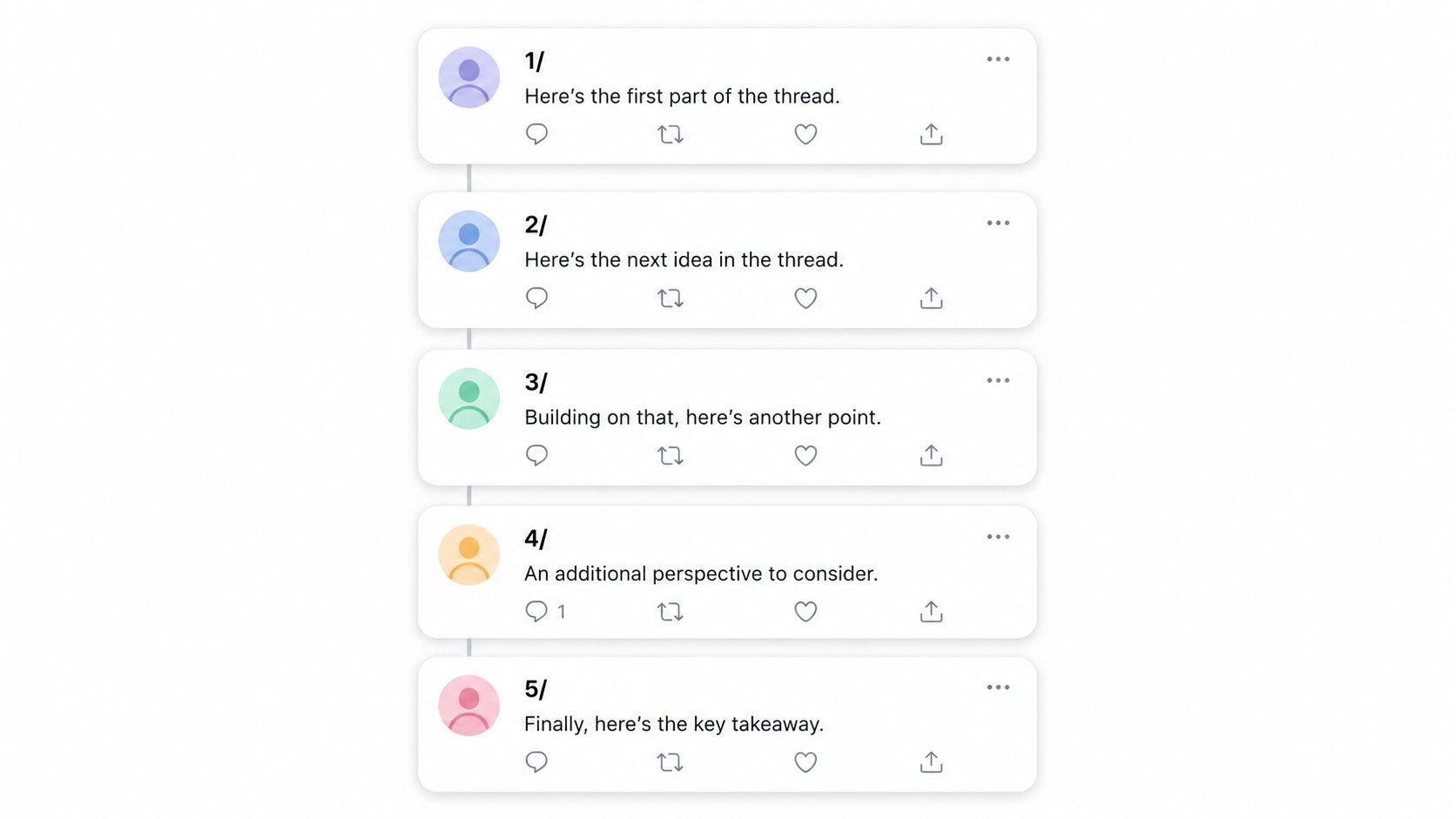
Some ideas are too dense for a single post. That's where threads earn their place. A good thread doesn't feel like one long tweet broken into parts. It feels like a guided sequence where each post gives the reader a reason to continue.
Founders often misuse threads by packing them with everything they know. The stronger move is narrower. One thread should solve one problem, unpack one lesson, or document one process. “How a product launch was repositioned after weak signups” is better than “everything learned about marketing this year.”
How to keep readers moving
The second tweet matters more than generally perceived. If tweet one promises a breakdown, tweet two should begin delivering immediately. Don't waste early posts on throat-clearing lines about “a lot of people asked for this.”
A simple thread rhythm works well:
Opening promise: Tell readers exactly what they'll get.
Early proof: Show the lesson, example, screenshot, or mistake quickly.
Middle progression: Add context, steps, or counterintuitive details.
Ending move: Ask for a follow, click, reply, or profile visit.
Research on the X Streaming API notes that it supports near-real-time monitoring, event detection, and longitudinal sampling designs. For practitioners, that matters because threads can be timed around live market moments, product launches, or industry news instead of being treated like static evergreen content.
Plainly put, the best thread examples of tweets meet demand while attention is still forming.
3. The Question-Based Engagement Tweet
Question tweets are one of the fastest ways to learn what your market thinks. They also fail fast when the prompt is vague, self-serving, or too broad to answer with any conviction.
Founders should treat this format as lightweight research, not filler for a content calendar. A strong question pulls in replies, but the bigger win is sharper language. The exact words people use in responses often map directly to positioning, onboarding copy, sales objections, and roadmap clues.
The format works best when the question forces a choice, exposes friction, or asks for lived experience. “Thoughts on sales?” creates weak replies because the audience has to invent the frame for you. “What slowed down your first sales hire more: low pipeline or weak onboarding?” gives people a clear lane and gives you cleaner signal back.
A practical framework I use is simple:
Pick one tension: speed vs quality, retention vs acquisition, manual vs automated
Name one audience: founders, operators, marketers, first-time managers
Ask for experience: what happened, what broke, what changed
Keep the answerable surface small: one decision, one obstacle, one trade-off
These prompts usually produce better discussion:
Decision question: “For an early-stage SaaS, what deserves attention first: retention or distribution?”
Experience question: “What part of content creation takes more time than non-marketers expect?”
Friction question: “What almost stopped your team from shipping this month?”
Diagnostic question: “Which hurts conversion more on a homepage: weak proof or vague positioning?”
There is a trade-off. Broad questions can get more replies because they ask less of the audience. Narrow questions usually get fewer replies, but better ones. If the goal is reach, go wider. If the goal is customer insight, tighten the prompt and accept lower volume.
Teams that want a steadier pipeline of reply opportunities can use Twitter engagement tools for finding and managing conversations. The tool helps with volume. Judgment still decides whether the question sounds informed or staged.
One more rule matters. Do not ask a question you could answer with a quick search or a lazy opinion. Ask the kind of question that reveals how people make decisions under real constraints. That is where this tweet type stops being engagement bait and starts becoming a reusable founder research system.
4. The Contrarian Hot Take Format
Contrarian posts spread because they create tension fast. They signal that the writer sees the market differently. That can build authority, but only when the claim is backed by reasoning instead of attitude.
A founder saying “building fast is overrated” can get attention. A founder saying “building fast hid weak positioning, and slower customer interviews fixed it” earns respect. The first is bait. The second is a point of view.
How to stay sharp without sounding lazy
The strongest hot takes challenge a common belief, then replace it with a more useful frame. They don't rely on insults, quote-tweet dunks, or fake certainty.
An effective formula looks like this:
Common belief: Name the advice everyone repeats.
Counterpoint: State what's wrong with it.
Replacement belief: Offer a more grounded principle.
Proof: Tie it to observed experience, examples, or process.
Independent evidence suggests that negativity and counterpoint-style posts can be shared more, especially for public figures, and one compilation discussed in the same research notes that native video can drive up to 10x more engagement than typical posts. That doesn't mean founders should become permanently combative. It means strong disagreement paired with the right format can travel.
Hot takes work best when the audience feels challenged, not tricked.
This format usually fails when the writer copies a creator's tone without matching their credibility. Contrarian content needs a real spine. Without that, it reads like performance.
5. The Data-Driven Insight Tweet
Raw numbers do not build authority. Interpretation does.
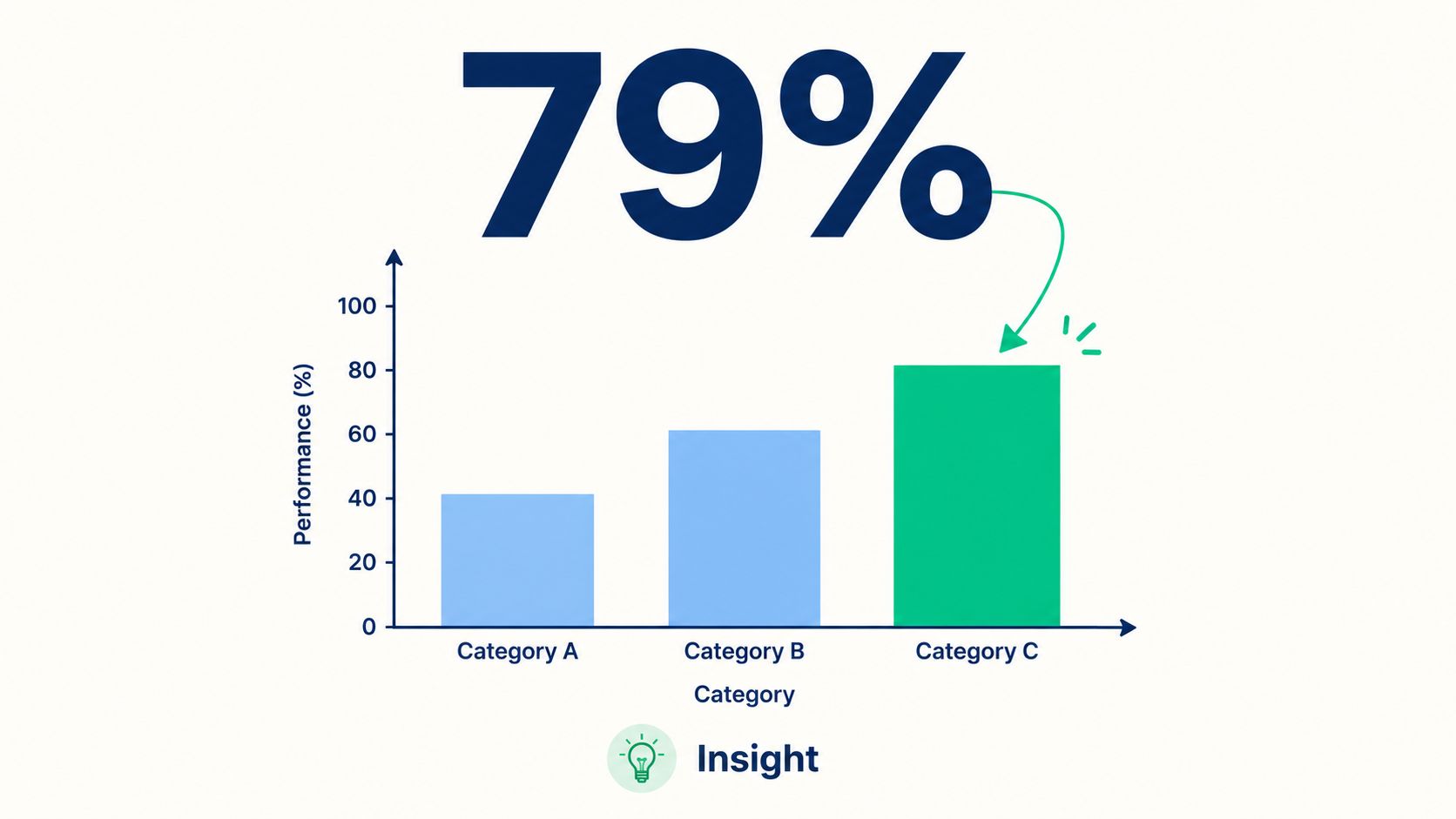
That is why this tweet type works for founders. It turns a datapoint into a decision. The reader should be able to see the number, understand why it matters, and know what to test next.
What makes a data tweet credible
A useful example is format selection. As noted earlier, research on X content formats suggests that media choice can shift response and intent. The practical takeaway is simple. Founders should stop treating format as decoration and start testing it as a distribution variable.
The strongest data-driven tweets follow a repeatable structure:
Observation: Lead with the takeaway, not the spreadsheet.
Proof: Add one clear number, chart, or sourced finding.
Meaning: Explain what changed in your strategy, messaging, or channel mix.
Adaptation note: Tell the audience where this applies and where it does not.
That last part matters more than people think. A datapoint from a large consumer brand account does not transfer cleanly to an early-stage B2B founder account. Good operators say what to borrow and what to ignore.
For example, a founder could post a screenshot showing that short product clips outperformed text-only posts over 30 days, then add the key lesson: clips worked because the product needed demonstration, not because video is always stronger. That framing keeps the tweet useful instead of turning it into cargo-cult advice.
Teams using Twitter analytics tools to compare format performance can test whether screenshots, charts, clips, or plain-text observations earn attention. If you want to turn a strong internal chart into a shareable visual, a free meme and visual post generator for X can speed up packaging without adding design overhead.
One tweet should carry one insight. If you need multiple charts, caveats, and exceptions, split the argument or turn it into a thread.
6. The Meme Humor Format
Meme tweets work because they compress recognition into one glance. The reader sees the joke, sees themselves in it, and decides in a second whether to like, reply, or send it to a coworker. For founders, that speed matters. A good meme can reach people who would scroll past a serious product post.
The trade-off is real. Humor can make an account feel sharper and more human. It can also make the brand look lightweight if every joke sounds borrowed from the same startup template page.
The fix is simple. Build memes from lived tension inside your market.
A founder writing for technical buyers should joke about painful implementation calls, security review delays, impossible feature requests, or the gap between what prospects say they want and what they buy. That is different from posting a generic reaction image with a broad caption about "building in public." Specificity is what protects authority.
A useful framework for this format has three parts:
Shared pain: Name a situation your audience deals with often.
Angle: Add a clear opinion, usually self-aware, skeptical, or lightly frustrated.
Caption discipline: Keep the text tight so the joke lands fast.
One pattern I use is to ask, "Would a real customer or operator send this to a peer?" If yes, the meme has distribution potential. If the joke only entertains your existing followers, it may get likes but rarely earns the kind of sharing that grows an account.
Interactivity can strengthen this format too, especially when the audience already has strong opinions. A founder might post a meme about product feedback chaos, then add a poll asking which request shows up most often. The poll gives people an easy way to join the joke instead of just observing it.
For teams that need to turn an internal joke into a polished post quickly, this free meme generator for X posts helps package the visual without slowing down production.
Use meme tweets as seasoning, not the whole diet. One or two well-aimed humor posts can make serious strategy, product, or sales tweets hit harder because the audience now sees a real operator behind the account.
7. The Before-After Transformation Format
Transformation posts are powerful because they compress progress into one glance. They show movement. Readers don't just hear that something improved. They see the contrast between the old state and the new one.
That's why screenshots, side-by-side comparisons, and product changes often beat abstract celebration posts. “Things are finally working” is forgettable. “The homepage led with features, then switched to buyer pain and demos became easier to book” is concrete.
What makes transformation posts believable
This format only works when the audience trusts the gap. The strongest version names the starting point clearly, shows what changed, and explains the shift in behavior, positioning, or process that created the result.
A practical transformation tweet often includes:
Before state: What wasn't working.
After state: What improved.
Key changes: The few decisions that produced the shift.
Constraint: Why the lesson may not apply equally to every account size.
A campaign case-study review argues that effective tweet performance is usually driven by authenticity, interactivity, and trend adaptation. That's especially relevant here. Before-after posts don't work because they show a prettier outcome. They work because they prove a process and invite audience participation through replies, questions, and follow-up discussion.
The audience believes transformation when the path looks repeatable, not magical.
8. The Tactical How-To Tweet
Tactical tweets get saved because they reduce friction. They answer a narrow question with a narrow solution. Good ones don't try to teach everything. They help the reader do one thing faster or better.
For founders, this format is one of the safest ways to earn authority early. It doesn't require huge audience size, big opinions, or dramatic storytelling. It requires clarity.
A useful tactical post sounds like this: “Three ways to improve demo request quality: tighten the landing page headline, remove extra fields, and add one customer-specific example above the form.” That's practical. It gives the reader a starting point right away.
A visual walkthrough works especially well for this format:
How founders should adapt tactical posts
The best how-to tweets are scoped to the audience's current stage. Advice for a large creator account often won't fit a first-time founder with limited reach. That's why adaptation matters more than copying.
A simple tactical framework works well:
Problem: Name the task or frustration.
Steps: Give one to three actions.
Boundary: Say who the tactic is for.
Extension: Link or thread only if more depth is necessary.
This format breaks when the writer hides key details behind vagueness. “Post better hooks and engage more” isn't tactical. “Open with the tension, reply to relevant posts in the first hour, and restate the offer clearly” is.
The strongest examples of tweets in this category feel testable. A reader should be able to try the advice the same day.
9. The Personal Vulnerability Failure Tweet
Vulnerability posts still work, but only when they're anchored in reality. Readers can spot performative openness quickly. “Hard season, grateful for growth” says almost nothing. A specific mistake with a clear lesson says a lot.
This format is especially useful for founders because business building already includes visible misses. Failed launches, weak onboarding, unclear offers, hiring mistakes, and bad timing are all honest material. Shared well, they build trust.
Failure posts that build trust
The best failure tweets don't wallow. They admit the miss, explain the flawed assumption, and show what changed after the lesson landed.
A practical pattern:
State the failure: What went wrong.
Name the reason: Which assumption caused it.
Give the lesson: What others should do differently.
Show motion: What happened next.
Research on online news found that fringe outlets embedded tweets more frequently than reliable outlets and often used them as the source of the article rather than as illustration. The same study identified 2,397,388 tweets linking to low-credibility sources. That's a useful warning for vulnerable or commentary-heavy posts. When a failure tweet references external events, sourcing and context matter. Personal honesty doesn't excuse weak evidence.
The strongest failure posts make the writer look credible because they show judgment improving in public.
10. The Call-to-Action Direct Response Format
A CTA tweet should feel like the next logical step, not a sudden demand. When direct response posts fail, it's usually because the account hasn't earned the ask, or because the ask is cluttered.
“Follow, like, comment, subscribe, and book a demo” is too much. One tweet should drive one action. If the desired behavior is a reply, build the whole tweet around that reply. If the goal is a click, remove distractions.
How to ask without sounding needy
The strongest CTA posts usually begin with a clear benefit. The action comes after the audience understands why it matters.
A practical structure looks like this:
Benefit: What the reader gets.
Fit: Who it's for.
Action: One specific next step.
Clarity: Remove extra asks and unnecessary cleverness.
X works as both a conversation platform and a distribution channel, which is why direct-response posts matter. For marketers, creators, and founders, a single tweet can function as a prompt, a sign-up driver, or a product entry point when the value proposition is crisp.
CTA posts also benefit from discipline. Don't turn every useful post into a pitch. The strongest accounts alternate between giving proof, earning trust, and then asking for action. That sequencing is what makes conversion feel natural instead of forced.
Comparison of 10 Tweet Formats
Format | Implementation complexity | Resource requirements | Expected outcomes | Ideal use cases | Key advantages |
|---|---|---|---|---|---|
The Hook-Story-Payoff (HSP) Format | Medium, needs planning and narrative pacing | Time to craft, clear hook, optional simple visuals | High engagement and shareability; prompts replies | Founders, coaches, creators building thought leadership | Emotional connection, memorable storytelling |
The Thread (Extended Format) | High, requires coherent multi-post structure | Significant time, editing, visuals/data across tweets | Sustained engagement, authority-building, bookmarks | Indie hackers, SaaS founders, consultants teaching frameworks | Deep exploration of topics, positions creator as expert |
The Question-Based Engagement Tweet | Low, quick to write but needs good targeting | Minimal time; requires moderation to manage replies | High reply rates and community feedback | Audience research, community building, idea validation | Simple format that boosts conversation and reach |
The Contrarian / Hot Take Format | Low–Medium, needs conviction and defensible reasoning | Thought, examples or data to support claim; possible follow-up thread | Strong reactions, debate, high shareability (polarizing) | Establishing thought leadership, standing out in crowded niches | Differentiation, high attention and discourse generation |
The Data-Driven / Insight Tweet | Medium–High, requires sourcing and clear framing | Access to reliable data, visual design for charts/infographics | Credibility, quotable shares, increased profile authority | Marketers, founders validating product-market fit, researchers | Concrete evidence, high shareability and trust |
The Meme / Humor Format | Low–Medium, creative timing and cultural fit required | Image editing or meme assets; cultural/context knowledge | Very high engagement-to-follower ratios and shares | Personal brands, audience growth, breaking up serious content | Relatability, virality, humanizes creator |
The Before-After / Transformation Format | Medium, needs real, verifiable results | Actual metrics/screenshots, visual comparison assets | Persuasive social proof, follower growth, conversions | Demonstrating product/course effectiveness, client case studies | Demonstrates tangible results and motivates action |
The Tactical / How-To Tweet | Medium, must be specific and actionable | Hands-on experience, screenshots or tool references | High saves/bookmarks and perceived utility | Marketers, growth practitioners, coaches offering stepwise tactics | Practical, immediately usable guidance that builds trust |
The Personal Vulnerability / Failure Tweet | Medium, requires authentic framing and care | Time to craft honest narrative; edit to avoid oversharing | Deep trust and strong parasocial connection | Founders building authenticity, coaches, community-focused creators | Builds empathy, relatability, and long-term loyalty |
The Call-to-Action (CTA) / Direct Response Format | Low–Medium, clear single-action focus needed | Landing page/link, tracking, concise copy | Measurable conversions (signups, clicks, replies) | Growing email lists, product launches, driving traffic | Directly drives desired actions and improves funnel metrics |
Your System for Creating High-Impact Tweets
These 10 formats work best as a system, not as isolated tricks. A strong X presence usually blends attention, conversation, proof, and conversion across the week. One day might call for a hook-story-payoff post that sharpens the brand voice. Another might call for a tactical how-to, a transformation post, or a direct CTA tied to a product launch.
That mix matters because not every tweet should solve the same problem. Some examples of tweets are built to attract the right audience. Others are built to deepen trust with people already paying attention. Others exist to turn attention into action. When accounts miss this balance, they often drift into one-note posting. They become informative but forgettable, or engaging but hard to monetize.
The more practical approach is to assign each format a job. Hook-story-payoff posts build memorability. Question tweets create conversation and reveal market language. Contrarian tweets sharpen positioning. Data and transformation posts add proof. Tactical tweets earn saves. Failure tweets make authority feel human. CTA posts turn momentum into pipeline.
This also helps founders adapt by account size. Smaller accounts usually need more clarity, more specificity, and more interaction. Large accounts can get away with broader observations because the audience already grants attention. That's why copying viral examples of tweets word for word rarely works. Structure transfers. Context doesn't.
A useful operating rhythm is simple. Draft several tweet types in advance, then rotate them based on business goals. If the goal is authority, lean into insight, tactical, and transformation posts. If the goal is engagement, use questions, humor, and selective hot takes. If the goal is conversion, earn attention first, then publish a focused CTA with a clear benefit.
Analytics close the loop. Review which formats generate replies, profile visits, clicks, and downstream actions. Pair the numbers with qualitative review. Which tweets attracted the right people. Which ones triggered shallow engagement. Which ones created serious conversations in replies or DMs. That's the difference between posting often and posting with intent.
Teams that want a tighter workflow can use tools like SupaBird to generate angles, rewrite drafts into stronger formats, schedule posts, and review what's landing. That can help reduce blank-page friction, but the primary advantage still comes from judgment. Format selection, audience fit, and credible messaging do the heavy lifting.
One more habit improves the whole system. Regularly understand Twitter audience sentiment instead of judging performance only by visible engagement. Replies often reveal whether a tweet built trust, triggered confusion, or attracted the wrong crowd.
Growth on X gets easier when the account stops guessing. The win isn't finding one perfect tweet. It's building a repeatable publishing system around formats that already match how people read, react, and act on the platform.
Creators, founders, and marketers who want help turning rough ideas into publishable X posts can try SupaBird to generate tweet angles, improve hooks, schedule content, and refine drafts into stronger formats.

How Developer Startups Build a Brand on X Before Launch

30-Day Starting Plan for New X (Twitter) Accounts

How Often Should You Tweet for Maximum Growth?

What Should Your First 10 Tweets Be About?

How to Run X for Ten Clients: The Agency Workflow

How to write a bio that gets people to follow you

Digital Product Launch Strategy

Best Twitter Growth Service for Creators in 2026
From X to Every Platform: Repurpose Without Flopping
