SupaBird vs Postwise: The Ultimate Comparison
Compare SupaBird vs Postwise. Explore features, pricing, scheduling, find the best X growth tool for your needs.

Growing on X in 2026 isn't about luck anymore, it's about consistency, hooks that stop the scroll, and showing up in the replies of the right accounts. Doing all of that manually, every day, is what burns most creators out before they ever build real momentum. That's exactly the gap AI growth tools like SupaBird and Postwise are built to fill.
Both tools promise the same outcome: more followers, more impressions, and less time spent staring at a blank compose box. But they take noticeably different paths to get there. This guide breaks down how SupaBird and Postwise actually compare, features, workflow, pricing, strengths, weaknesses, and who each tool is really built for, so you're choosing based on facts, not marketing copy.
What Is SupaBird?
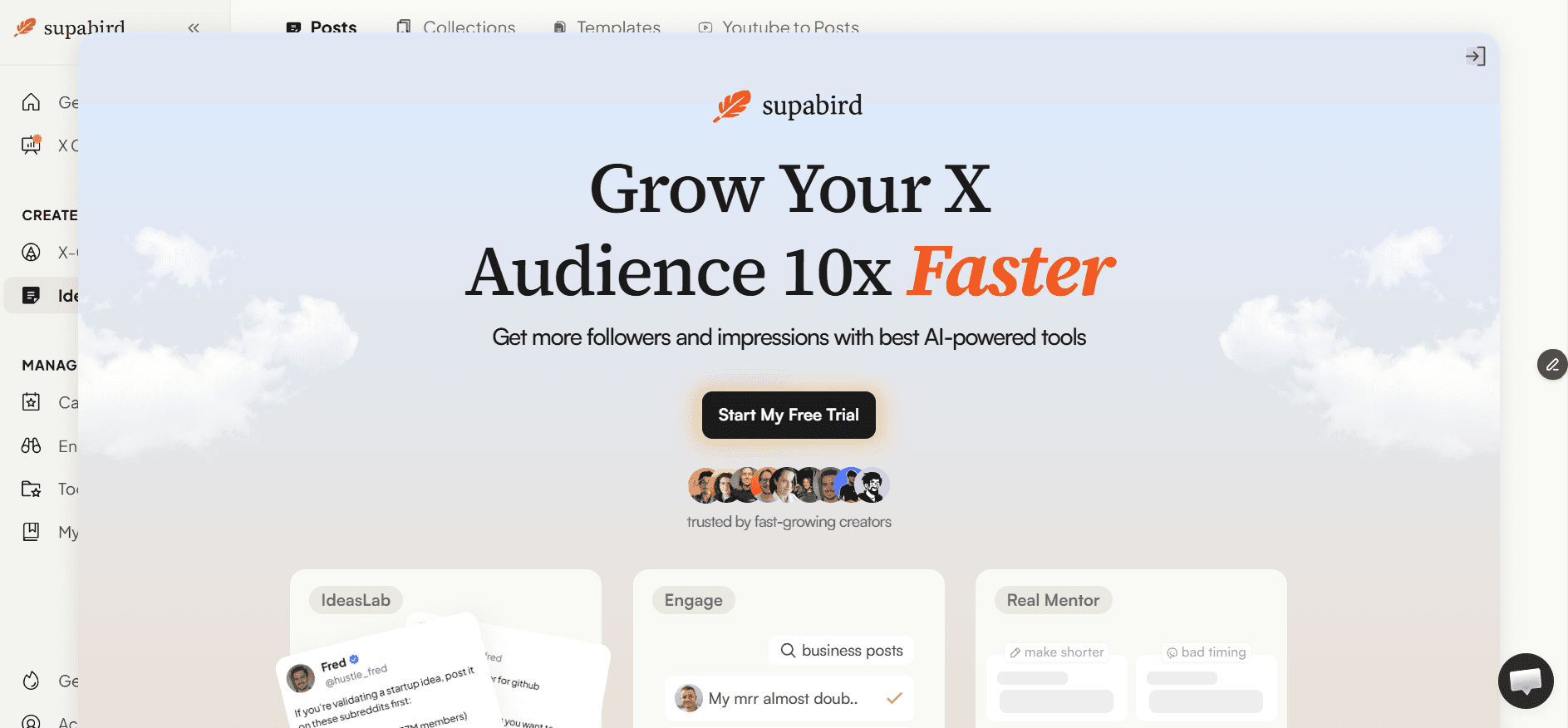
SupaBird is an AI-powered growth platform built specifically for X. It's designed for creators, solopreneurs, and marketers who want consistent, compounding growth without spending hours each day researching, writing, and scheduling content by hand.
The product is built around a simple idea: most accounts don't stall because their niche is bad or their audience doesn't exist, they stall because of three very fixable problems: running out of content ideas, posting inconsistently, and getting little to no engagement on what they do post. SupaBird's toolset maps directly onto those three failure points.
Core SupaBird features include:
Ideas Lab – studies creators and formats you admire and generates personalized post ideas based on what has actually worked for them, adapted to your voice and niche.
X-GPT writing agent – rewrites your rough drafts into more engaging, higher-performing tweets, trained on patterns from top-performing creators.
SupaCalendar – automatically creates posting slots based on your best-performing times, so consistency doesn't depend on remembering to post.
Post-Finder – surfaces relevant, high-potential posts in your niche worth replying to, replacing the guesswork of scrolling for engagement opportunities.
Video-to-Posts – converts long-form content, like YouTube videos or blog articles, directly into ready-to-publish X content, so your best ideas don't stay locked in one format.
X Coach – acts as an ongoing growth coach, reviewing your account and content patterns to give personalized guidance on what to fix, double down on, or try next.
SupaBird is intentionally X-only. That's a trade-off, but it's also the entire point of the product. Every feature is built around one platform's algorithm, posting rhythms, and audience behavior, instead of trying to generalize across five different networks at once.
What Is Postwise?

Postwise is an AI writing and scheduling tool that started as an X-focused product and has since expanded to also support LinkedIn and Threads. Its core strength is content generation: give it a rough idea, and it produces several post variations built around patterns that tend to perform well.
Core Postwise features include:
Viral Tweet/Post Generator – produces hook-driven posts from a topic or a rough idea, trained on large volumes of high-performing content.
Thread Writer – expands a single idea into a structured, multi-part thread with a single click.
AI replies – helps generate replies at scale to support engagement without manually composing every response.
Cross-platform scheduling – publish to X, LinkedIn, and Threads from a single dashboard, with content adapted per platform.
Growth analytics – tracks follower growth, impressions, and engagement trends over time so you can see what's working.
Because Postwise spans multiple platforms, it appeals to creators who want one dashboard to manage a broader content presence, rather than a tool that goes deep on X specifically.
Core Philosophy: X-First vs Multi-Platform
This is really the central difference between the two products, and almost everything else follows from it.
SupaBird is built on the belief that X rewards a very specific kind of behavior, frequent posting, active replying, and content shaped around the platform's own conventions, and that a tool trying to serve X, LinkedIn, and Threads equally will inevitably serve all three a little worse. So SupaBird narrows its scope on purpose and goes deep: idea generation, rewriting, scheduling, and reply discovery are all tuned to what actually moves the needle on X specifically.
Postwise takes the opposite bet: that most creators don't want to manage three separate tools for three separate platforms, and that a single AI writing engine, adapted per platform, is worth more than platform-specific depth. If your content strategy already spans X, LinkedIn, and Threads, that convenience is real.
Neither philosophy is objectively "correct", it depends entirely on how you actually work.
Feature-by-Feature Comparison
Feature | SupaBird | Postwise |
|---|---|---|
Platform focus | X (Twitter) only | X, LinkedIn, Threads |
AI content generation | Yes (Ideas Lab + X-GPT rewriting) | Yes (Viral Generator + Thread Writer) |
Scheduling | Yes (SupaCalendar, best-time posting) | Yes, cross-platform |
Reply/engagement discovery | Yes (Post-Finder) | AI-generated replies |
Long-form-to-post repurposing | Yes (Video-to-Posts) | Limited |
Thread creation | Via X-GPT rewriting | Dedicated Thread Writer |
Multi-account support | Available on higher plans | Available on higher plans |
Free plan | free trial only | free trial only |
Best for | Solo creators focused on X growth | Creators posting across multiple platforms |
Content Quality and AI Writing
Both tools lean on AI models trained on large volumes of high-performing social content, but they apply that training differently.
SupaBird's X-GPT agent is framed less as a "write this for me from scratch" tool and more as a rewriting engine, you draft something, and it reshapes it into a version more likely to hook readers, using patterns pulled from creators you actually follow and admire. Combined with Ideas Lab, the workflow leans toward "here's a direction, now make it sharper" rather than fully automated output.
Postwise's Viral Tweet Generator leans more toward generating full posts from a topic or idea with minimal input, and its Thread Writer is purpose-built for turning one idea into a multi-part thread instantly. If your bottleneck is genuinely "I don't know what to write," Postwise's more generative approach may get you to a usable draft faster.
In both cases, AI output is a starting point, not a finished product, the tools that report the best results are the ones where creators still apply their own judgment and voice before hitting publish.
Scheduling and Consistency
Consistency is arguably the single biggest lever for growth on X, and both tools treat it as a first-class feature rather than an afterthought.
SupaBird's SupaCalendar automatically creates posting slots based on your account's best-performing times, removing the manual work of figuring out when to post on top of what to post. It's designed to keep a single X account posting reliably without requiring daily micromanagement.
Postwise's scheduler works across all connected platforms, X, LinkedIn, and Threads- from one calendar view, which matters more if you're trying to keep a consistent cadence across multiple channels simultaneously rather than just one.
Engagement and Reply Discovery
This is one of the more meaningful differentiators between the two tools.
SupaBird's Post-Finder is built specifically to surface posts within your niche that are worth replying to, a feature aimed squarely at the fact that replies are often a faster growth lever than original posts, especially for smaller accounts trying to get in front of a bigger audience.
Postwise takes a different approach with AI-generated replies, which helps you respond at scale once you've identified who to engage with, but it doesn't include a dedicated discovery layer for finding the right posts and accounts in the first place.
If reply strategy is a core part of how you plan to grow, SupaBird's Post-Finder addresses a step in the process that Postwise largely leaves to you.
Analytics and Growth Tracking
Both platforms include growth analytics, follower growth, impressions, and engagement trends over time, so you can see whether your strategy is actually working rather than posting blind.
Postwise's analytics are positioned as a core part of its offering across all three supported platforms, which is useful if you want a single view of performance across X, LinkedIn, and Threads at once.
SupaBird's analytics are tightly scoped to X, feeding directly back into Ideas Lab and Post-Finder so that what's working gets fed back into future content and reply suggestions, closing the loop rather than just reporting numbers. X Coach builds on top of that same data, translating raw performance trends into specific, personalized guidance on what to fix, double down on, or try next, turning analytics from a dashboard you check into direction you actually act on.
Pricing Breakdown
Both tools are subscription-based with no permanent free tier, though pricing and plan structures can and do change, so it's worth confirming current numbers on each product's official pricing page before you commit.
SupaBird has historically been priced around $19/month ($8.25 billed yearly) on a monthly plan, with an annual option that works out to a noticeably lower effective monthly rate. There's no free plan, but new sign-ups are typically covered by a 7-day money-back guarantee, which lowers the risk of trying it.
Postwise plans have generally started in the $37 - $59 per month for a base tier covering a handful of connected accounts and a monthly AI-post allowance, scaling up through mid-tier and higher plans that add more accounts, more AI credits, longer scheduling windows, and deeper analytics. Postwise typically offers a 7-day free trial rather than a money-back guarantee.
Neither tool positions itself as the cheapest option in the AI social growth category, both are priced below more established, heavier platforms, while still charging a meaningful monthly fee for the AI and automation layer.
Ease of Use and Onboarding
Both tools are built for non-technical users and follow a similar onboarding pattern: connect your account via OAuth, set your niche or topics of interest, and generate your first piece of content within minutes.
SupaBird's onboarding is shaped around getting you into the Ideas Lab quickly, since idea generation is the entry point to the rest of the workflow. Postwise's onboarding is shaped around getting you to your first generated post as fast as possible, reflecting its more generation-first approach.
Neither requires technical skill, and both are usable by someone who has never used a scheduling or AI writing tool before.
Pros and Cons of Each Tool
SupaBird
Pros:
Purpose-built entirely around X, with no divided focus.
Post-Finder adds a genuine engagement-discovery layer most competitors skip.
Video-to-Posts turns existing long-form content into new posts automatically.
Lower effective price on the annual plan.
Money-back guarantee reduces trial risk.
Cons:
X-only, so it won't help with LinkedIn or Threads.
Smaller, newer product with a shorter track record than more established players.
Postwise
Pros:
Covers X, LinkedIn, and Threads from one dashboard.
Strong generative writing tools, including a dedicated Thread Writer.
Free trial available before paying.
Analytics span all connected platforms in one view.
Cons:
Less depth on any single platform compared to a platform-specific tool.
No dedicated feature for finding posts or accounts worth engaging with.
Pricing tiers and limits have varied across sources and can change.
Who Should Use SupaBird
SupaBird is the better fit if:
X is your primary or only growth channel, and you don't want a tool splitting its attention across other networks.
You want a connected workflow, ideas, rewriting, scheduling, and replies, that all feeds back into itself.
You already publish long-form content elsewhere (YouTube, a blog, a newsletter) and want it automatically turned into X posts instead of manually repurposed.
Reply strategy and community engagement are part of your growth plan, not just original posting.
Who Should Use Postwise
Postwise is the better fit if:
You're actively building a presence across X, LinkedIn, and Threads and want one tool instead of three.
Your main bottleneck is generating full drafts and threads quickly, more than finding people to engage with.
You'd rather test the product with a free trial before committing to a subscription.
Cross-platform analytics in a single dashboard matters more to you than platform-specific depth.
Frequently Asked Questions
Is SupaBird or Postwise better for beginners? Both are built for non-technical users and get you to your first AI-generated post within minutes. Beginners focused purely on X may find SupaBird's narrower, more guided workflow easier to follow; beginners managing multiple platforms may prefer Postwise's single dashboard.
Can I use both tools at the same time? Technically yes, but it's rarely worth paying for two overlapping subscriptions. Most creators are better served by picking the tool that matches their actual platform strategy, X-only versus multi-platform, rather than running both.
Which tool is better for finding accounts to reply to? SupaBird's Post-Finder is purpose-built for this. Postwise focuses more on generating replies once you've identified who to respond to, rather than surfacing those opportunities for you.
Does AI-generated content actually perform well on X? AI output from either tool is best treated as a strong first draft rather than a finished post. Creators who see the best results typically edit AI drafts to match their own voice before publishing, rather than posting raw AI output.
Final Verdict
SupaBird and Postwise are solving a similar problem, content, consistency, and growth, from two different directions. SupaBird's advantage is depth: it's built entirely around X and includes features like Post-Finder and Video-to-Posts that go beyond basic writing and scheduling into genuine engagement strategy. Postwise's advantage is breadth: if your growth plan already spans more than one platform, its multi-network scheduling and generation tools are a real convenience.
If you're serious about X specifically and want a tool that treats it as more than "just another platform to post to," SupaBird's X-first design is the more purpose-built choice.
Ready to try the X-first approach? Start your SupaBird trial and see the difference a platform built exclusively for X can make.
Read More Stories

SuperX vs Tweet Hunter: Which Tool Is Better?
SupaBird vs Postwise: The Ultimate Comparison

SupaBird vs Brandled: X Growth Tools Comparison

SupaBird vs Brand Brain: A Detailed Comparison

SupaBird vs XBeast: X Growth in 2026

SuperX vs SupaBird: SuperX's Top Alternative

SupaBird vs Postel: Which Is Better for X Growth?

SupaBird vs Typefully: Which X Growth Tool Is Right for You?

SupaBird vs TweetHunter: Which Is Better?
