Twitter Thread Template: 8 Proven Hooks & Structures
Author:

Stop guessing. The difference between a thread that gets ignored and one that travels on X usually comes down to format, not talent. That matters because the platform's own history pushed writers toward modular storytelling, first with the 140-character limit and later the 280-character expansion in November 2017, which made structured threads a practical way to tell longer stories without breaking the feed's rhythm TweetArchivist. The best twitter thread template is less about sounding clever and more about making each post carry one clean job, one clear payoff, and one reason to keep reading.
That's also why threads can outperform a lone tweet when the structure is right. One content-format roundup says 5 to 9 tweet threads can earn about 3× the engagement of single tweets, and posts published in peak audience windows like 9 to 11 a.m. or 6 to 9 p.m. can earn 2 to 3× more engagement than off-peak posts AutoTweet statistics roundup. Other guidance points to a sweet spot of 5 to 7 tweets, with each tweet kept tight and sequenced for retention TweetArchivist thread guide. If you're serious about growth, the answer isn't “post more,” it's “use the right structure for the idea you already have.”
LinkedIn content strategy for virality
Table of Contents
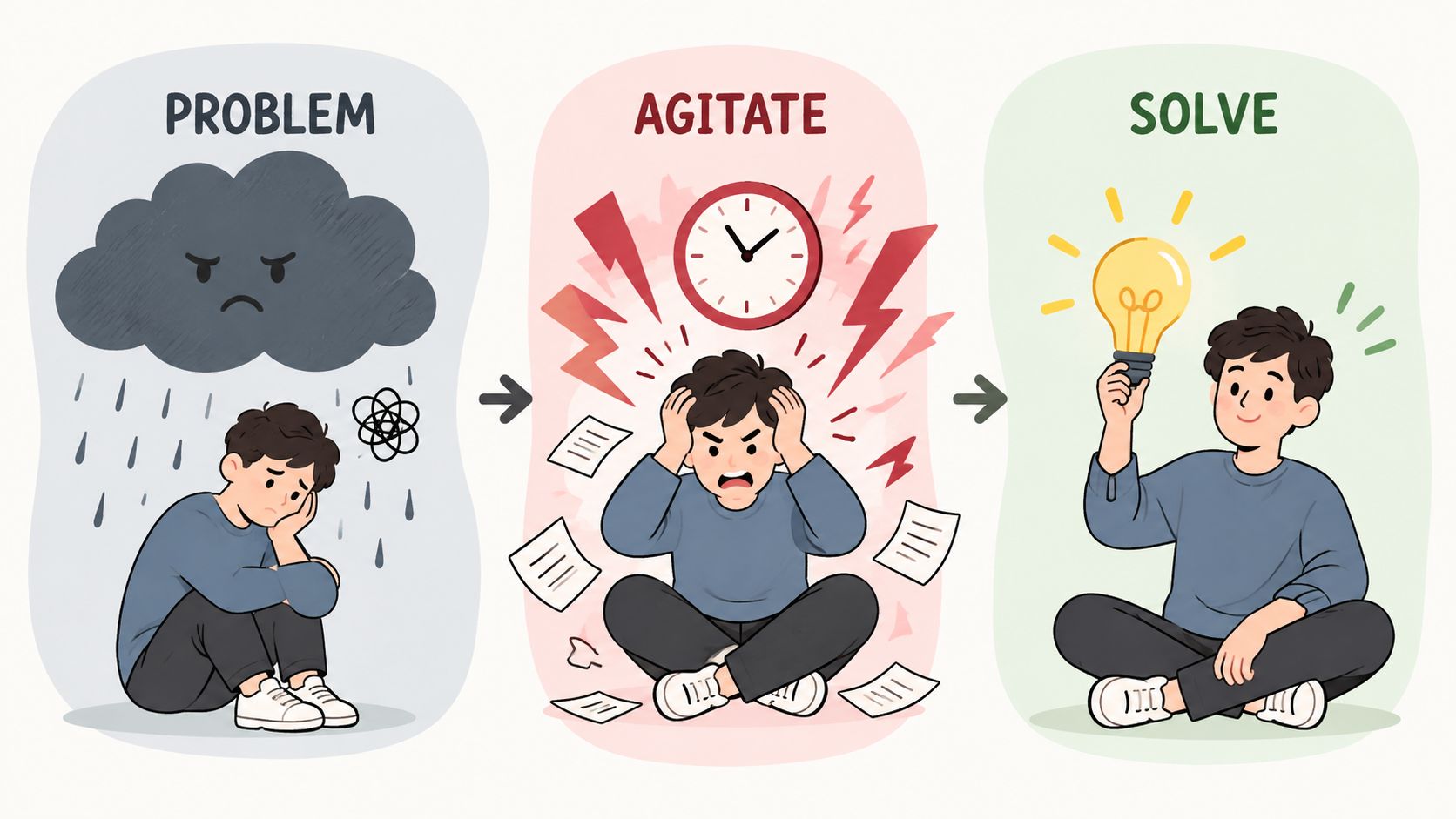
1. The Problem-Agitate-Solve Thread
PAS works because it copies how people think when they're frustrated. First you name the pain, then you intensify the cost of ignoring it, then you offer relief. On X, that sequence keeps attention because readers already recognize the emotional shape of the problem before they even finish tweet 1.
A strong PAS thread starts with a problem readers can feel immediately. For a creator, that might be “You keep posting threads that get likes but no profile visits.” For a founder, it might be “Your product thread gets attention, but nobody clicks through to try the tool.” The key is not to describe a vague industry issue, it's to state a lived annoyance in plain language.
Practical rule: the agitation tweet should make the reader nod, not roll their eyes. If the pain sounds theatrical, the thread loses trust fast.
A clean example looks like this:
Tweet 1: “Your X threads aren't failing because you ‘lack consistency.’ They're failing because the opening tweet doesn't earn the next click.”
Tweet 2: “That means people scroll once, feel no tension, and never reach the useful part.”
Tweet 3: “Even good ideas get buried when the structure doesn't create momentum.”
Tweet 4: “Use a hook that names the pain, then show the cost of doing nothing.”
Tweet 5: “Then solve the specific friction, not the entire universe.”
SupaBird is useful here because its drafting flow helps you isolate a cleaner hook before you publish. If you want hook practice, start with SupaBird's hook-writing guide and test whether your first tweet states a real problem or just a generic complaint. In practice, PAS works best when the solution is simple enough to state in one sentence and strong enough to make the reader feel the gap between where they are and where they want to be.
The weakness is just as real. If the pain isn't specific, PAS turns preachy fast. If the solution is too broad, the payoff feels thin.
2. The List + Breakdown Thread
The list thread wins because it lowers effort. Readers see a number, they understand the path, and they know how much attention the thread will ask for. That reduces decision fatigue, which is exactly why numbered posts keep working across niches.
The psychology is simple. Numbers promise order, and order feels safe in a crowded feed. A well-built list thread also creates micro-checkpoints, so readers feel progress as they move from item to item instead of wondering whether the post is wandering.
A practical version looks like this:
Tweet 1: “7 ways to make your X threads easier to finish.”
Tweet 2: “1. Open with one clear promise.”
Tweet 3: “2. Make the next tweet answer the first.”
Tweet 4: “3. Keep each post about one idea.”
Tweet 5: “4. Use examples that fit the audience.”
Tweet 6: “5. End with a reason to reply or visit your profile.”
Each item should stand alone. That matters because people don't always read threads top to bottom, they skim, pause, and jump. The more each tweet can be understood on its own, the more useful the thread becomes even when it's partially read.
For execution, SupaBird helps most when you're turning one idea into several clean posts. Its repurposing workflow pairs well with this format, especially if you already have a blog, a post, or a founder note that can be broken into scannable pieces. If you're starting from an existing long-form asset, SupaBird's content repurposing strategy article is a useful reference for turning one source into multiple tweet-ready points.
Practical rule: keep the list honest. If the items are basically synonyms, readers notice immediately and the thread feels padded.
The downside is familiarity. People have seen this structure everywhere. If you don't add a sharp point of view, a real example, or a strong reading path, the list becomes generic and forgettable.
3. The Before-After-Bridge Thread
Transformation is one of the oldest persuasion patterns because people trust change they can see. Before-after-bridge works when the audience can locate themselves in the “before,” believe the “after,” and understand the exact bridge that made the shift possible.
The underlying force here is contrast. A weak thread says, “I improved.” A strong one says, “I used to do this, then I changed one thing, and the result was different.” That bridge element matters because it turns the thread from a brag into a usable story.
A useful structure looks like this:
Before: the frustrating state.
After: the outcome people want.
Bridge: the system, habit, or decision that caused the change.
Here's the psychology in practice. Readers don't just want inspiration, they want repeatability. If the bridge feels specific, they can imagine using it themselves. If the bridge feels vague, the thread becomes another polished success story that's easy to admire and hard to apply.
For product or service creators, this format is especially useful when you've got a concrete workflow shift. If your team changed how you write, schedule, or review posts, the transformation is easy to show. SupaBird fits naturally here because it combines drafting, idea generation, and scheduling in one workflow. The platform site is the best place to explore that setup directly, and you can start at SupaBird.
A strong annotated example is:
Tweet 1: “I used to spend an hour forcing thread ideas.”
Tweet 2: “The result was drafts that sounded flat and inconsistent.”
Tweet 3: “The bridge was simple, I started collecting hooks before writing the body.”
Tweet 4: “That made the structure clearer before I touched the details.”
Tweet 5: “Now each thread starts with a clearer promise.”
The weakness is credibility. If the “before” feels fake, the whole thing reads like performative humility. If the bridge is oversold, experienced readers stop believing the rest.
Honest transformation threads work because they show a real turning point, not a polished origin myth.
4. The Counterintuitive Truth + Proof Thread
Contrarian threads work because they create tension immediately. Readers expect one thing, you say the opposite, and now they need proof. That little bit of cognitive dissonance is powerful, but only if the argument earns its place.
The best version doesn't just make a surprising claim, it explains why the conventional wisdom fails in practice. You want the reader thinking, “That sounds wrong, but I need to see the logic.” That's the emotional engine behind this structure.
A clean version might look like this:
Tweet 1: “The best X threads usually aren't the longest ones.”
Tweet 2: “Long threads often lose readers because the value arrives too late.”
Tweet 3: “Short, tightly structured threads can keep momentum better.”
Tweet 4: “That's why the hook and the first few posts matter more than decoration.”
Tweet 5: “The actual goal is not length, it's retention.”
The proof matters more than the posture. If you open with a bold claim and then repeat generic advice, the thread collapses. If you acknowledge the obvious counterpoint, the thread feels stronger because you've shown that you understand the objection before you answer it.
Practical rule: don't try to be controversial just to be noticed. Be surprising only when you can explain the mechanism.
This is a good place to use SupaBird's X-focused rewriting tools, because contrarian threads need cleaner phrasing than most drafts. A hook that's too polite won't land, and a hook that's too aggressive can feel cheap. SupaBird's drafting flow is useful when you want to test several versions of the same opening before choosing the one that has teeth.
The trade-off is obvious. This format can attract replies, but it can also attract arguments from people who only read the first tweet. If your evidence is thin, the thread may get attention for the wrong reason and damage trust with the audience you want to reach.
5. The Question-Driven Discovery Thread
Questions pull people in because they invite participation instead of demanding agreement. This format works when you don't want to sound preachy, and when the topic benefits from exploration rather than conclusion.
The psychological advantage is humility. A good question-driven thread says, “Let's think this through together.” That stance creates room for uncertainty without sounding weak, which is useful when the topic has trade-offs or competing answers.
A practical structure is:
Tweet 1: a high-stakes question.
Tweet 2: a smaller question inside it.
Tweet 3: one possible answer and its drawback.
Tweet 4: another possible answer and its drawback.
Tweet 5: your current view and a prompt for replies.
This format does a good job of creating conversational energy. It also gives you a natural way to test ideas in public without pretending the answer is settled.
If you're hunting for topics, SupaBird's ideation workflows can help you move from a rough question to a sharper angle. Its ideas module is a practical fit when you want to surface prompts that are already resonating in your niche, and SupaBird's content idea guide is a relevant place to start.
A simple annotated example:
Tweet 1: “Why do some X threads get saved while others get ignored?”
Tweet 2: “Is it the hook, the topic, or the structure?”
Tweet 3: “The hook matters, but only if the body rewards the click.”
Tweet 4: “The topic matters, but even good topics fail without sequencing.”
Tweet 5: “My current view is that structure carries more weight than people admit. What's yours?”
The downside is conversion. If you need direct action, this won't always push as hard as a prescriptive format. It's better for conversation than hard sell, which is why it works best for creators building trust over time.
6. The Data-Driven Insight + Narrative Thread
Data threads work because numbers feel defensible, but numbers alone are easy to forget. The strongest version opens with a clear metric, then gives that metric a human frame so the reader understands why it matters.
The psychology is straightforward, credibility plus memory. The statistic grabs attention, the narrative makes it stick. Without the story, the number feels flat. Without the number, the story reads like opinion.
A strong data-led opening might look like this:
Tweet 1: “Threads of 5 to 9 tweets can earn about 3× the engagement of single tweets.”
Tweet 2: “That does not mean every long thread wins.”
Tweet 3: “It means structure and timing often matter more than raw length.”
Tweet 4: “A creator who posts at the right time and keeps each tweet tight has a better shot at holding attention.”
Tweet 5: “The takeaway is simple, make the data usable.”
The proof works best when the narrative stays close to the evidence. Do not force a dramatic case study that the data does not support. Use the number to explain behavior, then turn that behavior into practical choices the reader can apply.
Visual planning helps here too. Threads that reference charts, screenshots, or simple graphics are easier to process because the reader gets a second anchor for the point. SupaBird's scheduling and rewrite tools help when the point is already clear and you want the delivery to be cleaner, tighter, and easier to publish at the right time.
Data is only persuasive when the implication is obvious enough to act on.
The weak point is sourcing. If you do not have a real number or credible context, the format loses its biggest advantage. A vague “research says” thread will not hold up, especially with an audience that knows how often people misuse statistics on X.
7. The Micro-Lesson Sequence Thread
The micro-lesson sequence is the most trust-building format on this list. It works because every tweet gives something useful immediately, so the audience doesn't feel baited into waiting for the payoff.
Psychologically, this structure rewards patience with utility. Each post feels complete enough to stand on its own, but the sequence still builds toward deeper understanding. That's why it's so effective for authority building, especially for coaches, consultants, operators, and founders who want to teach without sounding salesy.
A strong sequence looks like this:
Tweet 1: a clear promise about the skill.
Tweet 2: the first lesson.
Tweet 3: a small example.
Tweet 4: the next lesson.
Tweet 5: a simple framework or checklist.
Tweet 6: a more advanced application.
Tweet 7: a practical call to action.
The structure is useful because it makes people stop at multiple points. Someone may save tweet 2, reply to tweet 4, and click the profile after tweet 7. That gives the thread more than one path to engagement.
SupaBird is a natural fit for this style because its template library can help you turn one idea into a cleaner sequence. If you're looking for a broader set of pattern options, SupaBird's 2026 Twitter post templates guide is a smart companion read before drafting the thread.
A practical example:
Tweet 1: “How to write a stronger X thread without sounding robotic.”
Tweet 2: “Start with one promise, not three.”
Tweet 3: “If the hook is vague, the rest of the thread has to work harder.”
Tweet 4: “Use one idea per tweet so each post can carry its own weight.”
Tweet 5: “End with a reason to act, reply, or visit your profile.”
Tweet 6: “That progression feels natural because it matches how readers skim.”
Tweet 7: “Build your next thread from the payoff backward.”
The downside is time. To make this format genuinely useful, you need real substance, not filler. If you rush it, the thread becomes a shallow tutorial that looks generous but teaches very little.
8. The Hot Take + Breakdown Thread
Hot takes get attention because they create a stance before they create nuance. The danger is obvious. If you lean on the opinion without the reasoning, the thread becomes empty provocation.
What makes this format work is the breakdown after the stance. You say something bold, then you earn it with specific reasons, examples, and concessions. That balance is what keeps the thread from feeling like rage bait.
A usable version looks like this:
Tweet 1: “Most X threads fail because the writer tries to sound impressive instead of useful.”
Tweet 2: “That makes the hook feel broad, which weakens the click.”
Tweet 3: “It also makes the body harder to follow because the thread has no clear promise.”
Tweet 4: “A better thread gives one useful idea per post.”
Tweet 5: “That's why structure beats style when the goal is retention.”
Tweet 6: “I know some writers prefer looser, more expressive threads. That can work, but only when the audience already trusts them.”
This format earns reach because it's memorable. People retweet positions, not mushy middle-ground summaries. The risk is that you can box yourself into a take you don't fully want to defend later, so the reasoning has to be strong enough to stand on its own.
If you want the opinion to travel, make the explanation stronger than the insult.
SupaBird helps here when you're refining the wording of the hot take before it goes live. Its X-focused rewrite tools are useful for sharpening the opening without making it sound like a cheap engagement trap. That matters because the most effective hot takes sound like a creator with a point of view, not a writer chasing outrage.
The strongest hot takes don't try to win every argument. They make one clear claim, show the logic, and stop. That's enough to create debate without losing credibility.
8 Twitter Thread Templates Compared
Template | Implementation complexity | Resource requirements | Expected outcomes | Ideal use cases | Key advantages |
|---|---|---|---|---|---|
The Problem-Agitate-Solve (PAS) Thread | Medium, structured narrative, strong hook required | Low–Medium, time to choose genuine problem and craft agitation | High engagement, strong conversion potential | Coaches, SaaS founders, marketing, indie hackers | Builds narrative tension, clear value proposition, highly shareable |
The List + Breakdown Thread | Low–Medium, assemble and explain items clearly | Low, curation and concise explanations | High shareability, easy skimming, saves for later | Creators teaching tools/tactics, marketers, founders | Scannable, quotable, reduces decision fatigue |
The Before-After-Bridge Thread | Medium, needs authentic transformation and a clear bridge | Medium, evidence or client examples required | Relatable aspirational engagement, social proof, conversions | Coaches, founders, personal brands | Demonstrates proof-of-change, persuasive and believable |
The Counterintuitive Truth + Proof Thread | High, bold claim plus rigorous evidence and framing | Medium–High, data/case studies and credibility | High virality, debate, positions author as independent thinker | Established creators, founders, thought leaders | Attention-grabbing, memorable, sparks discussion |
The Question-Driven Discovery Thread | Medium, careful questioning and exploratory structure | Low–Medium, research and engagement time | Strong replies and community building, collaborative insights | Thought leaders, founders, community builders | Encourages conversation, shows intellectual humility |
The Data-Driven Insight + Narrative Thread | High, data sourcing, analysis, and storytelling | High, quality data, sources, and visualizations | High credibility and memorability, defensible claims | Consultants, marketers, data-driven founders | Combines credibility with narrative for persuasive impact |
The Micro-Lesson Sequence (Value-First) Thread | High, distill expertise into standalone micro-lessons | High, expert knowledge, templates, time to craft | Trust-building, high shares, authority growth | Coaches, creators, founders, marketers | Value-first, actionable, builds goodwill and trust |
The Hot Take + Breakdown Thread | Medium–High, provocative stance plus robust justification | Medium, evidence and confident framing | High engagement and shareability, polarizing reaction | Established creators, founders, personalities | Distinctive voice, high visibility, drives conversation |
From Template to Traction Your Next Steps
A common mistake with a twitter thread template is treating it like a copy-paste machine. Templates only work when they match the asset you already have, the kind of attention you want, and the audience behavior you're trying to influence. A useful thread has a clear opening, a readable middle, and a payoff that feels earned, not slapped on at the end TweetArchivist's viral thread guide.
The most practical move is to pick two or three structures and get good at those before you try everything else. PAS is strong when the pain is obvious. The list thread works when the topic is scannable. The micro-lesson sequence is the best choice when you want trust. The counterintuitive and hot-take formats are better when you need debate and memorability. Match the shape to the message, not the mood you're in that day.
A disciplined workflow matters too. Draft the hook first, then tighten the body so each tweet carries one idea, then revise the closing so it clearly invites replies, clicks, or profile visits. If you want a system for that kind of repetition, cold email follow up templates can be a useful reminder that structure matters across every outbound format, not just threads. The same principle shows up in X, email, and any channel where the first line has to earn the second.
SupaBird fits naturally into that process because it helps with idea generation, rewriting, and scheduling in one place. Its calendar and rewrite workflow are especially useful if you want to keep publishing without burning time deciding what to post at the last minute. Consistency beats bursts of effort, especially on a feed that rewards regular, readable output.
Pick one template, write one thread today, and publish it with a clear purpose. Then watch which structure fits your voice instead of guessing from other people's results.
If you want a faster way to turn ideas into publishable threads, SupaBird gives you tools for hooks, rewrites, ideas, and scheduling in one workflow. Use it to test the thread structures in this guide, then keep the formats that help you publish more consistently on X.

The Reply Guy Strategy: A Growth Guide for X

Why New X Accounts Get Less Reach

ClimbX Review (2026): Features, Pricing, Pros and Cons

How Developer Startups Build a Brand on X Before Launch

30-Day Starting Plan for New X (Twitter) Accounts

How Often Should You Tweet for Maximum Growth?

What Should Your First 10 Tweets Be About?

How to Run X for Ten Clients: The Agency Workflow

How to write a bio that gets people to follow you
