
Most advice about a Twitter page viewer starts with the wrong question. People obsess over who viewed their profile, then chase tools that promise named visitors, even though X doesn't expose individual viewers and instead relies on aggregate counts and profile visits for its native analytics X's view count documentation. The useful question is simpler, and a lot more practical, what can you see, what can't you see, and which metrics help you grow?
A second mistake is treating every “viewer” tool as if it solves the same problem. Some tools are just read-only browsers for public X content, while others lean on vanity claims about hidden tracking that aren't real. If you separate those two meanings early, you'll stop wasting time on scammy apps and start using the metrics that move followers and reach.
Table of Contents
The Two Things People Actually Mean by Twitter Page Viewer
A Twitter page viewer usually means one of two different things, and mixing them up creates most of the confusion around X profile visibility. One meaning is a tool for viewing public profiles and posts. The other is the fantasy that X hands you a list of people who viewed your profile. It does not. X provides aggregate analytics, not named visitors, and the profile-views explainer walks through that distinction in plain language.
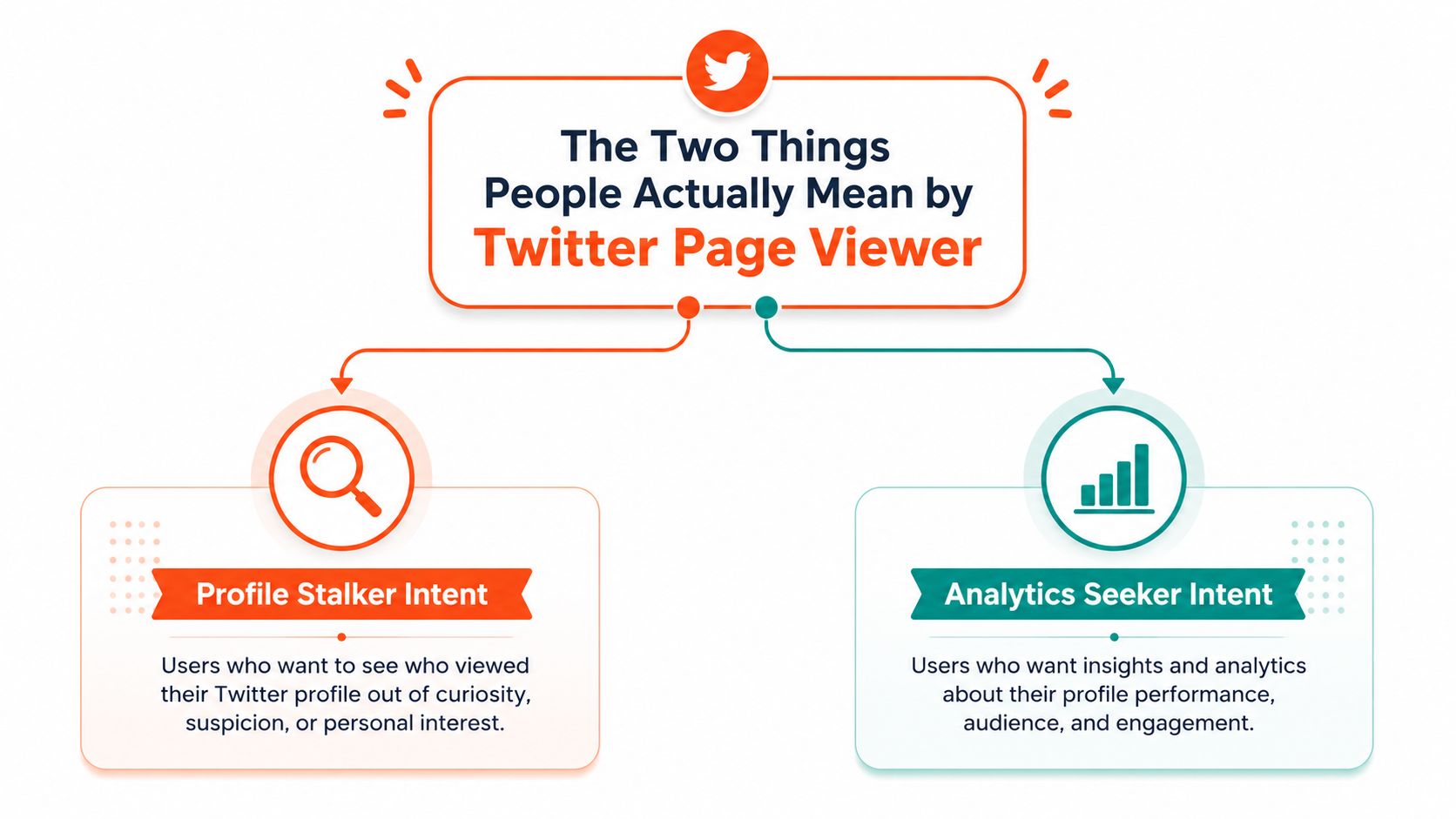
Public browsing tools
The first meaning is straightforward. People want to inspect a public X profile or scan recent posts without logging in, whether they are checking a creator's feed, reviewing a brand account, or quickly looking at recent activity. That use case is legitimate as long as the account is public, because X says public posts are visible to anyone, even without an X account public and protected posts.
The limits matter more than the pitch. A read-only viewer can show public profile details and recent posts, but it cannot get into DMs, protected accounts, or anything else X keeps restricted. If a tool suggests it can reveal private activity, it is overstating what a browser-style viewer can do.
Analytics seekers
The second meaning is the one that matters for growth. These users want profile visits, post views, and a way to see whether content is pulling people toward the profile where conversion happens. That is measurement, not stalking.
Practical rule: if the goal is growth, use analytics to learn which posts create curiosity, not tools that pretend to reveal anonymous people.
Public browsing helps you inspect what anyone can already see. Analytics shows how often that visible surface is drawing people in, which is the metric that changes decisions.
How X Tracks Views and Profile Visits
X's native metrics are built to avoid naming individual viewers. A view count is the total number of times a post has been seen, and it includes logged-in users who encounter the post in Home, Search, Profiles, or other surfaces, including the author's own view. That number is useful for reach, but it does not tell you who watched.
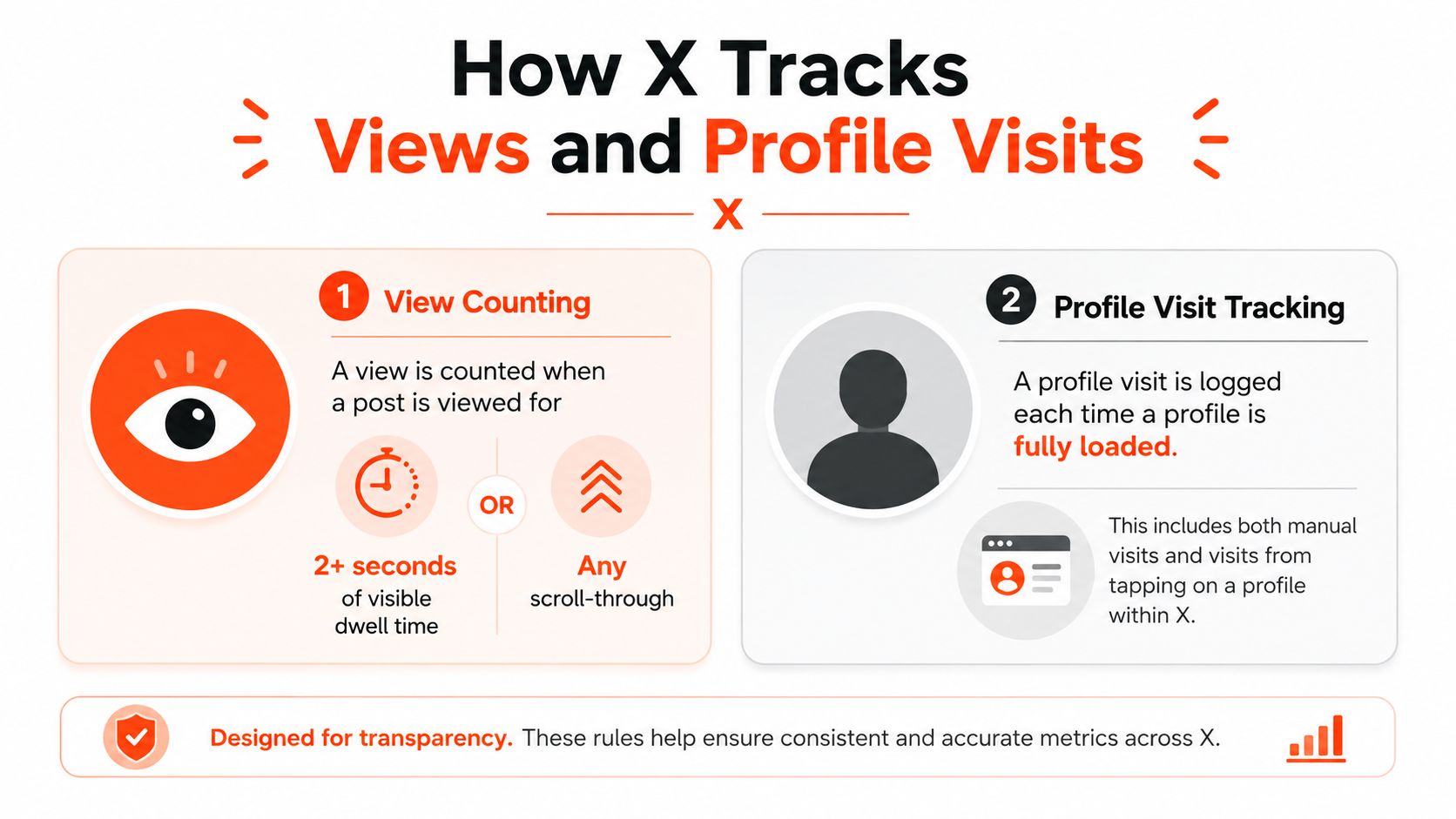
What the platform counts
The distinction that matters is between a post view and a profile visit. Post views sit in the standard analytics surface on each post and in post detail view, while profile visits are aggregate visits to your profile, not a list of named accounts. For a direct explanation of the view-count model, see X's view count documentation.
That split changes how you read performance. One post can draw wide exposure without sending many people to your profile, while another can post fewer total views and still produce stronger profile interest. If your goal is growth, the second pattern usually matters more.
Why the model matters for creators
X uses this setup to avoid turning the platform into a visitor log. You get enough signal to judge distribution and interest, but not enough to reconstruct a private browsing trail. That trade-off protects user privacy, even if it frustrates anyone looking for named profile viewers.
Creators need to read the signals in context. Treat views as distribution, profile visits as intent, and follower growth as the outcome that shows whether the content did more than attract passive scrollers. If you want a technical reference for how this data is handled, use the developer integration guide, then compare the practical dashboard side with Twitter analytics tools and whether X exposes profile viewers. The question is not who watched. The useful question is what made people care enough to click through.
Third-Party Viewer Tools and Privacy Risks
A lot of third-party Twitter page viewer tools sit in a narrow lane, while their marketing tries to sound much bigger than the product really is. The legitimate version is a read-only layer over public X data. It can fetch public profile metadata and recent tweets, but it cannot touch DMs, protected accounts, or write data back to X twitter viewer API developer guide. In practice, the caller still needs API authentication, just not user-context access to the target account.
![The image requirement for this section is intentionally absent.]
Capabilities versus marketing claims
The cleanest way to judge the category is to separate public access from fantasy claims.
Third-Party Viewer Tool Capabilities | Legitimate Access | Common False Claims |
|---|---|---|
Public profile metadata | Yes, for public accounts | “Reveals hidden profile data” |
Recent public tweets | Yes, through public endpoints | “Shows deleted or private tweets” |
DMs | No | “Reads direct messages” |
Protected accounts | No | “Bypasses privacy settings” |
Writing to X | No | “Auto-interacts on your behalf” |
The trouble starts when a tool's language shifts from viewing into access. If it says it can reveal named viewers, bypass privacy settings, or pull restricted data, that is not a viewer. It is a claim that does not match how X's public surface works.
Privacy and compliance concerns
The category has also moved beyond simple browsing. Many viewer pages now pitch search, export, or historical access, but they rarely explain where the data came from, whether it is cached, or how long it is stored twillot's viewer overview. That creates a real privacy issue, because a tool can be fine for reading public pages and still be a poor choice if it stores your searches or overstates what it can access.
A tool that only displays public content is not automatically safe, and a tool that looks polished is not automatically compliant.
Users should slow down here. If you are evaluating an anonymous viewer, ask whether it is only displaying public pages, whether it caches content, and whether it advertises access to anything beyond X's public surface. If you also use automation elsewhere, keep that separate from browsing workflows, and review the risks in auto-follow bot guidance before you let one tool blur into another. For timing decisions that shape profile traffic, use PostSyncer's X posting guide as a practical reference, then compare what you see with your own analytics.
Accessing and Interpreting X Analytics
X analytics is where the useful work starts. Open your post analytics and account analytics together, then watch for patterns across views, profile visits, and engagement, not just isolated spikes. The goal is to identify which posts create enough interest to push people from passive consumption to profile exploration.
Reading the dashboard like a strategist
Start with the post level. Look at which posts earn the strongest visibility, then compare that with the posts that drive profile visits. Those won't always be the same, and that gap tells you a lot about whether a post is entertaining, credible, useful, or merely noisy.
The profile level is where the conversion lens matters. If a post gets attention but doesn't move people to your profile, the hook may be interesting but not identity-building. If visits rise after a specific type of post, you've found a format that creates curiosity about who you are and what you do.
What to review every week
A simple review cadence works better than random checking.
Post performance: Identify which posts got the strongest visibility and which ones pulled viewers into the profile.
Format mix: Compare threads, short posts, visuals, and replies to see what causes people to click through.
Timing pattern: Note which publishing windows tend to produce stronger response across your audience.
Profile conversion: Check whether the posts that earn visits are also the ones likely to attract follows.
For teams that need more structured tooling, an X analytics dashboard is useful, but the dashboard only helps if you're consistent about what you compare. A creator can also pair native analytics with a separate social media API workflow when they need to move data into a broader reporting stack. If you're keeping it simpler, the practical priority is still the same, connect content type to profile visits, then connect profile visits to follow growth.
Timing and Content Strategies That Drive Profile Visits
Posting time isn't magic, but bad timing can bury good content before it has a chance to travel. Buffer's 2026 analysis of 8.7 million tweets points to Tuesday at 9 a.m. as the strongest slot, with Wednesday at 10 a.m. and Wednesday at 9 a.m. also near the top, while Sprout Social's 2026 study of nearly 2 billion engagements points to Tuesdays through Thursdays from 12 p.m. to 6 p.m. local time Buffer's best time to post on X Sprout Social's best times to post on X. Those findings don't cancel each other out, they tell you to test by timezone and audience behavior.
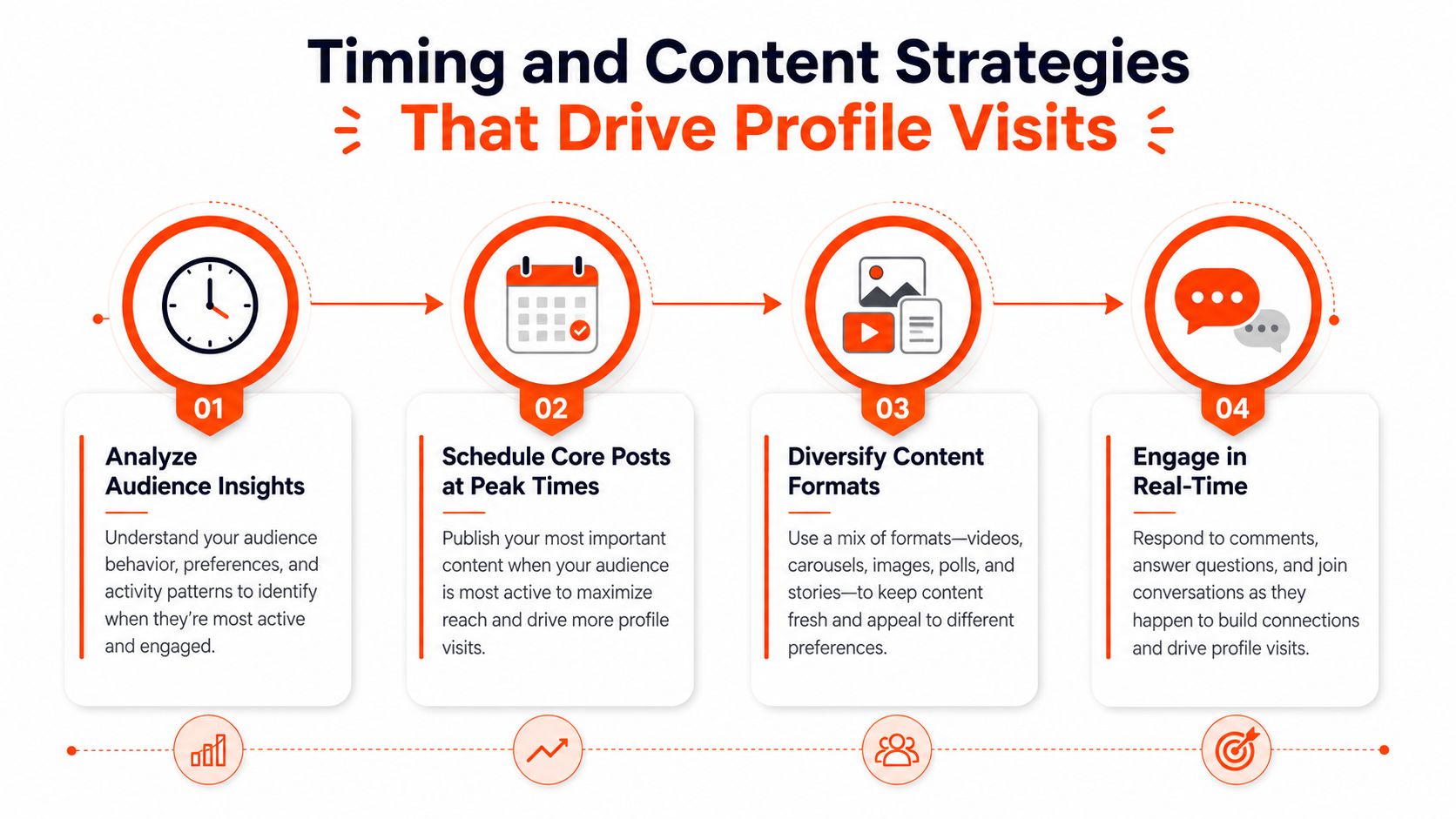
How to combine morning and midday windows
The easiest practical move is to segment by audience geography. If your followers are concentrated in one region, test the morning slot first. If your account reaches multiple time zones, compare the weekday morning window with the midday local-time window and watch which one creates more profile visits, not just likes.
Practical rule: use timing to buy attention, then use the post itself to earn the click to your profile.
That means your best-performing slot may be different from your best-performing format. A sharp thread can do well in one window, while a cleaner single post with a strong hook may perform better in another. The test is simple, publish the same content style at different times, then see which version leads to more profile interest.
Content formats that tend to create clicks
A content calendar only works if the posts inside it are built to convert. Threads are useful when the topic needs depth, because they create multiple chances to hold attention. Single posts are better when the message is crisp and identity-driven, especially if the payoff is obvious in one scan.
If you want a practical planning resource, PostSyncer's X posting guide is a good companion for organizing your schedule around posting windows. The lesson is steadiness, not perfection. Strong posts at thoughtful times beat random bursts, and profile visits usually follow creators who look deliberate, not frantic.
Building a Consistent Growth System with SupaBird
The creators who keep growing usually do not wait for inspiration to show up. They build a workflow that turns ideas into posts, posts into engagement, and engagement into profile visits. One tool that fits that system is SupaBird, which includes an Ideas Lab, an Engage module, X-GPT drafting, a calendar for posting times across cities like Berlin, New York, London, and Mumbai, and an X Coach for feedback on why a post worked or flopped. If you want a closer look at that part of the workflow, the SupaBird X Coach feature is the most relevant place to start.
A simple weekly workflow
Monday can start with idea collection. Use the Ideas Lab to pull from accounts you already respect, then turn those patterns into a draft instead of staring at a blank screen. That keeps the week from stalling before it starts.
Tuesday and Wednesday are where publishing discipline matters most. The calendar helps you choose a slot that fits your audience's timezone mix, while X-GPT can reshape a rough draft into a tighter hook or cleaner structure. If the post still feels weak, the X Coach layer is useful because it points you toward a better angle instead of just telling you to post more.
Practical rule: the best system is not the one that creates the most posts, it is the one that helps you publish better posts on time, every time.
Engagement and iteration
The Engage module matters because growth on X is not only about posting. Replying to the right accounts creates visibility in places where your own feed might never reach, and that is often how newer creators get discovered. The goal is to join relevant conversations without sounding forced.
Iteration matters just as much as output. A profile that keeps getting visits usually has a repeatable loop, collect ideas, publish on a schedule, engage with intent, then review what drew attention. SupaBird says users have produced over 40,000 posts with the platform, which gives it some social proof as a workflow tool rather than a one-off app. Used well, a system like this does not replace judgment, it makes good judgment repeatable.
Your Action Plan for Smarter X Growth
Stop treating viewer tracking as the target. The job is to read the metrics X gives you, then use them to build a profile that earns visits, follows, and trust. If you keep chasing fake named-viewer tools, you are solving the wrong problem.
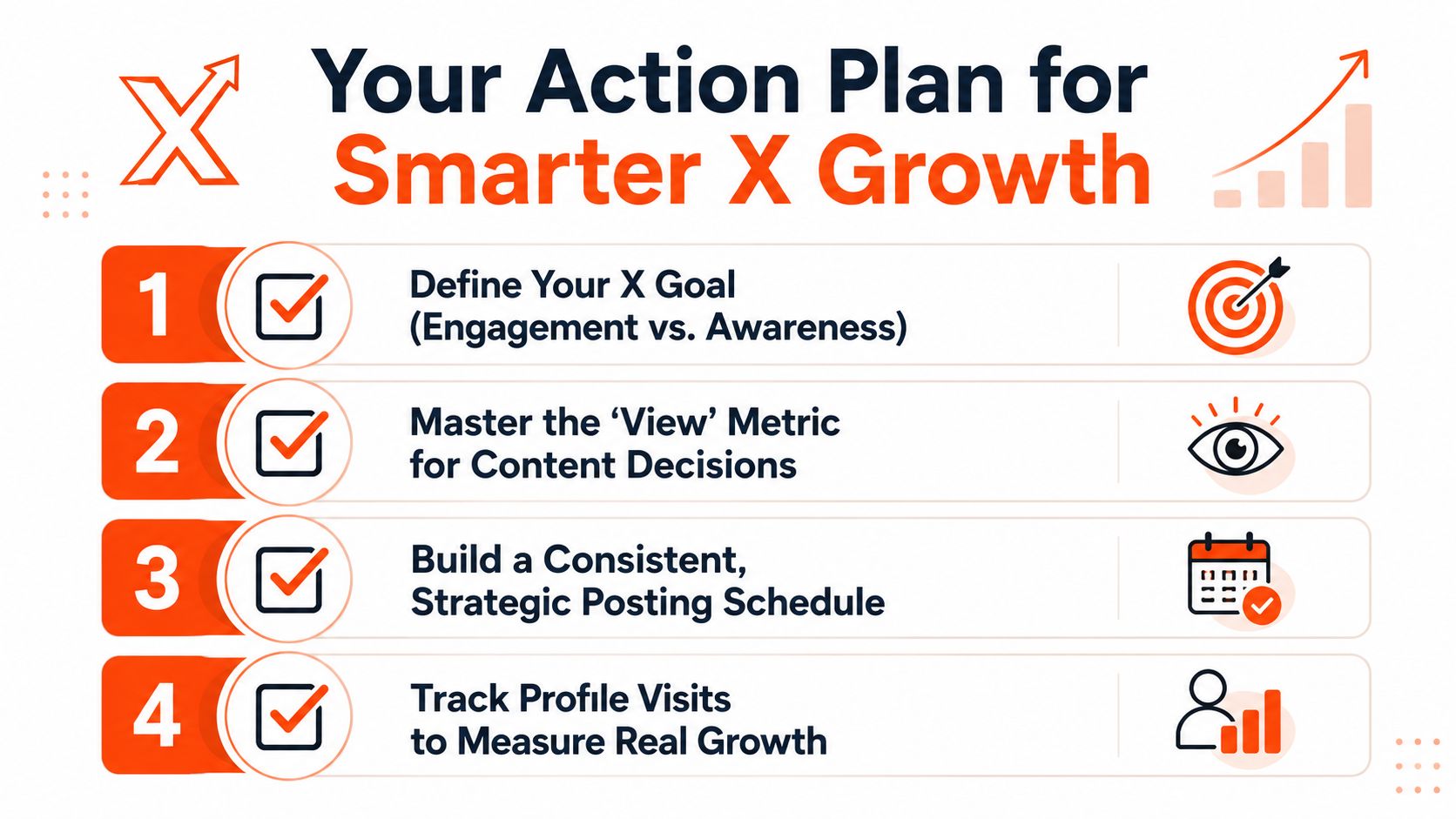
A practical five-point reset
The first move is to define the outcome you want. Awareness, engagement, and profile conversion are different goals, and each one changes how you judge a post.
Then audit your baseline. Look at which posts already send people to your profile, compare the hooks, topics, and timing, and note the pattern instead of guessing.
Use legitimate tools only. Public profile browsing and research are fine, but fake visitor tracking tools are a privacy risk and do not tell you who viewed your page. That matters because false certainty wastes time and can push you toward bad decisions.
Post with intent. Test weekday morning and midday windows, then keep the slots that produce profile visits rather than raw impressions. A post that reaches fewer people can still outperform if it sends the right visitors to your profile.
Review the numbers every week. Compare views, profile visits, and follows so you can see which topics and formats change behavior.
If you want a workflow that helps with idea generation, scheduling, and feedback in one place, compare your current setup with the LunaBloom AI app. The point is simple, consistent strategy beats curiosity about invisible viewers.
If you want a cleaner way to turn X analytics into real growth, visit SupaBird and see how its idea generation, scheduling, and coaching tools fit the profile-view and posting strategy in this guide. It is built for creators who want more than vanity metrics, and it can help you turn smarter posting into measurable profile visits.

30-Day Starting Plan for New X (Twitter) Accounts

How Often Should You Tweet for Maximum Growth?

What Should Your First 10 Tweets Be About?

How to Run X for Ten Clients: The Agency Workflow

How to write a bio that gets people to follow you

Digital Product Launch Strategy

Best Twitter Growth Service for Creators in 2026
From X to Every Platform: Repurpose Without Flopping

How to Get Cited by Grok: Winning X’s AI Search in 2026
