Lead Generation on Twitter: A 2026 Playbook for Founders
Author:

Most advice about lead generation on Twitter is stuck in an older playbook. It tells founders to monitor broad keywords, chase followers, post more often, and blast cold DMs to anyone who vaguely fits an ICP. That still creates activity. It rarely creates pipeline.
The stronger approach in 2026 is narrower and more deliberate. The best leads on X usually don't announce, "ready to buy." They show intent in smaller ways. They reply to a competitor launch. They describe a painful workflow in plain language. They ask a peer whether a tool is worth switching to. Those are buying signals. A generic search for "need software" is not.
Twitter also works best when it's treated as a relationship channel, not a standalone lead engine. For B2B teams, it tends to drive traffic, authority, and conversations that convert later, especially when decision-makers are active on the platform and content stays educational instead of overly transactional, as noted in Alibaba's guide to whether Twitter is effective for B2B. The founders who win here don't look louder. They look more relevant.
Table of Contents
Optimize Your Profile for Conversion Not Just Followers
A weak X profile reads like a résumé. A strong one filters the right people in, gives them a reason to care, and points them to one next step. For lead generation on Twitter, the profile isn't decoration. It's the page prospects check after seeing a reply, a thread, or a DM.
Treat the profile like a landing page
Most founders make the same mistake. They describe themselves instead of the problem they solve.
Bad profile copy:
Bio mistake: "Founder | marketer | building in public"
Header mistake: a logo with no promise
Pinned post mistake: a personal update with no call to action
Better profile copy:
Bio shift: "Helping B2B SaaS teams turn X replies into booked demos"
Header shift: one audience, one problem, one outcome
Pinned post shift: a short post that explains the method, proof of expertise, and a simple next step
Practical rule: If a stranger lands on the profile, they should understand the audience served, the problem solved, and what to do next in a few seconds.
A founder who sells analytics software, for example, shouldn't write "building data tools." That says almost nothing. "Helping RevOps teams fix messy attribution and reporting" is sharper. It pre-qualifies the visitor before any DM starts.
Build the four conversion zones
Header
The header should do one job. Clarify value fast.
A simple framework:
Audience: who the account helps
Pain point: what problem gets removed
Offer path: what the visitor can click or read next
Example:
Weak: product screenshot plus company name
Strong: "For SaaS founders who want more qualified conversations from X. Free teardown in pinned post."
Bio
The best bios combine positioning with a soft filter. They don't try to impress everyone.
Useful formula:
Who it's for
What changes
How to engage
Example:
Weak: "Growth consultant. Coffee. AI. Opinions are my own."
Strong: "Helping consultants turn X content into inbound leads. Strategy, reply workflows, and simple funnels. Resources below."
For better structure ideas, this guide on how to write a good Twitter X bio that gets you more followers is worth reviewing, especially for tightening positioning language without sounding corporate.
Link
The profile link shouldn't send traffic to a homepage with five menu options. It should send visitors to the next logical action.
A good link destination often looks like one of these:
Lead magnet page: a checklist tied to the main pain point
Booking page: if the audience is already problem-aware
Resource hub: if the account publishes educational content across formats
Zone | Bad example | Better example |
|---|---|---|
Link | Company homepage | Single-offer landing page |
Bio CTA | "Learn more" | "Get the audit checklist" |
Pinned CTA | No CTA | "Reply 'audit' or download the guide" |
Pinned post
The pinned post is the evergreen closer. It should make the account legible to a new visitor.
A strong pinned post usually includes:
The problem the audience keeps running into
The method used to solve it
A small proof signal such as experience or specific process
One action only
That post should also match the account's content mix. The 80/20 rule for Twitter lead nurturing is still a solid constraint. Eighty percent of posts should provide value and only twenty percent should promote directly. Profiles convert better when the pinned post sells inside a broader context of useful content, not on top of a feed full of pitches.
Create a Content Rhythm That Attracts Inbound Leads
Inbound leads on X do not come from posting more. They come from posting the kind of content that makes a qualified buyer think, “This person understands the problem I'm dealing with right now.”
That changes how content should be planned. The goal is not broad reach. The goal is repeated exposure to pain points, buying triggers, and objections that show up right before someone evaluates tools, books a demo, or asks a peer for recommendations.
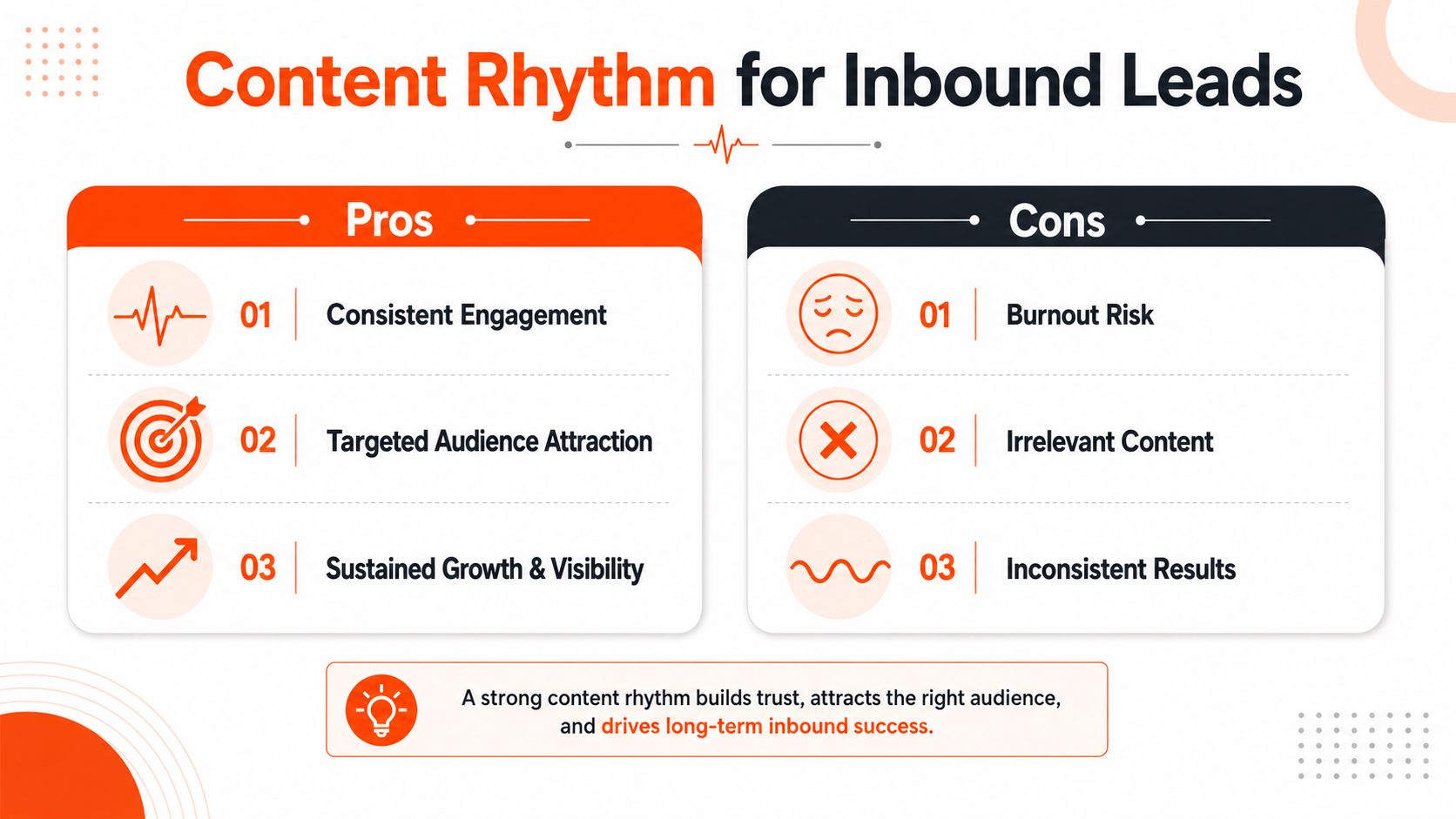
A lot of X advice still pushes generic consistency. Post daily. Stay visible. Join trends. That advice produces activity, not pipeline.
A lead-focused rhythm works better when each post fits one of four jobs:
Name a painful problem clearly: Show buyers you see the issue before they can explain it well themselves
Diagnose the root cause: Explain why the usual fix fails
Show a practical path forward: Give a usable framework, checklist, or example
Create a next step: Invite the reader to reply, click, download, or DM if they want help
That mix attracts a better class of inbound lead because it filters for people who are already problem-aware. It also supports the 2026 reality on X. High-intent demand shows up around live conversations, competitor threads, and user frustration. Your content should mirror those signals, not drift into broad “thought leadership” that gets likes from people who will never buy.
Four post formats keep that rhythm sharp.
Problem diagnosis threads: Explain one broken workflow in plain language. Example: “Your SDR team does not have a follow-up problem. They have a list quality problem.”
Field-note posts: Share patterns from calls, onboarding issues, failed setups, or objections you hear every week
Short tactical posts: One lesson, one example, one action. These are fast to publish and often drive profile visits
Contrarian opinion posts: Challenge stale advice with specifics. This format works well on X because strong, defensible takes earn replies from buyers who are actively comparing options
Promotional content still matters, but it needs restraint. One clean offer post or conversion thread each week is enough for most founder-led accounts. If every third post asks for the demo, the feed starts to look like a brochure.
The better approach is to earn the click before asking for it.
A founder selling support automation could run a week like this:
Monday. A thread on why support teams automate FAQs but ignore messy edge-case handoffs
Wednesday. A screenshot post rewriting a weak auto-reply into a useful one
Friday. A short observation from a customer conversation about where automation breaks
Saturday. A checklist offer for auditing support workflows
That cadence is simple, but it does real work. It builds recognition around a narrow pain point. It also gives buyers multiple ways to self-identify before they ever reply or visit the site.
If you need help turning those themes into a repeatable publishing system, this guide to building a social media content strategy is a solid planning reference.
A weekly rhythm a busy founder can maintain
The best schedule is the one you can keep during launches, customer fires, and hiring weeks. On X, consistency beats ambition.
Day | Content type | Example |
|---|---|---|
Monday | Educational thread | Explain a category mistake buyers keep making |
Tuesday | Tactical single post | Show one workflow fix with a concrete example |
Thursday | Customer observation | Share how the problem appears in actual operations |
Friday | Contrarian take | Push back on bad advice with a clear argument |
Weekend | Soft promotion | Offer a checklist, template, or demo CTA |
One more practical point. If your X content feeds an email capture funnel, list quality matters after the click too. Before running outreach to leads gathered from X, protect sender score with email verification.
A good content rhythm does not try to entertain everyone. It trains the right buyers to recognize their problem, trust your diagnosis, and take the next step.
Find High-Intent Leads with Surgical Precision
Keyword monitoring is one of the most overrated tactics on X. Searching broad phrases like "need a CRM" sounds logical, but it produces noisy lists full of students, researchers, job seekers, competitors, and people who are only browsing.
The strongest lead generation on Twitter now comes from intent signals that appear inside live conversations.
Why keyword monitoring underperforms
The old idea was simple. Set keyword alerts. Wait for buying language. Jump in quickly.
The problem is intent quality. According to Leadverse's guide to finding leads on Twitter, recent 2026 reports confirm that 68% of B2B leads from X come from reply threads to competitor launches, not keyword searches, and these engaged users are 3 to 5 times more likely to convert than passive followers. That changes the hunting ground completely.
A reply under a competitor launch often contains much richer context:
Specific pain: "This still doesn't solve multi-workspace permissions"
Comparison behavior: "Has anyone switched from X to something easier?"
Urgency: "Team can't keep doing this manually"
Those are evaluation-stage signals. A hashtag search rarely gives that level of clarity.
How to search for intent instead
A practical workflow looks like this:
Start with competitor events
Watch launches, feature announcements, pricing changes, outage discussions, and viral threads from competitors.Read the replies, not just the original post
Buyers often reveal more in side conversations than in standalone posts.Tag language patterns
Look for pain statements, comparisons, frustration, implementation blockers, and switching intent.Filter by role
Prioritize operators and decision-makers over random commenters. Titles matter, but context matters more.Build a response list
Save posts where a helpful reply would feel natural.
For mobile workflows, this guide to Twitter Advanced Search on mobile is a practical shortcut when a desktop setup isn't available.
Broad keyword searches find chatter. Competitor reply threads find buyers in motion.
A SaaS analytics company, for example, might ignore "best dashboard tool" searches and instead monitor replies to a competitor's pricing update. The useful lead isn't the person asking for recommendations in the abstract. It's the RevOps manager replying, "We keep hitting limits on permissions and exports."
Where AI helps and where it doesn't
AI is useful for sorting, clustering, and prioritizing. It's less useful when it writes canned replies that flatten nuance.
A solid AI-assisted workflow can:
Group pain points into recurring themes
Flag evaluation language such as alternatives, switching friction, or team-specific blockers
Surface daily opportunities from competitor threads faster than manual scanning
What AI shouldn't do is fully automate the human part. The reply still needs to reference the actual post and move the conversation forward.
Later in the funnel, teams often try to enrich those prospects off-platform. When that involves email outreach, it helps to protect sender score with email verification before adding discovered contacts into any follow-up system.
This walkthrough shows the kind of search behavior and interface discipline that works better than static keyword lists:
The Engagement Playbook for Replies and DMs That Convert
A high-intent prospect can still go cold fast if the outreach feels rushed. The winning pattern isn't instant pitching. It's visible familiarity, then a direct message that makes sense because the public interactions already happened.
According to AutoReach's 2025 Twitter lead generation guide, an effective warm-up sequence works like this: Week 1 to 2 involves liking and retweeting, Week 2 to 3 focuses on thoughtful replies, Week 3 to 4 builds profile recognition, and Week 4+ initiates personalized DMs, with daily outreach never exceeding 50 to 75 to avoid spam flags.
A realistic warm-up sequence
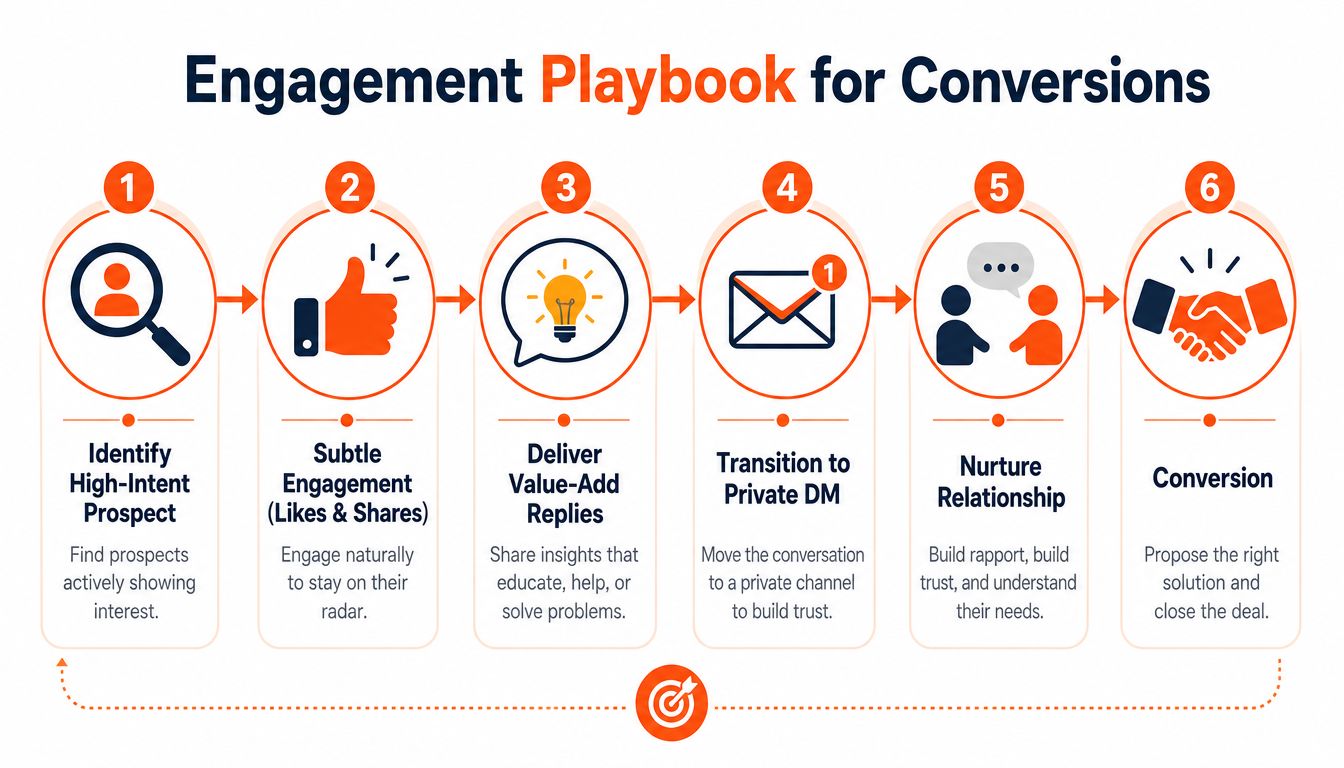
Consider a founder selling developer tooling to engineering leaders. A target prospect replies under a competitor thread complaining about setup friction.
The sequence should look like this:
First touch
Like the reply and another relevant post from the same person. No DM yet.Public value add
Reply with something useful that doesn't mention the product. Example: "That usually breaks when teams try to force one permission model across staging and production. Splitting those workflows tends to reduce confusion."Second interaction
A day or two later, engage with another post. Keep it specific. The goal is recognition, not volume.Warm DM
Only after the prospect has seen the name a few times should a direct message open the private conversation.
This is also where workflow speed matters. Teams that want a tighter process for discovering and responding to the right posts can use guides like how SupaBird Engage helps find and reply to the right posts on X faster as a reference for system design, even if they build their own stack.
Reply and DM examples that don't feel spammy
A useful public reply often does one of three things:
Clarifies the problem
Offers a small fix
Adds a missing decision criterion
Examples:
"A lot of teams call this a reporting issue when it's a permissions issue upstream."
"Worth checking whether the slowdown starts at the handoff, not the dashboard."
"If exports are the pain point, compare admin controls before comparing templates."
The DM should continue the same thread, not switch into a pitch deck.
Stage | Weak message | Better message |
|---|---|---|
Reply | "DM sent" | "That bottleneck usually starts earlier in the workflow" |
DM | "Want a demo?" | "Saw the note about setup friction. A short teardown of the workflow might help." |
DM rule: reference a specific post, make one observation, then offer one small next step.
A simple DM template:
Opening: "Saw the reply about export limits on the launch thread."
Observation: "It sounded like the bigger issue is team permissions, not just reporting."
Offer: "Happy to send a short checklist on how teams usually diagnose that, if useful."
That works because it feels earned. It also matches a relationship-first method. A more manual version of this process is outlined in Volumn's Twitter lead generation guide, which emphasizes public interactions before the warm DM and warns against generic outreach that gets flagged as spam.
Bridge Your X Activity to a Real Sales Funnel
Replies and DMs create interest. They don't create owned audience by themselves. The actual handoff occurs when an X conversation moves into email, a booked call, or a resource hub the brand controls.
Use lead magnets that match the conversation
The mistake here is offering a generic ebook after a very specific exchange. If a prospect complained about migration pain, the next step should feel like a continuation of that problem, not a marketing asset dropped from the sky.
Three lead magnets fit X especially well for technical and B2B audiences:
Checklist
Good for operational pain. Example: "Migration Readiness Checklist for RevOps Teams."Resource list
Useful when buyers are still comparing approaches. Example: "The evaluation sheet for choosing a support automation stack."Short workshop or teardown video
Best when the problem is hard to explain in text. Example: a short walkthrough on diagnosing attribution breaks between product events and CRM records.
A founder discussing support handoffs in replies shouldn't send traffic to a generic homepage. A focused checklist or teardown page is the cleaner bridge.
Keep the landing page focused
The landing page should continue the promise made on X. That means:
One headline tied to the pain point already discussed
One outcome the visitor will get
One conversion action only
Mobile-first layout because many visits start inside the X app
A simple structure works:
Headline that mirrors the problem language
A short paragraph explaining who it's for
Three bullets on what the resource covers
One form or one booking button
A weak bridge forces the prospect to re-interpret the offer. A strong bridge feels like the next logical click.
The best founders also weave these offers into pinned posts, occasional promotional tweets, and warm DMs so the transition off-platform doesn't feel abrupt. That's where Twitter stops being "good for awareness" and starts contributing to a real sales funnel.
Scale Your Efforts with Ads and Proper Measurement
Paid ads shouldn't be the starting point for lead generation on Twitter. They should amplify a message that already gets clicks, replies, and inbound interest organically. If the offer doesn't resonate in public posts and warm outreach, ads won't rescue it. They'll just make the mismatch more expensive.
Run ads only after the offer is proven
For a low-risk test, Alex Berman's Twitter lead generation ads guide recommends starting with a $50/day test budget, using two or three ad variations, one clear offer, and a landing page optimized for a single conversion goal, while installing the X Pixel before day one. That setup is disciplined for a reason. It isolates the offer and gives the account clean tracking from the beginning.

A founder with a working organic funnel can promote:
A proven lead magnet
A strong educational thread
A landing page tied to one painful use case
What shouldn't be promoted first:
A vague homepage
An offer with unclear audience fit
A post that only worked because friends engaged with it
Track business metrics not vanity metrics
Follower count can support credibility, but it doesn't validate a funnel. Better measurement asks whether X activity moved someone from attention to action.
A practical dashboard should track:
Link clicks from posts and profile
Lead magnet signups
Inbound leads attributed to X
Booked calls or qualified conversations
For teams that want better instincts on campaign reporting, especially when creative formats get looser or more culture-driven, this guide on Interpreting meme marketing campaign data is a useful reminder that distribution metrics only matter if they connect back to the conversion path.
The point isn't to turn X into a spreadsheet exercise. It's to know which threads, replies, offers, and ad variants are creating real movement.
SupaBird helps founders and marketers execute this playbook faster. It supports idea generation, scheduling, and smarter engagement workflows on X without turning the account into a generic automation feed. For teams that want a more consistent system for content, replies, and growth, SupaBird is worth trying.

The Reply Guy Strategy: A Growth Guide for X

Why New X Accounts Get Less Reach

ClimbX Review (2026): Features, Pricing, Pros and Cons

How Developer Startups Build a Brand on X Before Launch

30-Day Starting Plan for New X (Twitter) Accounts

How Often Should You Tweet for Maximum Growth?

What Should Your First 10 Tweets Be About?

How to Run X for Ten Clients: The Agency Workflow

How to write a bio that gets people to follow you
