
Stop Scrolling, Start Learning: The X Accounts That Build Businesses
Following strong accounts is the easy part. The key advantage comes from treating X like an apprenticeship feed. Study how great operators turn one idea into a hook, a thread, a reply magnet, and eventually a product, newsletter, or consulting pipeline.
That is the standard behind this list.
These accounts are not here because they are famous. They are here because each one teaches a repeatable skill. One is worth studying for thread structure. Another for audience research. Another for swipe-worthy examples, sharper positioning, or better buyer psychology. If you copy only their topics, you will sound derivative. If you study their formats, pacing, and audience signals, you can build your own system faster.
A curated feed matters because attention on X is uneven. Big follower counts often hide weak signal. For founders, marketers, and operators, engagement quality is the better filter. The account with fewer followers but strong replies, saves, and idea density usually teaches more than the account posting polished fluff.
Use this list actively. Save 3 posts per creator. Break down the hook, the structure, and the call to action. Rewrite one post in your own voice. Turn another into a reply. Turn a third into a short thread or carousel draft. If you want a stronger publishing system around that habit, this guide to growing on X from 0 to 10,000 followers pairs well with the frameworks below, and tools like SupaBird can help you collect patterns, repurpose winners, and keep the learning loop tight.
The goal is not better scrolling. The goal is better taste, better output, and better business results from what you study.
Table of Contents
1. Sahil Bloom

Sahil Bloom is worth following because his content is built around named frameworks. That's useful for founders and marketers because named ideas travel well on X. They make strong hooks, they're easy to remember, and they can be repackaged into threads, carousels, email intros, and short posts without losing clarity.
His biggest strength isn't platform trickery. It's compression. He takes broad topics like wealth, focus, energy, and decision-making and turns them into clean, repeatable formats. That gives smaller creators a practical model for writing posts that feel structured instead of improvised.
What to study from Sahil Bloom
A strong way to learn from Sahil Bloom is to reverse-engineer the format, not the topic. Look for three parts in his posts: a sharp premise, a memorable label, and a short explanation that makes the concept useful right away.
Borrow the naming habit: Turn vague advice into labeled frameworks. “Better meetings” is forgettable. “The two-question meeting filter” is easier to post and easier to share.
Mine one long idea into many short ones: A newsletter essay or article can become a thread opener, three standalone posts, and a visual summary.
Use contrast in hooks: Posts that compare two choices, two mindsets, or two paths usually create cleaner curiosity.
Practical rule: Don't copy the “razor” or framework name. Copy the packaging logic. Name the pattern in a way that fits the audience's actual problem.
One useful trade-off to understand is that Sahil Bloom's advice is broad by design. That makes it ideal for idea generation, but it often needs translation into X-specific moves like reply strategy, thread pacing, or profile positioning. That's where a workflow matters.
A founder studying his feed could take one framework post, rewrite it for a narrower audience, and then schedule three variants. A creator using SupaBird's guide to grow on X from 0 to 10,000 followers can map those framework ideas into a repeatable publishing plan instead of treating each post as a one-off.
2. Justin Welsh
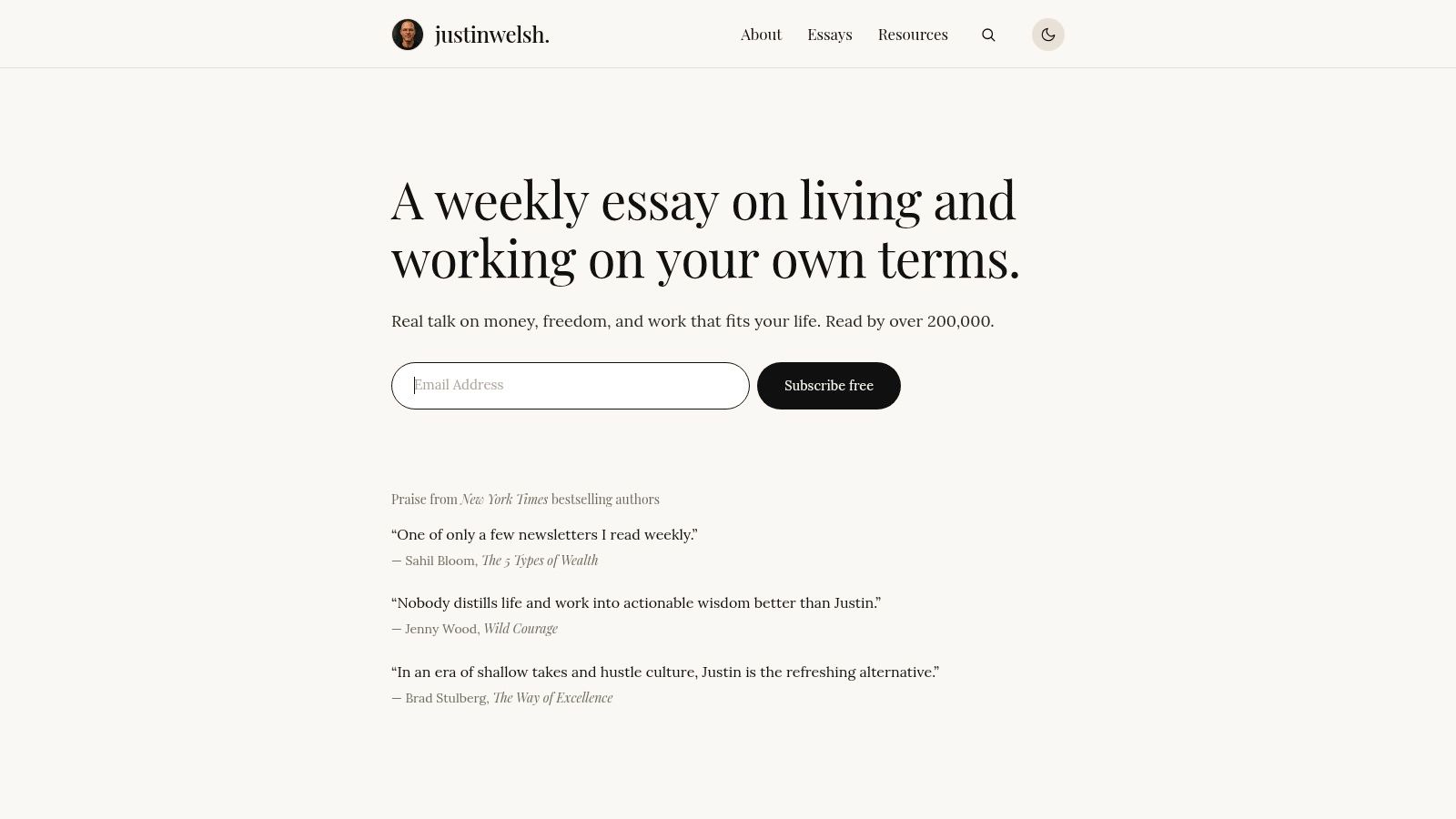
Justin Welsh is a strong follow for founders who need a repeatable publishing process. His value on X is not raw creativity. It is disciplined packaging. He takes one business idea, gives it a clear angle, and publishes it in enough formats that the message sticks.
That matters because founders rarely struggle with having nothing to say. They struggle with turning experience into posts people can understand in seconds. Justin's feed is useful because it solves that translation problem.
How to learn from Justin Welsh without copying him
Study his content like an operator studying a workflow. Start with the source idea, then track how it gets compressed, expanded, and reframed. A longer essay can become a short opinion post, a checklist, a thread, and a personal story. The lesson is to build ideas with enough structure that they can survive different formats without losing clarity.
That is the practical framework to borrow:
Start with one sharp claim: Pick a single belief, mistake, or lesson your audience cares about.
Create three format versions: Write it as a one-line opinion, a short list, and a story from experience.
Keep the wording consistent: Repetition works when the core promise stays intact across posts.
Match the profile to the content: If your posts promise one thing and your bio promises another, the conversion path breaks.
One useful constraint in Justin's style is that every post usually does one job. It teaches, frames, or persuades. It does not try to do all three at once. That makes his feed a good model for creators who write crowded posts with too many ideas competing for attention.
A simple exercise helps. Take one lesson from your week, such as a failed launch, a sales call insight, or a hiring mistake. Write a direct takeaway. Turn it into a three-bullet checklist. Then rewrite it as a short story with a clear before-and-after. If you need help turning that into a repeatable publishing cadence, use a social media content strategy that maps one idea across multiple post formats.
The trade-off is real. Justin's free content is strong on principles and structure, but lighter on platform-specific mechanics like reply strategy, timing, or how to build momentum from smaller accounts. Newer creators often need that extra layer. A practical complement is SupaBird's build in public guide for indie hackers on X, especially if you want to turn day-to-day operating work into posts that attract the right audience.
3. Amanda Natividad
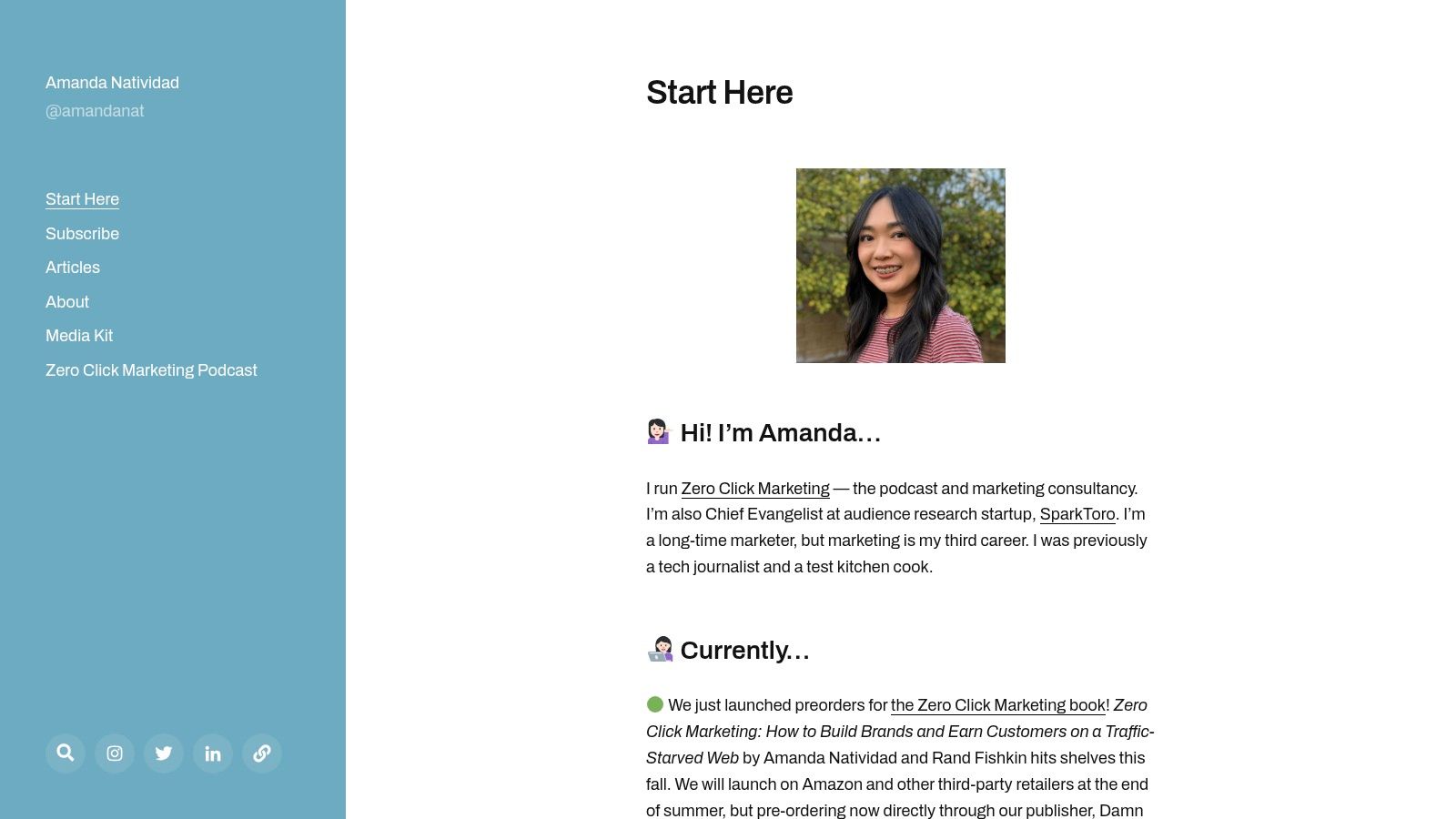
Amanda Natividad stands out because she teaches a skill many creators ignore. She shows how to make content valuable without forcing the audience to leave the platform. That's a direct fit for X, where a post often performs better when the payoff happens in-feed.
Her “zero-click” orientation is especially useful for marketers who keep writing teaser posts that say almost nothing. On X, those posts often read like ads for a blog post nobody asked to open. Amanda Natividad's work pushes in the opposite direction. Give away the good part first, then earn trust and future attention.
What Amanda Natividad teaches better than most creators
Her feed is best studied through message-market fit. Instead of obsessing over thread structure, study how she frames a problem so the right reader feels seen immediately. That's often what separates a post that gets polite likes from one that gets replies from the exact people a founder wants to attract.
A practical exercise works well here. Take a product update or marketing lesson and write it three ways:
Audience-first version: Start with who the advice is for.
Pain-first version: Start with the mistake or friction point.
Insight-first version: Start with the surprising lesson.
Then compare which version sounds most native to X, not which version sounds most polished.
Field note: Platform-native content usually answers the reader's question inside the post. It doesn't hide the answer behind a click.
This is one of the best Twitter accounts for marketers who want better engagement without relying on endless thread writing. The trade-off is that Amanda Natividad focuses more on resonance than on thread engineering. That's a strength if the underlying problem is weak positioning, but it won't replace a tactical posting workflow on its own.
For teams building a more complete content process, SupaBird's article on winning social media content strategy is a useful companion because it helps turn platform-native ideas into a publishing rhythm.
4. Marketing Examples (Harry Dry)

Marketing Examples is the fastest shortcut on this list from “I need an idea” to “I can post something today.” Harry Dry's strength is showing copy and creative in a form that's easy to steal from ethically. The examples are concrete, visual, and usually small enough to absorb in minutes.
That matters because many founders don't need more theory. They need better source material. Marketing Examples supplies that with screenshots, before-and-after rewrites, and punchy observations that can quickly become tweet hooks.
How to use Marketing Examples without becoming derivative
The right move isn't to repost the example with a thin opinion on top. The better move is to convert the lesson into a new use case. If the original example is about homepage copy, rewrite the principle for a founder bio, a launch tweet, or a three-post sequence.
A simple adaptation workflow works well:
Identify the mechanism: Is the example using contrast, specificity, novelty, or clarity?
Change the context: Apply that mechanism to X content, not web copy.
Change the voice: Rewrite it in the language the audience already uses in replies and DMs.
This account is one of the best Twitter accounts for daily practice because it lowers the cost of getting started. A marketer can take one example from the archive and turn it into a post draft, a thread hook, and a reply angle in the same session.
The downside is that Marketing Examples isn't X-specific. That's not fatal, but it does create work. A landing-page lesson doesn't automatically become a strong tweet. The creator still has to strip away extra detail and preserve the most interesting tension.
The archive is the real asset. When the feed is quiet, the swipe file still works.
5. Julian Shapiro
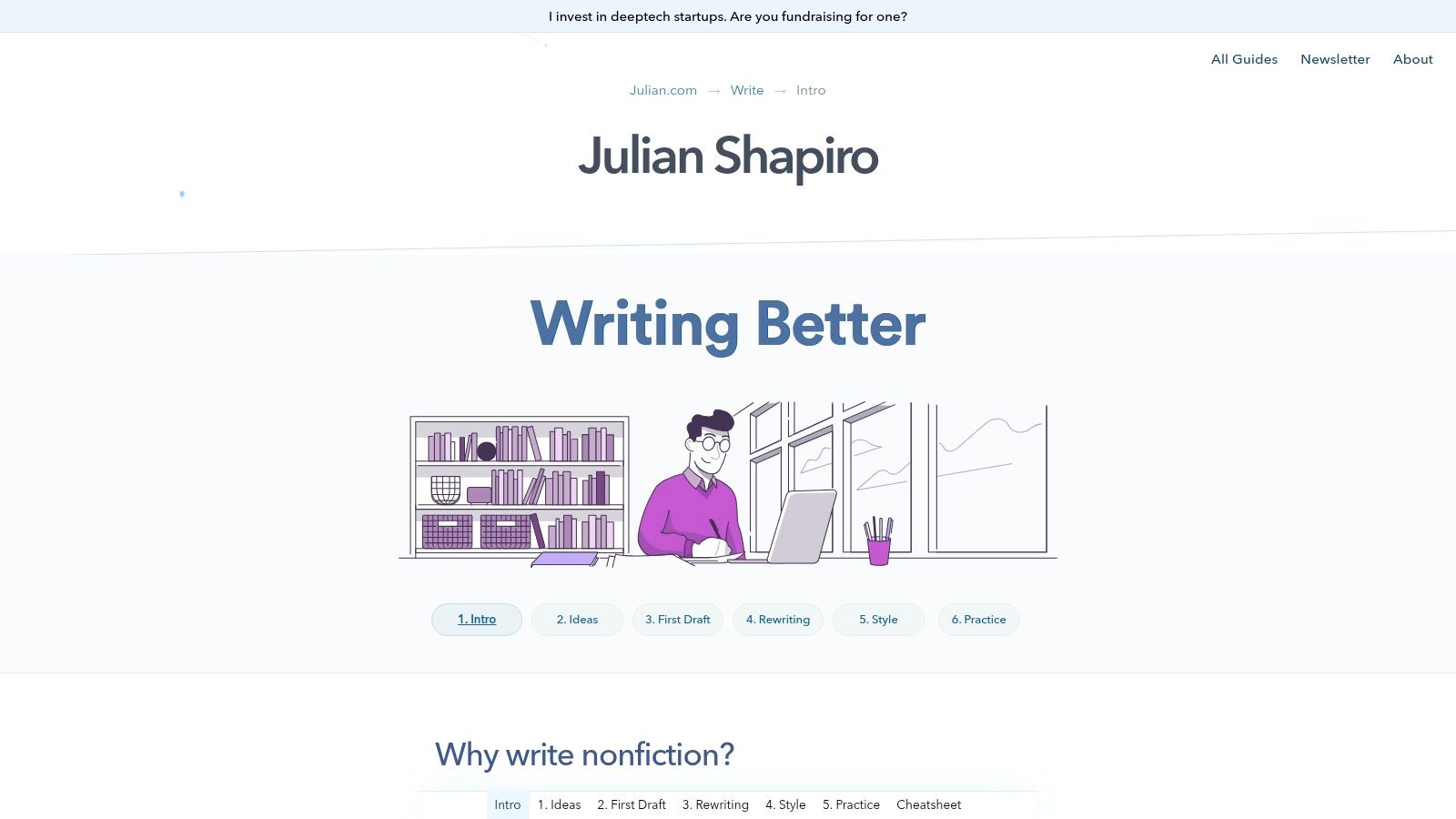
Julian Shapiro's writing guide is less about growth hacks and more about craft. That's exactly why it belongs on a list of the best Twitter accounts and resources for founders. Better writing increases retention, clarity, and shareability long before any tactic matters.
His material is especially useful for creators whose posts are technically correct but forgettable. The problem usually isn't knowledge. It's sentence shape, abstraction, and weak editing. Julian Shapiro helps fix that.
How Julian Shapiro improves thread quality
The practical lesson from his work is that strong writing is rewritten writing. Threads often underperform because the author publishes the first decent version instead of pushing toward the clearest one. Julian Shapiro's systems encourage revision, sharper examples, and stronger wording choices.
A founder can apply his approach immediately:
Cut generic nouns: Replace “strategy,” “value,” and “results” with what happened or what the reader does.
Prefer vivid phrasing: The best lines in a thread are usually concrete enough to picture.
Edit the first line hardest: If the opening post is weak, the rest of the thread never gets a fair chance.
This account is most useful for people who already post and now need to raise the baseline quality. It's less useful for someone who wants plug-and-play X tactics by tomorrow morning. His advice takes time to absorb because it changes how a creator thinks, not just what they publish.
That's the trade-off. Less tactical urgency, more durable improvement. For founders trying to build authority instead of chasing random spikes, that's usually a good trade.
6. Ship 30 for 30 (Dickie Bush)
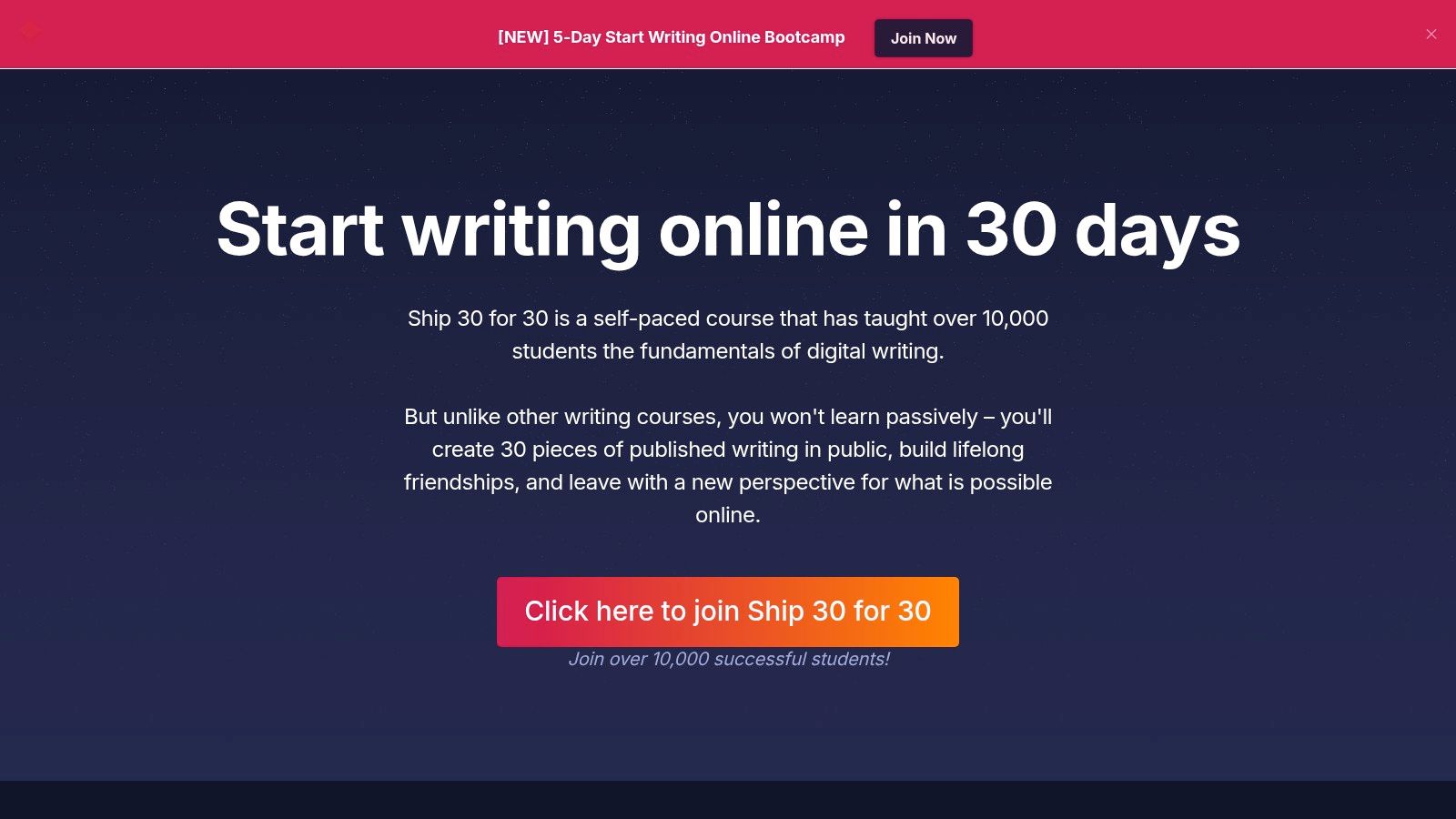
Ship 30 for 30 belongs on this list because consistency is still one of the clearest advantages on X. A lot of founders do not have an idea problem. They have a shipping problem. Dickie Bush built an ecosystem around fixing that through short daily writing, public iteration, and repetition that turns vague expertise into usable content.
The part worth studying is not just the account. It is the operating model behind it.
The best lesson from Ship 30 for 30
The core framework is the atomic essay. One compact idea. One clear takeaway. One post that can stand on its own, then expand into a thread, newsletter section, lead magnet, or sales angle later. That matters because founders often wait until an idea feels complete. Ship 30 teaches the opposite habit. Publish the smallest version that is still useful, then let audience response tell you what deserves a second draft.
That gives you a practical way to learn from Dickie Bush instead of only reading him:
Write one atomic post each day: Capture a single lesson from a client call, failed experiment, or repeated question.
Tag the post by theme: Messaging, sales, hiring, product, positioning. After two weeks, your best categories become obvious.
Expand only proven ideas: If a short post gets replies, saves, or profile clicks, turn it into a thread or newsletter issue.
Reply with extensions: Use comments to add examples, objections, or a contrarian angle. That often reveals the next post.
This is also one of the easiest accounts to model at the format level. Short punchy posts. Clear premise. Clean takeaway. Low production overhead. For early-stage creators, that format is useful because it removes the excuse that every post needs research, design, or a seven-part thread.
There is a trade-off. A cadence-first approach can produce a lot of competent content that nobody remembers. Daily posting helps you find signal faster, but only if the packaging earns the click. Studying a practical guide to writing stronger hooks on X helps tighten the first line, and tools like SupaBird can make it easier to track which formats, topics, and hooks are worth repeating.
Follow Dickie Bush if you need a publishing system more than inspiration. His account is strongest for founders and operators who already have ideas, but need a repeatable way to turn those ideas into assets.
7. Customer Camp / Why We Buy (Katelyn Bourgoin)

Katelyn Bourgoin's Why We Buy is one of the most useful accounts and resources on this list for a simple reason. Buyer psychology travels well across formats. A strong understanding of why people care, hesitate, compare, or delay gives founders better hooks and better offers on X.
A lot of creators study top accounts and copy style before they understand motivation. That usually leads to polished posts with weak pull. Katelyn Bourgoin's work helps correct that by grounding messaging in customer behavior rather than surface-level content tricks.
How to apply buyer psychology on X
The best way to use her material is to rewrite posts around the moment before purchase, sign-up, or reply. Instead of leading with product features or general advice, lead with a friction point the reader already feels.
Three useful rewrites come from that approach:
From feature to trigger: Don't post “new analytics dashboard.” Post the frustration that made the dashboard necessary.
From lesson to tension: Don't post “content consistency matters.” Post the cost of inconsistent publishing.
From claim to diagnosis: Don't say a funnel is broken. Describe the symptom the audience already recognizes.
This is especially valuable because a lot of “best Twitter accounts” lists still function like directories. They tell readers who is famous in a niche, but not how to identify high-signal accounts or turn lessons into action. Even the broader discussion around the platform points toward this gap. A recurring contrarian point on X is that some of the best accounts are “minuscule” in follower count. That's a useful reminder to value idea density and reply quality over status.
The limitation is that Katelyn Bourgoin's feed isn't focused on X mechanics. The user has to convert psychological insight into platform-native writing. For founders launching offers, though, that extra step is worth it because stronger buyer language improves almost every post format.
Top 7 Twitter Accounts Comparison
Creator / Resource | Implementation complexity | Resource requirements | Expected outcomes | Ideal use cases | Key advantages |
|---|---|---|---|---|---|
Sahil Bloom | Low–Medium, principle-to-platform translation needed | Low, newsletters, frameworks, library | Repeatable frameworks and steady idea flow | Educational threads, carousels, newsletters | Memorable mental models and evergreen formats |
Justin Welsh | Medium, apply templates and workflows systematically | Low–Medium, essays, templates, time to iterate | Templatized content and clearer positioning | Systematic content schedules and repurposing | Leverage-focused playbooks and clear CTAs |
Amanda Natividad | Low–Medium, tactical, platform-native adjustments | Low, short playbooks, podcast examples | Higher in-feed engagement and message-market fit | Zero-click posts, quick experiments, positioning | Strong POV on platform-native attention tactics |
Marketing Examples (Harry Dry) | Low, direct copy and visual inspiration | Low, archive of examples and screenshots | Sharpened short-form copy and daily prompts | Swipe files, copy teardowns, creative hooks | Highly actionable visual examples and rewrites |
Julian Shapiro | Medium–High, craft requires practice and iteration | Medium, long handbooks and time investment | Clearer, more shareable writing and thread quality | Editing, idea pipelines, polishing threads | Rigorous writing systems and reusable templates |
Ship 30 for 30 (Dickie Bush) | Low–Medium, cadence-focused discipline | Medium, community/course participation | Consistent publishing habit and rapid idea output | Building frequency, beating writer's block | Cadence-first system with accountability and prompts |
Customer Camp / Why We Buy (Katelyn Bourgoin) | Medium, convert research into messaging | Medium, research tools, workshops, examples | Stronger hooks and conversion-oriented copy | Product launches, positioning, market-specific hooks | Research-backed buyer psychology and frameworks |
From Follower to Founder Your Action Plan
Following better accounts is the easy part. Learning from them in a way that changes output is what matters. The fastest path is to pick one or two accounts from this list and study them for a week with a narrow lens. One week can focus on hooks. Another can focus on post formats. Another can focus on how they answer comments and turn replies into relationships.
A simple system works better than a long one. Save a handful of posts from one creator. Break them down into components. What's the opening line doing. Is it creating tension, naming a mistake, or promising a shortcut. What format is repeated most often. Lists, short contrarian takes, mini-stories, or framework posts. Once those patterns are visible, write original posts using the same structure but different substance.
That's the key difference between passive consumption and active growth. The best Twitter accounts don't just entertain the feed. They provide building blocks. Sahil Bloom helps with packaging ideas. Justin Welsh helps systematize content. Amanda Natividad improves platform-native messaging. Marketing Examples sharpens copy instincts. Julian Shapiro improves craft. Ship 30 for 30 builds publishing discipline. Katelyn Bourgoin strengthens buyer-focused angles.
There's also a practical selection lesson behind this list. Audience size still matters on X, but it isn't the whole story. Static niche roundups often miss the higher-value question: which accounts produce high signal per follower, consistent ideas, and useful reply behavior. That gap shows up across older curated follow lists, including narrower niche guides such as Nielsen Norman Group's roundup of Twitter accounts for UX professionals. A founder or marketer needs more than names. A founder or marketer needs criteria.
For creators building that process, SupaBird can fit naturally into the workflow. Its Ideas Lab can help model patterns from favorite creators, and its Engage module can help surface conversations worth joining. That's useful when the goal is to move from reading great content to publishing and participating consistently.
For the broader brand layer behind that work, Sight AI's guide to branding is a solid companion read. Strong posts attract attention. Clear positioning turns that attention into recognition.
Start with one account. Study the mechanics. Publish the adaptation. Repeat until the feed becomes a training ground instead of a distraction.
SupaBird helps creators turn observation into execution on X. Its tools support idea generation, post rewriting, scheduling, and engagement workflows, which makes it a practical option for founders and marketers who want a more consistent system for applying what the best Twitter accounts do well.

How Developer Startups Build a Brand on X Before Launch

30-Day Starting Plan for New X (Twitter) Accounts

How Often Should You Tweet for Maximum Growth?

What Should Your First 10 Tweets Be About?

How to Run X for Ten Clients: The Agency Workflow

How to write a bio that gets people to follow you

Digital Product Launch Strategy

Best Twitter Growth Service for Creators in 2026

From X to Every Platform: Repurpose Without Flopping
