What Are Impressions on Social Media: 2026 Guide
Impressions are the total number of times a post is displayed on a screen, not the number of unique people who saw it. If the same person sees the same post twice, that counts as 2 impressions, which is why impressions are usually higher than reach.
A simple way to think about it is this. Impressions are how many times your post showed up on screens, while reach is how many distinct people got that chance to see it. That sounds basic, but it's where many creators get stuck. They open analytics, see a big impressions number, and still can't tell whether the post worked.
That confusion matters because social media is now a major discovery channel. Statista projects that global social media users will approach 5.75 billion in 2026, and Sprinklr reports that 58% of consumers discover new businesses via social media, which makes impressions an early signal of whether a platform is giving a creator visibility at all (social media marketing data). For creators who want clients, authority, and qualified attention, impressions aren't the finish line. They're the first checkpoint.
On X in particular, that distinction is brutal and useful. A post can rack up impressions because it got distributed into feeds or surfaced in search, while replies, follows, and clicks stay flat. That doesn't always mean the post failed. It means the creator needs to read the metric correctly.
For anyone trying to get more precise about that, tools focused on SuperX analytics for impressions can help make the visibility side easier to inspect before judging the post itself.
Table of Contents
Introduction Why Impressions Are a Social Media Double-Edged Sword
Impressions vs Reach vs Engagement Decoding the Core Metrics
Actionable Tactics to Increase Your Impressions Strategically
Introduction Why Impressions Are a Social Media Double-Edged Sword
The impressions number can feel like either a win or a trap.
A creator posts on X, checks analytics a few hours later, and sees that the platform delivered the post widely. That feels promising. Then the rest of the dashboard tells a different story. Replies are quiet, profile visits are weak, and follower growth barely moves. The post got seen, but it didn't pull people anywhere useful.
That's why impressions are a double-edged metric. On one side, they confirm whether the platform is distributing the content at all. On the other, they can inflate confidence when the underlying content didn't create action. A creator who treats impressions as proof of quality usually makes bad decisions fast.
Practical rule: Treat impressions as a visibility meter, not a verdict on whether the post was strong.
This matters even more on X because repeated exposure can blur the picture. A post may show up multiple times to the same slice of people. That can be useful when the goal is recall or reinforcement. It's less useful when the goal is expanding authority, earning followers, or getting inbound leads from new people.
The smarter move is to use impressions diagnostically. If they're low, the platform likely didn't surface the post much. If they're high and everything else is flat, the distribution happened but the message, audience fit, or offer likely broke somewhere after that first screen impression.
Why creators misread the metric
Most beginner explanations stop at “impressions are how many times your content was shown.” That definition is correct, but incomplete. It doesn't answer the question creators care about. Was this visibility valuable?
A useful interpretation starts with this distinction. Impressions tell a creator that content got a chance. They don't tell whether the audience cared. That difference is where strategy starts.
Impressions vs Reach vs Engagement Decoding the Core Metrics
The fastest way to understand these metrics is to stop looking at dashboards and picture a highway billboard.
The billboard analogy that makes this click
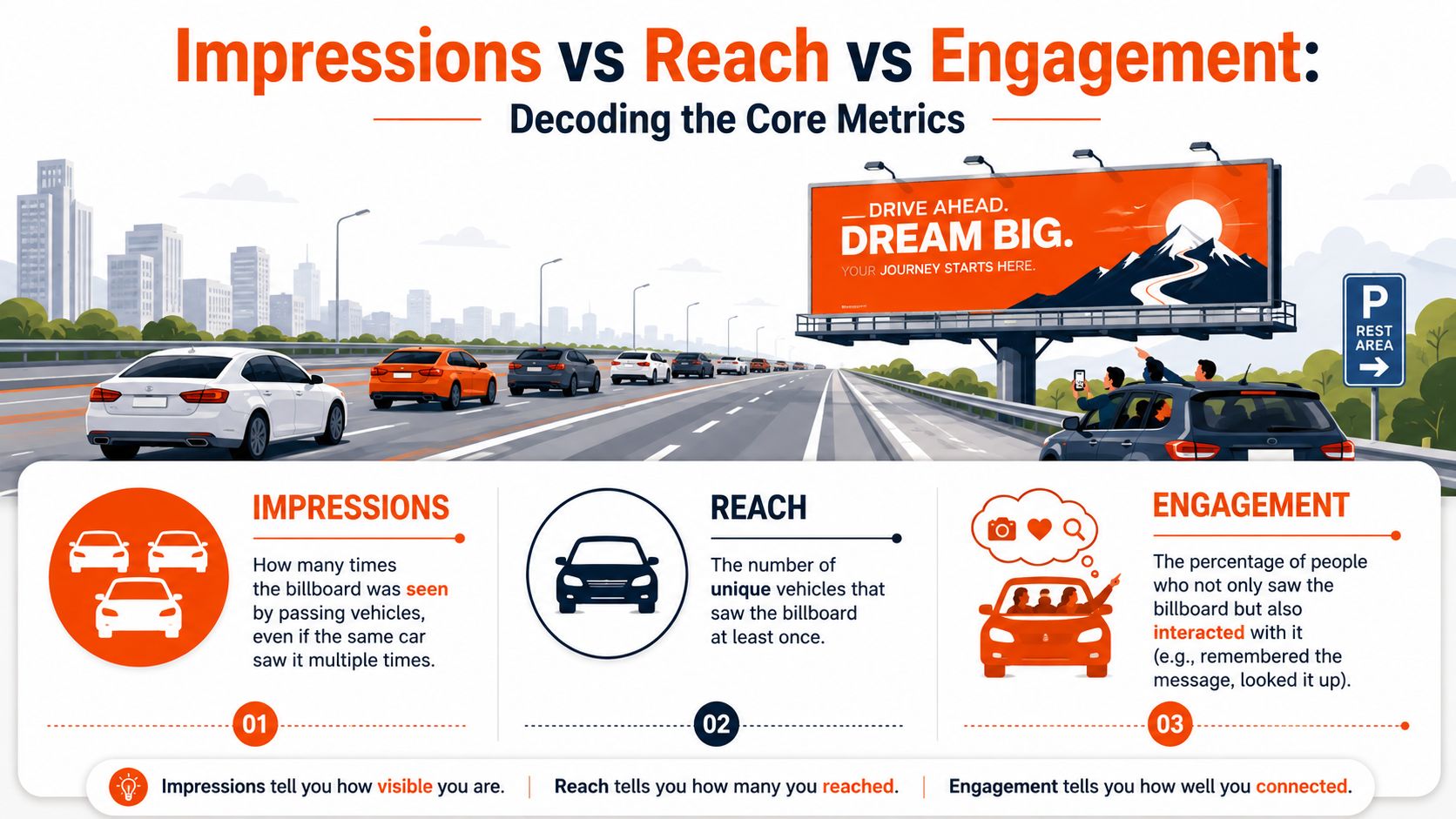
A billboard can be passed many times by the same driver. That's impressions. It's a frequency metric. On social platforms, impressions count the total number of times content is displayed or seen, while reach counts unique people. The same user can generate multiple impressions if the post reappears in their feed, which makes impressions a better proxy for repeated exposure than audience size alone (reach vs impression definitions).
Reach answers a different question. How many distinct people had at least one chance to see the post?
Engagement is a third layer entirely. It asks whether anyone did something after the content appeared. That might mean liking, replying, saving, clicking, watching longer, or following. A creator can have decent impressions and weak engagement when the platform surfaced the post but the content didn't earn attention.
For creators who publish video, a practical companion read is this guide for video creators on engagement, especially when the problem isn't visibility but what happens after visibility.
How to read these metrics together
The common mistake is reading each metric in isolation. That usually leads to the wrong diagnosis.
Metric | What it answers | What it doesn't tell you |
|---|---|---|
Impressions | Was the content displayed often? | Whether people cared |
Reach | How many unique people saw it at least once? | Whether repeated exposure happened |
Engagement | Did people interact? | Whether the platform distributed it broadly |
This creates a few practical scenarios:
High impressions, low reach: The same people may be seeing the content multiple times.
Low impressions, strong engagement: The message works, but distribution is limited.
High reach, low engagement: New people saw it, but the content didn't resonate.
High impressions and high engagement: The platform surfaced it and the content earned attention.
A strong post isn't just seen. It gives viewers a reason to stop, react, and remember.
For creators on X, an analytics check becomes useful rather than emotional. A post with soft engagement but strong visibility may need a better opening line, clearer positioning, or a more specific claim. A post with strong engagement from a small audience may need better timing, more consistent posting, or stronger participation in visible conversations. Tools such as X account analysis can help inspect patterns without relying on guesswork.
How Each Social Media Platform Counts Impressions
Creators often compare impression counts across platforms as if every app measures the same thing. They don't.
What stays consistent across platforms
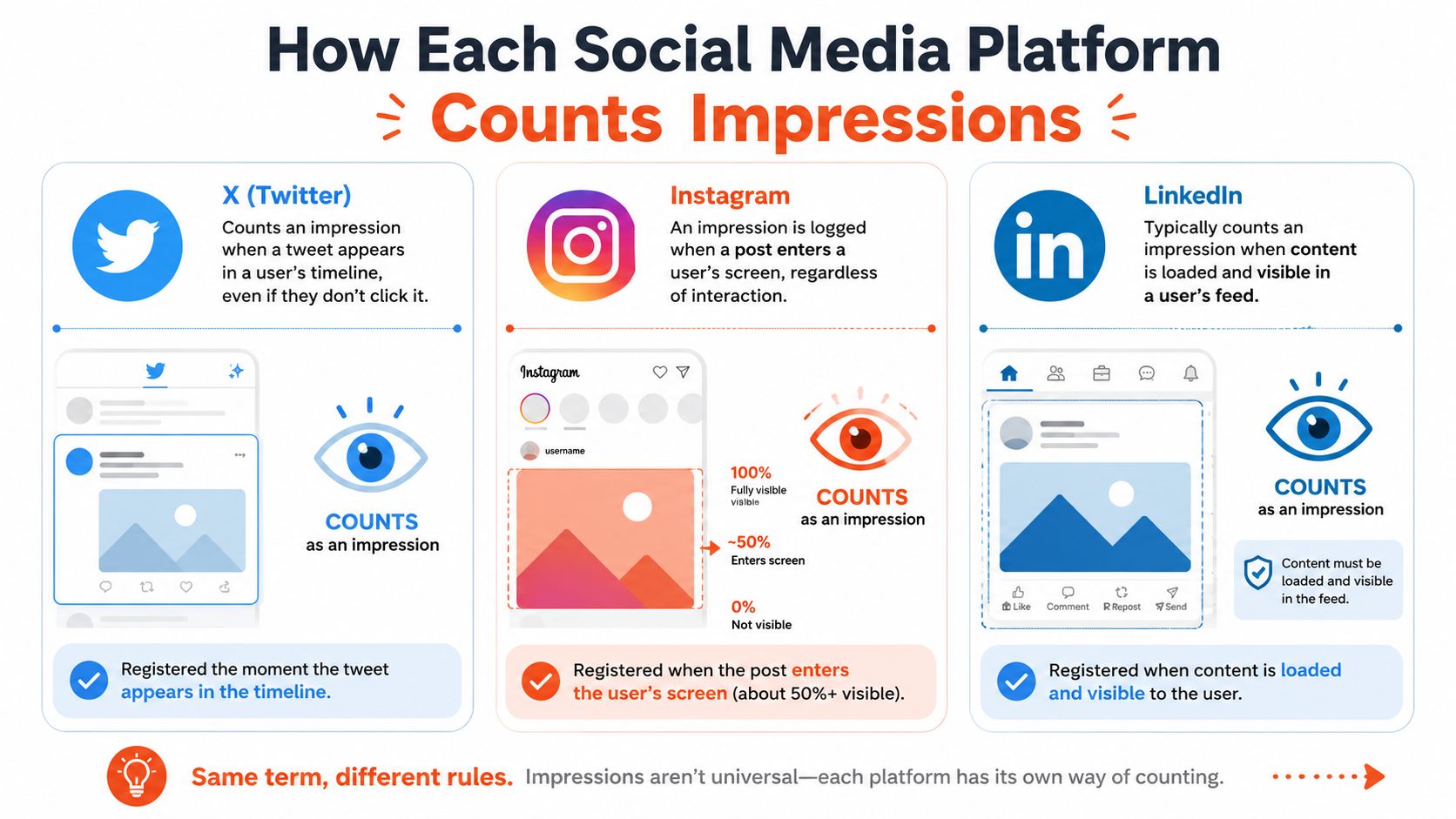
Across paid and organic distribution, impressions are typically counted when content is delivered to a feed or screen, not when a user clicks, reacts, or watches the full piece. That's why impressions work as a top-of-funnel diagnostic. They tell a creator whether the platform surfaced the post at all (how impressions are counted on social media).
That basic principle applies whether someone posts on X, Instagram, LinkedIn, Facebook, or TikTok. A display event comes first. Deeper actions come later, if they come at all.
This is why a creator can watch impressions rise while the post still feels dead. Distribution and persuasion are different jobs. The platform handles the first part. The content has to earn the second.
Where creators make bad comparisons
The trouble starts when creators compare one platform's impression number against another and assume the bigger number means the content performed better. That can push strategy in the wrong direction.
On X, impressions often align closely with feed visibility and search visibility. A post can pick up repeated exposures as users revisit feeds, search terms, or conversations. That makes X useful for testing hooks and distribution patterns, but it also means the same audience can drive the number up without meaningful audience expansion.
Instagram and Facebook also log impressions around on-screen delivery, but the surfaces can vary. Feed, profile, search, recommendations, and paid placements can all influence where those displays come from. TikTok adds another wrinkle because the delivery environment is highly recommendation-driven. A creator may get a quick burst of visibility, then see the post stall if retention or interaction doesn't hold.
LinkedIn impressions often get interpreted as “people read my post,” which is too generous. A creator should assume the metric means the post was loaded and visible enough to count, not that the user absorbed the idea, agreed with it, or remembered the brand.
A better operating rule looks like this:
Compare impressions within the same platform. Week-over-week and format-to-format comparisons are useful there.
Separate organic and paid visibility. Mixed reporting hides what content earned on its own.
Track source context. Feed impressions, search impressions, and profile-driven impressions can imply different user intent.
Judge downstream behavior next. Profile visits, clicks, replies, saves, and follows tell whether that exposure mattered.
The same number can mean different things on different platforms. Context decides whether the metric is useful or misleading.
For a creator building authority across channels, impressions are best used as platform-specific diagnostics, not universal scorecards.
The Pitfall of High Impressions and Low Engagement
High impressions with weak engagement frustrate creators because the number looks like success from a distance.
Why this gap happens
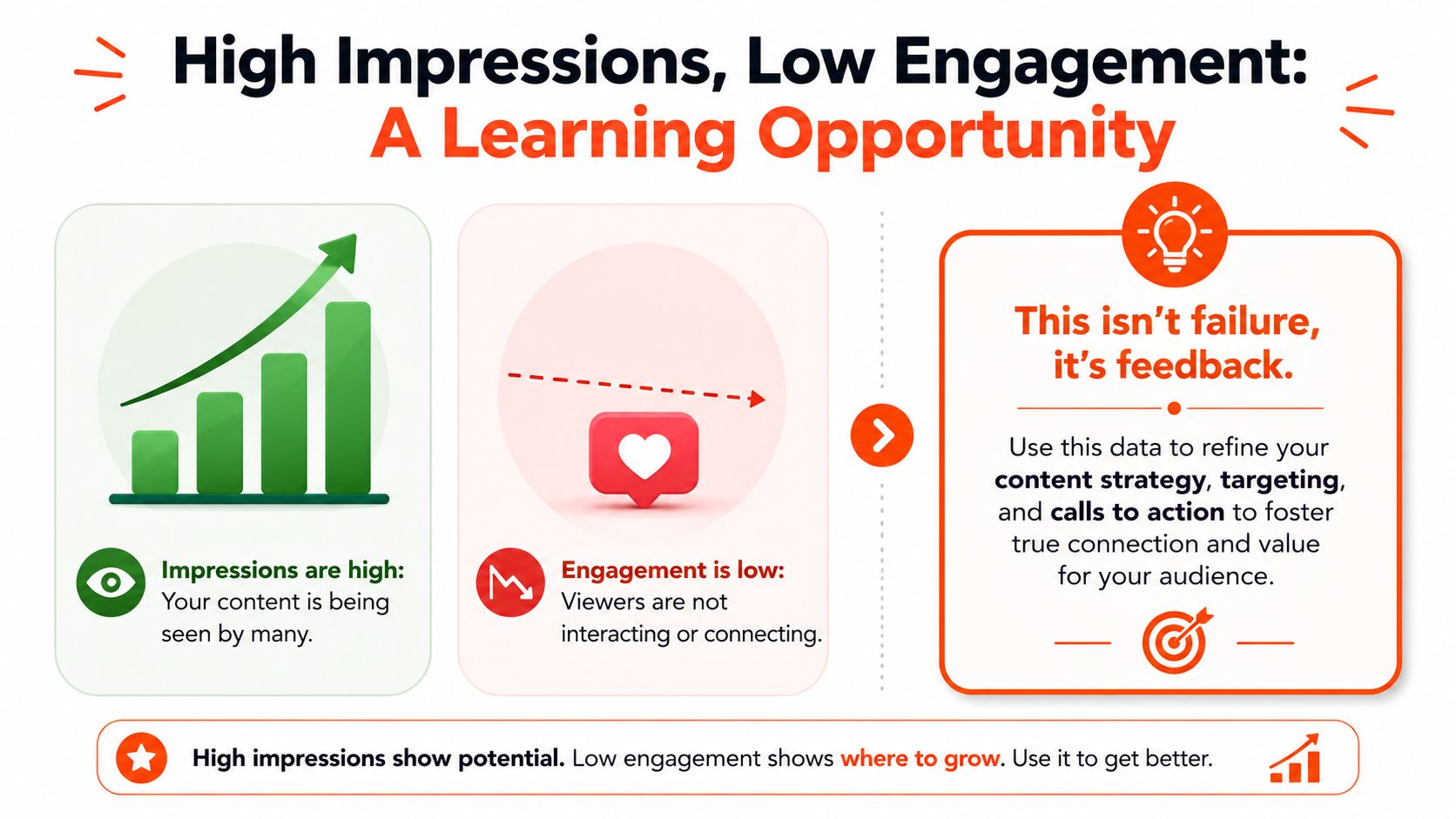
A common challenge for creators is interpreting that exact pattern. The right way to frame it is simple. Impressions are a distribution signal, not a quality score, because they only capture display events and don't measure whether users read, remembered, or acted on the post (high impressions low engagement explained).
That means high impressions can point to several different problems.
The hook didn't stop the scroll: The platform delivered the post, but the opening line didn't earn attention.
The post reached the wrong people: Visibility happened, but audience fit was weak.
The content made a point without tension: People saw it and moved on.
The CTA was vague: The post created interest but didn't direct any action.
On X, this shows up constantly when creators write posts that are broadly visible but thin on specificity. Generic advice can travel into feeds because the format is familiar, yet still fail to trigger replies, follows, or clicks.
What to fix first
The first correction usually isn't “get more impressions.” It's “make the current impressions count.”
A useful triage order looks like this:
Rewrite the opening line. If the first sentence doesn't create curiosity, conflict, or relevance, most viewers won't care what comes next.
Tighten the promise. Posts that try to say everything often persuade nobody.
Match the post to intent. A thought-leadership post, a client-attraction post, and a conversation-starting post need different structures.
Review frequency effects. If the same audience keeps seeing the post, the number may rise without expanding reach.
For creators trying to improve the stop-scroll factor on X, studying stronger hooks for Twitter posts is often the fastest fix because the issue usually begins before the body copy has any chance to work.
High impressions with low engagement usually mean the platform did its part. The post didn't finish the job.
Actionable Tactics to Increase Your Impressions Strategically
Impressions are worth increasing when they create more qualified attention, not when they just make the dashboard look healthier.
Sprout Social notes that more impressions aren't always better. If a creator's audience is highly repeated, rising impressions may reflect frequency rather than expansion. The more useful question is whether impressions are translating into unique reach, engagement, and follower growth (why more impressions aren't always better).
That framing changes the playbook. The job isn't to force raw visibility. The job is to increase useful visibility.
Tactics that improve distribution without chasing vanity
A few moves work across most platforms because they improve discoverability and clarity at the same time.
Use clearer topic signals. Keywords in the first line, caption, or on-screen text help platforms and users place the content quickly.
Choose formats the platform already distributes well. Native formats usually get more consistent opportunities than awkward reposted assets.
Publish with consistency. One strong post can spike. Repeated publishing gives the platform more chances to understand who should see the content.
Polish the profile. If a post earns attention, the profile has to convert that attention into follows, inquiries, or clicks.
Visual identity also matters more than many creators admit. Better profile photos, cleaner avatars, and stronger presentation can increase trust once a viewer lands on the profile. For creators reworking that layer, this piece on AI headshots for social media is a practical reference point.
X specific moves that create better impressions
X rewards distribution patterns that many creators underuse.
First, strong hooks matter more than long explanations. If the opening line can't win the first second, the rest of the post won't matter. Second, replies are a visibility lever. Thoughtful replies on relevant posts can put a creator in front of adjacent audiences without waiting for their own post to do all the work.
Third, threads can extend exposure when each line earns the next click. A weak thread opener kills the whole chain. A sharp opener paired with tight sequencing gives the platform more opportunities to keep the post visible.
Here's a practical workflow:
Start with one sharp claim. Not a topic. A claim.
Turn it into two versions. One punchy single post, one short thread.
Reply to adjacent conversations. Use the same core idea where it naturally fits.
Check what converted. Don't stop at impressions. Look for profile visits, follows, and replies.
A structured content system helps here. Some creators use spreadsheets, native scheduling, and manual swipe files. Others use tools that package ideation, rewriting, scheduling, and performance review in one place. One option is social media content strategy workflows, especially for creators who want repeatable X output without rebuilding the process every week.
A short tactical breakdown can also help before posting:
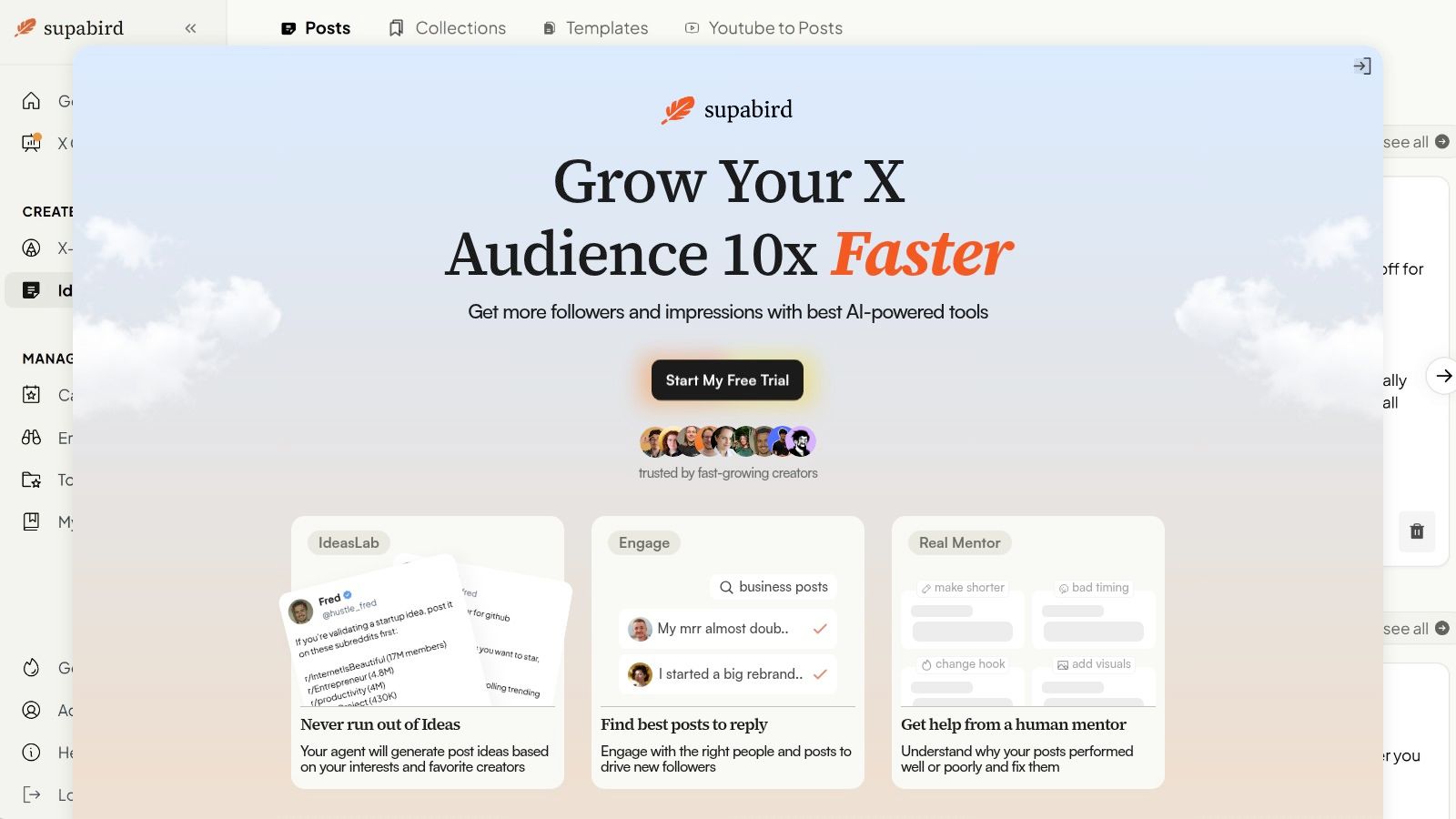
Used well, tools should make the process tighter, not noisier. SupaBird, for example, combines idea generation, reply discovery, draft rewriting, scheduling, and performance coaching for X. That's useful when the goal is not just publishing more, but testing hooks, timing, and conversation placement in a consistent workflow.
Conclusion From Tracking Impressions to Driving Real Growth
The question “what are impressions on social media” has a simple definition and a harder implication.
The definition is straightforward. Impressions count how many times content was displayed. The implication is where creators either build momentum or waste months. A post that gets seen isn't automatically a post that builds authority, earns trust, or generates clients.
The useful mindset shift is this. Impressions are a compass. They are not the destination. They tell a creator whether the platform gave the content a chance. After that, the essential work is judging whether the message converted that chance into attention and action.
That leads to a cleaner way to evaluate any post:
Check distribution first. Did the platform surface it?
Check audience response next. Did people engage?
Check business relevance last. Did it drive profile visits, followers, conversations, or demand?
Good creators don't just track metrics. They use them to make the next post sharper.
On X, that discipline matters because fast feedback can be misleading. A big impression number can create false confidence. A modest number with strong replies and profile activity can be more valuable. The creators who grow steadily are usually the ones who treat analytics as operating signals, not emotional proof.
For anyone building a more deliberate system around content, distribution, and post analysis, resources on Twitter growth service strategies can help connect metrics to repeatable execution.
SupaBird is an AI-powered tool for creators who want a more structured X workflow. It combines idea generation, high-visibility reply discovery, draft rewriting, scheduling, and coaching so content decisions aren't based on guesswork alone. For teams and solo creators trying to turn impressions into follower growth and qualified attention, SupaBird is one practical option to evaluate.

Digital Product Launch Strategy

Best Twitter Growth Service for Creators in 2026
From X to Every Platform: Repurpose Without Flopping

How to Get Cited by Grok: Winning X’s AI Search in 2026

5 X (Twitter) Growth Metrics Every Serious Creator Should Track — and How to Get the Data
Best Twitter (X) Scheduling Tools in 2026

Best X (Twitter) Growth Tools in 2026

Twitter Growth Hacking Tips 2026
How to Get More Followers on X (Twitter) in 2026
