Social Media Engagement Strategies: Boost Your Reach 2026
Author:

Likes still matter, but they are a weak operating metric.
What drives reach, trust, and revenue now is sustained interaction. Replies that lead to more replies. Posts that attract saves, profile visits, and direct messages. Content that gives the algorithm clear evidence that people want to spend time with your brand, not just tap once and scroll.
Buyer behavior has already shifted in that direction. Social platforms now shape product research, brand perception, and repeat attention long before a sales call or checkout page. Teams that treat engagement as a vanity layer miss its actual purpose. Social is now part discovery engine, part trust channel, and part retention system.
That changes how good strategy works.
Posting more often is rarely the answer. A better system creates conversations on purpose, turns one idea into multiple formats, and gives people a reason to come back. It also accepts the trade-offs. Fast growth tactics can attract low-fit followers. Broad content can raise impressions while lowering reply quality. Trend participation can increase visibility while weakening positioning if the message feels generic.
The brands that win treat engagement as an operating discipline. They respond with intent, study audience segments at a granular level, test timing by geography, and build repeatable formats instead of relying on one-off creative hits. They also build loyal online communities by making their point of view visible in every post, reply, and campaign.
This guide delivers 10 social media engagement strategies you can run. Each one includes implementation steps, measurable KPIs, X post examples, and practical ways to use SupaBird to execute consistently without turning content operations into a full-time role.
Table of Contents
1. Strategic Reply-to-Reply Engagement for Algorithm Amplification
4. Posting Schedule Optimization by Geographic and Temporal Patterns
8. Community Building Through Consistent Values and Polarizing Positions
1. Strategic Reply-to-Reply Engagement for Algorithm Amplification
Most accounts waste their best engagement energy at the top of the thread. The smarter move is often lower down, where people are already discussing specifics and asking sharper questions.
On X, the strongest opportunities usually sit inside active conversations, not just in the original viral post. A founder who replies to someone asking how a launch was structured often gets more qualified attention than the founder who drops a generic comment under the main post.
Find the right threads
SupaBird's Engage module is useful here because it surfaces conversations already pulling attention in a niche. Instead of replying to broad creator posts with obvious takes, target threads where the discussion has substance and the audience is still active.
A practical pattern looks like this:
Scan mid-sized conversations: Look for posts with active replies where there's still room to be seen, not massive celebrity threads where comments disappear instantly.
Answer the actual person: If someone asks how to validate a product idea, reply to that question directly instead of performing for the original poster.
Extend the conversation: End with a follow-up question that invites another reply and keeps the thread alive.
Practical rule: Spend more engagement time inside replies than crafting surface-level comments on headline posts.
Operational playbook
The execution is simple. Publish a post, then allocate a dedicated engagement block to reply-to-reply activity in adjacent conversations. Come back later and continue the exchange when new replies arrive.
A practical KPI set for this strategy is:
Reply count from non-followers
Profile visits after replies
Meaningful thread depth, meaning whether a reply creates a back-and-forth instead of a single response
For X, copy should feel specific, not polished. Example:
“That depends on what failed. Was it distribution, positioning, or onboarding? If the launch got clicks but no signups, the messaging probably wasn't the bottleneck.”
That kind of reply earns attention because it solves the next layer of the problem. It also signals expertise without sounding like a pitch.
2. Audience Analysis and Niche Micro-Targeting
Broad content usually gets broad indifference. A post aimed at “marketers” often lands weaker than one aimed at bootstrapped SaaS founders, B2B agencies, or solo consultants.
Accounts grow faster when they serve a few tight audience segments consistently. A founder selling one product can still speak differently to indie hackers, agency operators, and in-house growth leads. The offer stays the same. The framing changes.
Build niche profiles instead of one generic persona
A lightweight niche profile beats a long brand document. For each micro-niche, define goals, pains, vocabulary, objections, and trusted creators. That gives the content team a way to write in the audience's language instead of forcing one message onto everyone.
top social media scraping APIs can help with research workflows if a team wants to map recurring terms, hashtags, and creator clusters at scale.
A practical process:
Pick three to five micro-niches: Enough to create relevance, not so many that the account loses identity.
Interview a handful of people: Even brief chats reveal how each group talks about the same problem differently.
Audit recent posts: Score each post for how clearly it speaks to one niche versus trying to speak to all of them.
X post examples by niche
The same product can become three very different posts:
For indie hackers: “Most growth advice assumes you have a team. What's working for solo founders right now?”
For enterprise operators: “The bottleneck usually isn't tooling. It's getting multiple stakeholders to act on the same signal.”
For agencies: “Clients don't need more dashboards. They need one decision they can make this week.”
This approach also fits the current preference shift toward authenticity over polish, especially for smaller operators trying to sustain momentum without a large team, as discussed in the community recruitment study on low-cost social engagement.
The KPI isn't just likes. It's whether each niche starts recognizing that the account “gets” them.
3. Content Repurposing and Format Multiplication
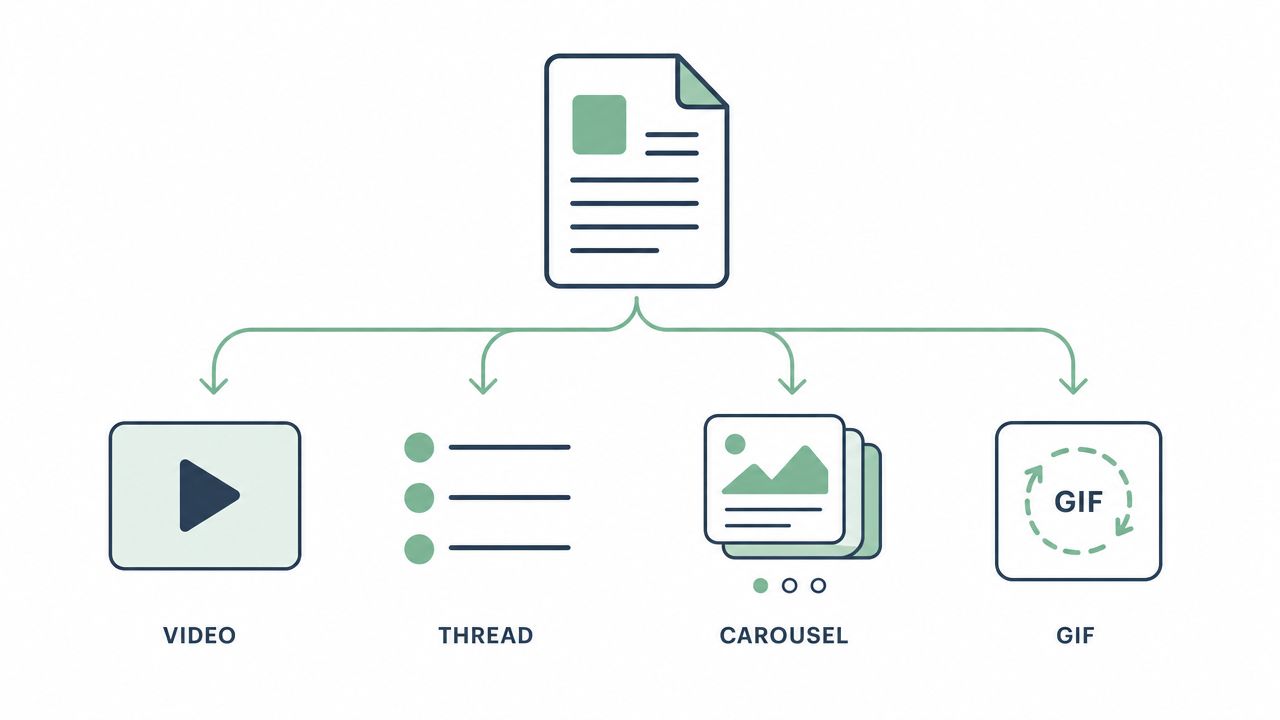
Publishing a good idea once is a waste. If a post earns attention, the job is not finished. The job is to turn that insight into a repeatable content asset that can travel across formats, hooks, and audience behaviors.
Build from a source asset, not from scratch
Repurposing works when every format starts from one strong source asset. Use a customer interview, product teardown, webinar clip, onboarding review, or founder lesson. Then rebuild the same core point for different attention spans and contexts.
Short-form video is often the best source format because it produces raw material for multiple downstream posts. HubSpot's video marketing trends research reports that short-form video delivers the highest ROI among social media content formats for many marketers. That does not mean every account should become video-first. It means video is often the most efficient starting point if the team can record consistently.
A practical workflow looks like this:
Choose one source asset: A five-minute walkthrough, objection-handling clip, or customer call excerpt
Pull out three to five distinct angles: mistake, fix, contrarian take, example, result
Assign each angle to a format: clip, thread, carousel, quote post, GIF, screen capture
Rewrite the hook for each format: change the promise, not just the layout
Schedule the sequence across several days: avoid posting all versions back-to-back
SupaBird helps here because it reduces the editing and formatting work between formats. That matters in practice. Repurposing fails when the workflow takes longer than creating a brand-new post.
Format multiplication only works if the message changes shape
A thread can explain process. A clip can show proof. A carousel can organize before-and-after thinking. A text post can state the sharpest opinion from the same material in one line.
That is the trade-off. More formats create more surface area for engagement, but weak teams often publish the same point with cosmetic changes. Audiences notice. Reach drops because each post feels recycled instead of adapted.
For X, use this sequence from one onboarding audit:
Clip: “The onboarding mistake that kills trial conversions”
Thread: “7 fixes we pulled from one onboarding review”
Carousel: “Before vs after onboarding copy”
Quote post: “Onboarding fails when the product asks for trust before it earns clarity.”
KPIs by format
Track the outcome each format is built to produce.
Saves for educational carousels and step-by-step threads
Replies for opinion posts and clips with a sharp takeaway
Profile visits for authority posts tied to founder insight or case-based analysis
Reposts for concise posts with one useful, repeatable idea
Completion rate or watch time for short video clips
Keep the review simple. Compare posts that came from the same source asset. If the clip gets reach but the thread gets saves and replies, the clip did discovery and the thread did conversion into deeper attention. Both can work.
Copy examples for X
Here is how one source idea can become four distinct posts:
Clip hook: “We reviewed 40 SaaS onboarding flows. The biggest mistake was not design.”
Thread opener: “Most onboarding friction starts before the product demo. Here are 7 fixes from one audit.”
Carousel title: “Before vs after. Onboarding copy that gets more users to the first action.”
Text post: “Users drop when onboarding explains features before it explains progress.”
Repurposing means translating one insight into multiple native experiences. Done well, it lowers content pressure, raises output quality, and gives the team more chances to learn which framing gets engagement.
4. Posting Schedule Optimization by Geographic and Temporal Patterns
Posting time shapes distribution more than many teams want to admit. A strong post published into the wrong region or work window can stall before it gets the early replies and reposts that push it further on X.
The fix is operational, not theoretical. Build your schedule around where followers live, when they work, and how quickly they engage in the first two hours. SupaBird is useful here because it lets teams queue posts by city-based timing patterns instead of relying on one generic “best time.”
Build your schedule by audience cluster
Start with follower geography. Then split the audience into 2 to 4 clusters based on location and role.
A B2B founder with followers across New York, London, and Mumbai is not reaching one audience. They are reaching different attention windows, with different work rhythms and different feed competition.
Use a simple setup like this:
US East morning: founders, operators, and in-house marketers starting the day
UK and Europe midday: SaaS teams, consultants, and agency operators between meetings
India evening: builders, technical audiences, and side-project founders after work
That structure is more useful than chasing a universal posting hour.
Repeat visibility still matters. If your audience is spread across regions, one post time leaves part of the market cold.
Measure early velocity, not just total engagement
For schedule testing, first-two-hour performance usually gives the cleanest signal. A post that gets replies and reposts quickly often outperforms a post that gathers slower engagement over the next day.
Track four numbers for each test window:
Replies in the first two hours
Reposts in the first two hours
Profile visits after 24 hours
Total engagement after 24 hours
Do not test five variables at once. Keep the format and topic stable, then change only the time slot.
A practical test looks like this: run the same type of founder insight post at three different windows for two weeks each. If the 8 a.m. Eastern slot gets more early replies but the Europe slot gets more profile visits, you have a trade-off to manage. One slot may be better for conversation. Another may be better for authority and discovery.
That is the level where schedule decisions start getting useful.
A two-week testing system that teams will actually follow
Use this operating rhythm:
Pick one repeatable post type, such as short opinion posts, customer insight posts, or tactical threads
Choose three time windows based on audience geography
Publish that format in each window for two weeks
Log first-two-hour engagement and 24-hour totals in one sheet
Keep the highest-performing slot for the next month
Retest after audience growth shifts the geographic mix
Teams often confuse volume with consistency. Posting more often at weak times usually creates more data, not better results.
Pre-scheduling helps because the work gets done before the day becomes reactive. SupaBird is especially useful for founders who want consistent output without manually publishing across multiple time zones.
Copy example for X
Use one post style and test the timing, not the wording:
“Many teams do not need more content ideas. They need one repeatable system for turning one insight into five posts.”
Publish that in three separate windows. Compare opening momentum, reply quality, and profile visits. If one slot produces fewer likes but more qualified replies from buyers or peers, keep that slot. Reach without the right audience is a weak win.
5. Strategic Hashtag Architecture and Trend Riding
Hashtags are filing systems for discovery. Trends are distribution windows. Treat them that way and they become useful. Treat them like decoration and they clutter the post.
The operating model is simple. Build a small hashtag set with defined jobs, then decide in advance which trends your account has earned the right to join.
Build a three-layer hashtag system
Use three buckets:
Branded tags: One or two repeatable terms tied to your framework, product philosophy, or recurring series
Niche tags: Specific topic tags your target audience already follows, such as #ProductLedGrowth, #Bootstrapping, or #CreatorEconomy
Trend tags: Temporary tags used only when your post adds a clear point of view, lesson, or data-backed observation
Keep the list short. A messy stack of hashtags weakens positioning because it signals uncertainty about who the post is for.
I usually set this up as a simple worksheet with four columns: hashtag, category, use case, and last result. That gives the team a repeatable system instead of random choices made five minutes before publishing.
Choose trends with a filter, not instinct
Trend riding works when the post still has value after the trend cools off.
That standard removes a lot of weak ideas.
If a topic like #BuildInPublic starts climbing, the goal is not to announce that you noticed it. The goal is to contribute something your audience can use. Educational angles tend to travel better than empty participation, especially on X where smart commentary gets more replies than generic enthusiasm.
A stronger post looks like this:
**“Three things public building gets wrong:
It often confuses visibility with trust
It rewards frequent updates more than useful insight
It works best when the audience learns from the process, not just watches it”**
That post can earn reach from the trend and still build authority with the right audience. “Building in public today” does neither.
A practical workflow for X
Use this process:
Track 10 to 15 niche and trend tags relevant to your market
Label each one as branded, niche, or trend
Define what qualifies your account to post on that trend, such as customer experience, original opinion, or a documented example
Write the post first
Add the hashtag last, only if the post is stronger with it
Review results by hashtag cluster every week
SupaBird helps here because you can store working angles, draft several versions quickly, and queue the strongest one while the topic is still active. The guardrail is simple. If the idea only works because a trend is hot, skip it.
KPIs that show whether this is working
Track outcomes that reflect fit, not vanity:
Engagement by hashtag cluster
Replies from new relevant accounts
Profile visits from trend posts
Follower quality, based on whether new followers match your target niche
Saves or bookmarks on educational trend posts, if that data is available in your workflow
There is a trade-off here. Broad trends can inflate impressions while lowering audience quality. Niche hashtags usually deliver less reach but better conversations. Founders and marketers should usually prefer the second outcome.
Copy examples for X
Use trend tags to sharpen discovery, not to carry weak copy.
Niche authority post: “Bootstrapped teams usually do not have a content problem. They have a distribution problem. One strong insight can become five posts if the system is clear. #Bootstrapping”
Trend response post: “A lot of #BuildInPublic content documents activity. Very little of it teaches judgment. That gap is where trust is built.”
Branded series post: “Founder Note 07: The posts that attract peers often differ from the posts that attract buyers. Build both on purpose. #FounderNotes”
That is hashtag architecture in practice. Clear roles, strict filters, and measurable outcomes.
6. Question-Based Content and Curiosity Loops
Questions pull people into the post. On X, that matters more than polished agreement because replies create visible momentum, expose objections, and give you raw language for future content.
I treat question posts as conversation starters with a job. They should surface pain points, force a choice, or invite examples from people who have done the work. If the question is too broad, the audience has to do the framing for you. That friction kills replies.
Build prompts that are easy to answer and hard to ignore
Strong question posts usually do one of three things:
Ask for a concrete example: “What part of your content workflow still takes too long, drafting, design, or distribution?”
Force a trade-off: “If you had to fix one this week, weak hooks or weak CTAs?”
Expose process gaps: “What breaks first when your posting cadence slips, reach, replies, or lead quality?”
Questions work best when the answer can come from lived experience, not theory. Hootsuite's overview of social media engagement formats notes that interactive prompts such as polls and Q&As help drive participation because they ask the audience to contribute, not just consume, according to Hootsuite's social media engagement guide.
That does not mean every post should be a poll. Polls are useful for fast signal and lightweight participation. Open-ended questions are better when you want language, nuance, and follow-up opportunities.
Use a simple curiosity loop
Curiosity loops work when the opening question creates an information gap, then the replies or thread begin to close it.
A practical format looks like this:
Lead with a specific question
Add a tension point or trade-off
Promise a follow-up insight in the thread
Reply fast to strong answers with a second question
Example:
Post: “What improved your X engagement more in the last 90 days, better original posts or stronger reply strategy? I have a clear winner from client accounts, but it surprised people.”
That structure gives people a reason to answer and a reason to keep reading. It also gives your team a natural path for follow-up comments.
Copy examples for X
These formats are practical because they are easy to repeat and measure:
Experience question: “What changed your engagement more this quarter, better hooks or better replies?”
Diagnostic question: “Where does your content usually fail first, topic choice, opening line, or weak visual?”
Trade-off question: “Would you choose daily posting with average quality or three strong posts a week if pipeline was the goal?”
Curiosity loop opener: “What content habit hurts engagement the most? I keep seeing the same answer across founder accounts.”
Operational playbook
Use this workflow if you want question posts to become a repeatable system instead of random audience prompts:
Step 1: Pull 10 real objections or bottlenecks from sales calls, customer interviews, founder DMs, or post replies
Step 2: Turn each into one narrow question that points to a clear decision, failure point, or example
Step 3: Draft 3 versions for X, one plainspoken, one sharper, one contrarian
Step 4: Post and stay active for 30 to 45 minutes so early replies get follow-up
Step 5: Reply with a second-layer question to anyone who gives substance
Step 6: Save strong answers as future post material, objection handling, or copy inputs
Step 7: Use SupaBird's X-GPT to rewrite flat educational posts into stronger question-led variants when your draft reads like a statement instead of an invitation
The trade-off is straightforward. Broad questions can increase reply count but lower relevance. Narrow questions reduce volume and improve signal. For founders and marketers, better signal usually wins because it reveals what the right audience cares about.
KPIs that show whether this is working
Track discussion quality, not just visible engagement:
Reply-to-like ratio
Average replies per question post
Second-level reply rate, meaning how often comments turn into back-and-forth discussion
Qualified profile visits from question posts
Content recycle value, based on how many future posts or offers come from reply themes
If likes rise and replies stay flat, the post probably read well but did not create participation. If replies increase but the comments are vague, tighten the question and make the trade-off more specific.
7. Visual Content Hierarchy and Thumbnail Optimization
Weak visuals kill engagement before the copy gets a chance. On X, people decide in a split second whether a post is worth stopping for, and the first frame does most of that work.
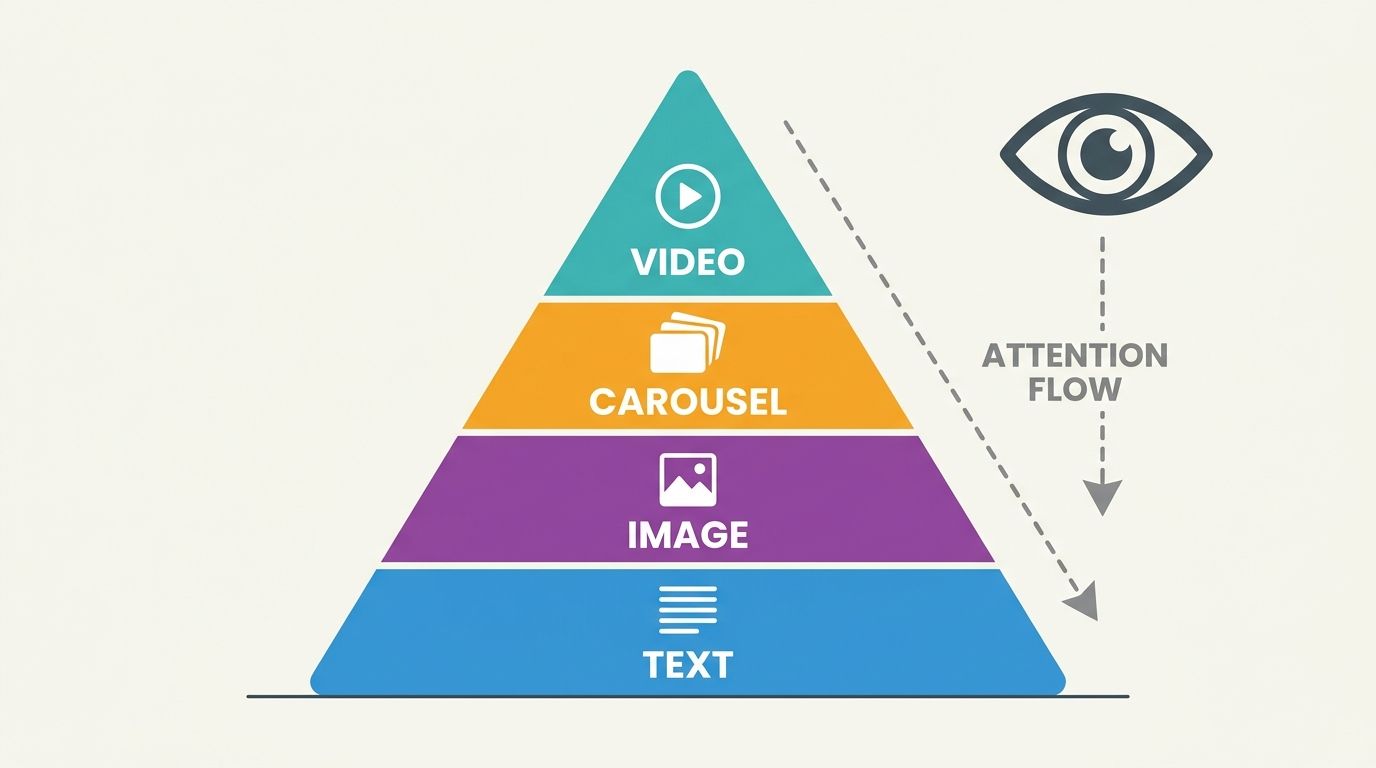
Good visual hierarchy solves a practical problem. It tells the viewer what to read first, what to ignore, and why the post matters. If that order is unclear, impressions rise and engagement stalls.
Wyzowl's video marketing research shows video is now standard across marketing teams, which is exactly why static assets need stronger structure and videos need stronger opening frames, not just better editing.
What strong hierarchy looks like on X
Use a simple sequence:
Primary headline: One short claim or promise in the largest text
Visual anchor: One face, chart, screenshot, or bold contrast area that pulls the eye first
Secondary proof: A subhead, number, label, or result that supports the main idea
Brand cue: Consistent color, type, or layout so repeat viewers recognize your posts
That order matters more than polish. A rough screenshot with a clear headline will often beat a polished design that asks the viewer to decode five competing elements.
For video, the thumbnail and first two seconds need to carry the same message. If the cover says “3 pricing mistakes” but the opening shot is a slow logo animation, retention drops fast.
Practical workflow for founders and marketers
A founder posting launch lessons can turn one insight into three visual assets:
Video post: 20 to 40 second teardown with captions and a first frame that states the mistake
Static post: one chart or annotated screenshot with a clear title
Carousel: problem, diagnosis, fix, result
I use the same rule across all three. One asset should communicate one decision. If a graphic tries to teach the whole strategy at once, save rates may look decent, but replies and clicks usually stay soft because the point was too broad to trigger action.
Step-by-step implementation
Choose one message per asset. Example: “Our demo CTA improved after we removed 2 fields.”
Write the thumbnail line first. Keep it under 8 words when possible.
Design for mobile first. Test readability at small size before exporting.
Place one focal element near the top half. Face, metric, red box, or bold phrase.
Cut decorative clutter. Background texture, extra icons, and tiny labels usually hurt more than help.
Match the visual to the post goal. Use screenshots for proof, carousels for process, short video for explanation.
Batch variants. Create two thumbnail options and test which one earns stronger stop rate.
Use SupaBird to turn one source asset into multiple X-ready formats so the team can publish faster without redesigning from scratch each time.
Teams that produce ad-style creatives often use tools such as the ShortGenius AI ad creative tool to generate iterations quickly, but speed only helps if the hierarchy is clear before production starts.
X copy and thumbnail examples
Post angle: pricing page lesson
Thumbnail option A: “We cut 2 fields”
Thumbnail option B: “This form hurt conversions”
Post copy: We thought our pricing page problem was traffic.
It was friction.
Removing 2 form fields increased demo starts. Here's the before/after and what we changed.
That pairing works because the visual carries the specific hook and the post body adds context. The viewer does not need to work to figure out the point.
KPIs to track
Measure visual performance with indicators tied to attention and action:
View-to-engagement rate on video posts
Average watch time or early retention on short clips
Carousel completion rate
CTR on posts with screenshots or charts
Save rate versus reply rate by visual format
Profile visits per 1,000 impressions on posts with redesigned thumbnails
If impressions are healthy but engagement stays weak, fix the first frame or headline. If people watch but do not click, the visual likely created curiosity without enough relevance or proof.
This video is a good reminder that pacing and structure matter as much as polish:
SupaBird helps by turning video into multiple X-ready assets. That matters because a strong visual workflow depends on repeatability, fast iteration, and clear performance feedback, not one polished graphic.
8. Community Building Through Consistent Values and Polarizing Positions
Strong communities rarely form around generic advice. They form around repeated beliefs, clear boundaries, and a point of view people can quote back to others.
On X, this matters more than many teams admit. The posts that attract replies, bookmarks, and repeat readers often do one thing well. They make a claim that signals who the account is for, and who it is not for, without slipping into cheap outrage.
Clear values make followers easier to convert into advocates
A founder who posts, “Profitability builds optionality faster than vanity growth,” is doing more than sharing an opinion. They are telling the right audience what they reward, how they make decisions, and what kind of conversation to expect in the replies.
That consistency builds recognition.
Industry research from Sprout Social's customer care research reinforces the operational side of this. People expect brands to show up and respond like humans, not publishing systems. A sharp point of view gets attention. Ongoing replies turn that attention into trust.
The trade-off is real. Strong positions usually reduce broad appeal. They also improve audience quality. For founder-led brands, that is often the better deal.
What good polarization looks like
Useful polarization is disciplined. It picks a side in a real industry debate and backs it with reasoning, examples, and trade-offs.
Use positions like these:
Bootstrapped founder: “Cash flow gives you more strategic freedom than headline growth.”
Creator software company: “Consistency beats occasional virality because trust compounds through repetition.”
Consultant or operator: “Frameworks help. Judgment decides whether the framework fits the situation.”
Weak polarization sounds performative. Strong polarization sounds earned.
A practical operating playbook for X
Use a simple three-part system.
1. Define three repeatable brand values
Write three beliefs your team can defend for six months. Not slogans. Real operating beliefs.
Example:
We prefer profitable growth over attention spikes
We value clarity over cleverness
We trust systems more than motivation
2. Turn each value into recurring post angles
Each value should produce at least five post types:
blunt opinion
short story
contrarian lesson
reply bait
proof post with screenshot, metric, or outcome
For example, the value “clarity over cleverness” can become:
Hot take: Clever copy gets likes. Clear copy gets demos.
Story post: We rewrote one landing page headline in plain language and sales calls got easier because prospects understood the offer before booking.
Reply prompt: What is one piece of “brand voice” advice that made your copy worse?
3. Stay active in the replies for 30 to 60 minutes
A polarizing post without follow-up creates heat, not community. Reply to agreement. Reply to skepticism. Clarify your stance when someone pushes back. That is where followers start to feel known, and where lurkers decide whether to stick around.
Copy examples tailored for X
Here are two post formats that work well.
Format 1. Direct stance
Virality is unreliable. Consistency is easier to compound.
I would rather see 100 qualified people remember the brand every week than 100,000 random impressions once.
Agree or disagree?
Format 2. Position plus proof
“Post more” is weak advice.
Better advice: pick 3 beliefs, repeat them for 90 days, and defend them in public.
That is how people start to associate your account with something specific.
Both formats invite discussion without sounding like bait.
KPIs that show whether community is getting stronger
Do not judge this strategy by likes alone. Track signals that show audience conviction:
Reply rate per post
Returning commenters over 30 days
Profile visits from opinion-led posts
Bookmarks on value-driven threads
Qualified inbound DMs or demo requests tied to recurring themes
If replies increase but profile visits stay flat, the stance may be interesting but disconnected from the offer. If profile visits rise but recurring commenters do not, the position may be clear but not yet sticky.
Tooling and workflow
SupaBird helps here by turning one core belief into a repeatable posting sequence for X. One strong stance can become a main post, five reply prompts, a short thread, and follow-up variations for testing across the week.
For teams building adjacent paid creative around the same point of view, ShortGenius AI ad creative tool can support asset production. The message still needs a clear stance, consistent language, and a team willing to defend it in public.
That is the operating rule. State a belief. Repeat it often. Back it with proof in the replies.
9. Data-Driven Post Dissection and A-B Testing Framework
Testing works only when the team isolates variables. Most social experiments fail because too many things change at once. Different topic, different format, different CTA, different time, then someone declares a winner.
A better system changes one element at a time. Hook this week. Format next week. CTA after that.
Benchmark correctly before changing strategy
Instagram average engagement rates typically fall between 0.45% and 0.6%, and month-over-month trend analysis is the valid way to judge whether strategy is improving according to YouScan's engagement benchmarking guide. That principle applies well beyond Instagram. Single-post volatility can mislead any team.
The right KPI stack for testing on X includes:
First two-hour engagement velocity
Reply rate
Repost rate
Profile visits
Saves or bookmarks where visible
A practical weekly test model
A founder testing one content topic could run:
Week one: statement hook versus question hook
Week two: text-only versus image-led post
Week three: explicit CTA versus implied CTA
Week four: one posting window versus another
What matters is documentation. Keep a simple sheet with variable, post links, early performance, final performance, and next action.
Actionable insights should lead to immediate decisions, not just observations. That principle is well explained in BluprintX's guide to actionable insights from data. “This post did well” is not useful. “Question hooks on operator pain points generate more replies than statement hooks” is useful.
SupaBird's analytics integrations make this easier because the team can collect post-level patterns without building a custom reporting workflow.
10. Influencer Collaboration and Strategic Co-Creation
The fastest way to waste time on X is chasing big accounts that do not share your audience, your format, or your incentives. Good collaborations are built around audience fit and a useful asset both sides can publish, clip, and reference later.
Reach matters less than relevance here.
A strong partner usually has three traits:
Audience overlap: They attract the same buyer, user, or operator you want
Complementary expertise: Their angle adds something you do not cover well
Visible conversation quality: Their posts earn thoughtful replies, not just passive likes
That last point matters on X because co-creation works best when the audience joins in. A creator with smaller reach and active replies will often produce better downstream results than a larger account with weak discussion.
Pick the collaboration before you send outreach
Bad outreach asks for “a collab” with no defined format. Better outreach proposes a specific asset, timeline, and reason it benefits both audiences.
Use a simple partner shortlisting process:
List 10 creators who already speak to your ideal customer
Review their last 20 posts for reply quality, recurring topics, and posting format
Mark where your expertise adds a missing layer
Choose one format that can be shipped within a week
Send a short pitch with the angle, draft outline, and expected distribution plan
For teams using SupaBird, the Engage module can help surface creators who already appear in the same conversation clusters. That gives you a warmer starting point than cold outreach to large accounts.
Collaboration formats that actually work on X
These formats are reliable because they create content, discussion, and follow-up assets from one effort:
Co-authored thread: Two operators explain one problem from different functions
Q and A exchange: Each person answers questions from the other's audience
Space with post-event clips: One live discussion, then multiple short posts from the strongest moments
Guest analysis inside a thread: One creator adds a practical section or counterpoint to the other's post
Example.
A SaaS founder partners with a lifecycle marketer on “why onboarding breaks after sign-up.” The founder covers promise-to-product mismatch. The marketer covers post-signup email and in-app messaging. Each person brings a distinct lens, so the thread feels useful instead of repetitive.
Outreach copy and execution plan
Keep the message short and concrete. X creators ignore vague asks.
Sample outreach DM:
“Enjoyed your recent posts on activation drop-off. I think our audiences overlap heavily around B2B SaaS growth. Want to co-write a thread on why onboarding fails after signup? You cover lifecycle and retention. I'll cover positioning and handoff from acquisition. I can draft the outline and first version by Thursday.”
Once they agree, run the workflow:
Pick one narrow topic
Split ownership by expertise
Draft the thread in one voice, then add clearly separated sections
Decide who posts first and who quote-posts
Schedule follow-up replies, clips, or a Space within 24 to 48 hours
KPIs that show whether the collaboration worked
Do not judge a partnership by impressions alone. Track performance at three levels:
Post-level: replies, reposts, bookmarks, profile visits
Audience-level: follower growth, qualified inbound DMs, email sign-ups if tracked
Partner-level: whether the first project led to a second one
A useful benchmark is simple. If the collaboration brings stronger reply quality, more profile visits, and better conversion activity than your average solo post, repeat the format. If it only produces vanity reach, change the partner, topic, or execution.
The best collaborations turn into a repeatable series. That is where co-creation starts compounding.
10-Point Social Media Engagement Strategy Comparison
Strategy | Implementation Complexity | Resource Requirements | Expected Outcomes | Ideal Use Cases | Key Advantages |
|---|---|---|---|---|---|
Strategic Reply-to-Reply Engagement for Algorithm Amplification | Medium–High, requires targeted discovery and high-quality replies | 20–30 min/day; monitoring tools (SupaBird Engage) | ~20–40% lift in engagement and replies within ~2 weeks | Niche creators seeking deeper thread visibility and authentic relationships | Higher reply visibility, access to intent-rich micro-conversations, lower competition |
Audience Analysis and Niche Micro-Targeting | High, extensive research and tailored messaging required | 4–6 hrs setup; 15–20 min/day; analytics tools, interviews, SupaBird Ideas Lab | 35–50% engagement increase; 25–40% faster follower growth in ~4 weeks | Brands/creators targeting multiple distinct audience segments | Stronger relevance, authority in niches, multiple discovery pathways |
Content Repurposing and Format Multiplication | Medium, template and adaptation workflow needed | ~1 hr per core piece; scheduling/calendar tools; simple editing tools | 3–5x impressions; 40–60% engagement lift from repurposed library | Creators with core long-form content wanting scale with less new creation | Multiplies reach from one idea, reduces creative burnout, fills calendar |
Posting Schedule Optimization by Geographic and Temporal Patterns | Medium, audience-timezone analysis and scheduling | 2–3 hrs initial analysis; ~5 min per scheduling; analytics and calendar (SupaBird) | 25–35% better first-hour engagement; 15–25% total reach increase in ~2 weeks | Global audiences or time-sensitive B2B posts where early velocity matters | Increases early engagement velocity and algorithmic distribution |
Strategic Hashtag Architecture and Trend Riding | Low–Medium, set hierarchy plus daily trend monitoring | 10–15 min/day; TweetDeck/X Trending and SupaBird alerts | 2–4x reach during trends; 30–50% faster niche discovery | Creators seeking discoverability and opportunistic trend amplification | Builds branded discoverability, connects to niche communities, trend leverage |
Question-Based Content and Curiosity Loops | Low–Medium, content rewriting and active follow-up | ~10 min/post; 15–20 min/day for reply engagement; X-GPT helpful | 50–80% increase in reply rate; 35–50% algorithmic reach uplift in ~2 weeks | Creators aiming to spark conversation and gather qualitative insights | Higher reply-driven engagement, fosters conversation and sustained threads |
Visual Content Hierarchy and Thumbnail Optimization | Medium, template design plus video/thumbnail workflow | 1–2 hrs template setup; 10–15 min per visual post; design/video tools | 40–60% engagement increase; 25–35% faster follower growth | Visual-first creators, product demos, data storytellers | Higher attention and video performance, consistent brand recognition |
Community Building Through Consistent Values and Polarizing Positions | Low–Medium, define values and maintain consistent messaging | 1–2 hrs initial; ~15 min/week to reinforce; moderation/time for replies | 30–50% higher engagement from aligned followers; stronger loyalty | Creators seeking deep, loyal communities and clear differentiation | Strong community loyalty, word-of-mouth advocacy, clearer positioning |
Data-Driven Post Dissection and A/B Testing Framework | High, disciplined testing, tracking, and analysis required | 30 min weekly setup; 15 min weekly review; analytics and spreadsheets, SupaBird integration | Predictable playbook in ~8–12 weeks; 50–100% improved engagement consistency; 25–40% avg lift | Creators who want repeatable, data-backed content formulas | Removes guesswork, builds tailored high-performing content formulas |
Influencer Collaboration and Strategic Co-Creation | Medium–High, partner identification and coordination | 2–3 hrs outreach; 1–2 hrs per collaboration; discovery tools (SupaBird) | 3–5x reach on collaborative posts; 20–30% follower growth lift | Those seeking credibility transfer and rapid audience expansion | Rapid reach and credibility boost, access to pre-filtered relevant audiences |
Turn Engagement Into Growth Your Action Plan
Engagement does not turn into growth by accident. It grows when you treat posting, replies, testing, and collaboration like an operating system.
The teams that get results from X usually do a few things with discipline. They respond fast in the right threads. They publish in formats their audience already prefers. They test angles instead of guessing. They know which niche they want to own, and they keep reinforcing it.
The business upside is real. Short-form video can drive customer acquisition, and influencer partnerships can produce stronger returns than many standard paid campaigns, as noted earlier. The point is not to chase every tactic. The point is to build a system that matches your bottleneck and your capacity to execute.
Start there.
If your posts get impressions but few replies, fix conversation design first. Use question-led posts, then stay active in the replies for the first hour. Add follow-up questions, reply to strong comments, and create reply-to-reply threads that keep the post active.
If reach swings wildly from post to post, tighten distribution. Repurpose one core idea into a text post, thread, quote graphic, and short video. Then test posting windows by region instead of relying on one default schedule.
If the audience feels broad and unfocused, narrow it. Pick one micro-niche, define three recurring pain points, and build around a clear point of view. If the feed feels random, stop adding more ideas and start reviewing the data with a simple A/B testing process.
A practical 30-day rollout looks like this:
Week 1: Audit the last 20 to 30 posts. Record impressions, reply rate, saves, profile visits, and follows per post. Choose one micro-niche and one primary KPI.
Week 2: Launch a reply-first workflow. Publish two question-led posts, block 30 minutes after posting for active replies, and log which comment patterns create second-order conversation.
Week 3: Repurpose your best-performing idea into at least three formats for X. Test two posting windows across your main geographies.
Week 4: Review results. Keep the formats, hooks, and time slots that produced meaningful conversation. Cut the tactics that added workload without adding response quality.
This is the trade-off founders and marketers need to accept. Breadth feels productive, but depth wins. Ten partially executed tactics create noise. Two or three well-run systems create repeatable lift.
SupaBird helps with the parts that usually break under real workload. The Engage module helps teams find relevant conversations to join instead of scrolling aimlessly. Ideas Lab speeds up hook generation when the draft is flat. X-GPT helps rewrite weak posts into sharper versions with clearer stakes, stronger questions, or tighter structure. The calendar keeps posting consistent across time zones without manual scheduling overhead.
Use the tool stack to support the process, not replace it. Good software reduces friction. It does not fix weak positioning, vague offers, or inconsistent follow-through.
The goal is a repeatable workflow. Strong engagement should come from clear niche targeting, active conversation management, disciplined testing, and consistent distribution.
SupaBird gives X creators and marketers a practical system for doing the work that drives engagement. It helps teams find high-impact conversations, turn rough ideas into stronger posts, schedule consistently across key time zones, and learn from performance patterns instead of guessing. For founders, solopreneurs, and growth teams that want a faster path to repeatable reach, SupaBird is worth putting into the workflow.

The Reply Guy Strategy: A Growth Guide for X

Why New X Accounts Get Less Reach

ClimbX Review (2026): Features, Pricing, Pros and Cons

How Developer Startups Build a Brand on X Before Launch

30-Day Starting Plan for New X (Twitter) Accounts

How Often Should You Tweet for Maximum Growth?

What Should Your First 10 Tweets Be About?

How to Run X for Ten Clients: The Agency Workflow

How to write a bio that gets people to follow you
