10 Meaningful Conversation Starters for X in 2026
Author:

Most advice about meaningful conversation starters is backwards. It tells creators to ask broad, polite questions and hope the audience does the work. On X, that usually produces silence, lazy replies, or the same recycled answers from people who were never going to become customers, collaborators, or advocates.
Meaningful conversation starters work when they create tension, specificity, and a reason to answer now. The platform rewards reaction, but people reward relevance. A prompt that surfaces a real frustration, challenges a stale belief, or invites someone to explain how they think will outperform a generic “What are your goals?” almost every time.
That approach also matches what conversation research has shown. In a controlled study of 398 strangers having 15-minute introductory conversations, follow-up questions mattered most for meaningful engagement, and conversations became more substantive when people moved beyond mirror questions and kept digging into one thread with active curiosity, as summarized by Harvard Business School Working Knowledge. For creators on X, that matters because the opener is only half the job. Significant gains come from the replies underneath it.
People also avoid depth more than they need to. Research highlighted by the American Psychological Association on deep conversations with strangers found that deeper conversations feel less awkward and more connecting than many people expect. That gap between expectation and reality is exactly why shallow posting is so common.
Creators building authority on social platforms can borrow ideas from adjacent channels too. The same logic behind strong prompts applies to outreach and relationship-building in places like LinkedIn strategies for B2B sales.
Table of Contents
1. The Problem-First Opener
The fastest way to earn replies is to start where the friction already exists. People answer when they feel seen. They scroll past when the question sounds like it could apply to anyone.
A strong problem-first opener names a specific bottleneck and asks how people are handling it right now. That creates immediate relevance and pulls in people who are actively living with the issue, not people browsing for something clever to say.

Name the pain precisely
Compare these two prompts:
Weak version: “What's your biggest challenge?”
Better version: “What's the #1 bottleneck stopping your team from publishing on X consistently this month?”
Better version: “Do you batch content weekly, or do you post as ideas come? What keeps breaking the system?”
The difference is precision. The weaker version forces the audience to do the framing work. The stronger version frames the problem, narrows the context, and makes the answer easier to give.
Practical rule: Ask about a pain someone dealt with recently, not a vague pain they theoretically have.
This also makes follow-ups easier. If a founder replies, “Content approvals slow everything down,” the next reply shouldn't be “Interesting.” It should be “Where does it usually stall, drafting, approval, or scheduling?” That's where meaningful conversation starters become actual conversations.
For X creators using SupaBird, this framework fits well with Ideas Lab and Engage. Ideas Lab can surface recurring creator frustrations worth posting about, and Engage helps find live discussions where the same pain is already being voiced. A post like “The challenge isn't usually a lack of ideas, but turning those ideas into scheduled posts. Where does your process break?” will usually attract better replies than any generic engagement bait.
2. The Contrarian Take Prompt
Agreement is easy to ignore. Tension earns attention.
The contrarian take prompt works because it gives people something to push against. On X, that matters. A creator who says what everyone already believes blends into the feed. A creator who questions a sacred cow creates a reason to reply.
A useful contrarian take isn't random provocation. It has to connect to a real decision your audience makes.
Disagreement needs boundaries
Examples that work:
Indie hacker: “Daily posting is overrated. Strong posts with space between them beat mediocre consistency. Agree or disagree?”
Marketing manager: “Posting when the idea is fresh beats waiting for the ‘optimal' slot on the calendar.”
Founder: “A smaller audience that buys is worth more than a huge audience that only likes.”
Each one sets up a real trade-off. That's why replies show up. People can locate themselves in the argument quickly.
What usually fails is fake contrarianism. “Unpopular opinion: authenticity matters” isn't contrarian. Neither is an extreme claim with no room for discussion. If the audience feels trapped into either praising the post or rejecting it, the thread dies fast.
Strong contrarian prompts invite argument without making the audience feel stupid for disagreeing.
The best follow-up is often a concession question. After someone argues for consistency, ask, “Where does consistency still beat quality spacing?” That shifts the exchange from hot take theater into something more useful.
SupaBird's X Coach is helpful here because many creators think their best contrarian angle is the loudest one. Usually it's the most specific one. “Viral content isn't the goal” is decent. “For a founder selling a high-trust service, niche replies beat broad reach” is much stronger because it gives the right people a reason to weigh in.
3. The Before-and-After Comparison
People understand transformation faster than explanation. A before-and-after prompt gives the audience two states to compare, then invites them to place themselves in one of them.
That works especially well on X because people like short contrasts they can scan immediately. They can see the problem, the shift, and the implied result without reading a long thread first.
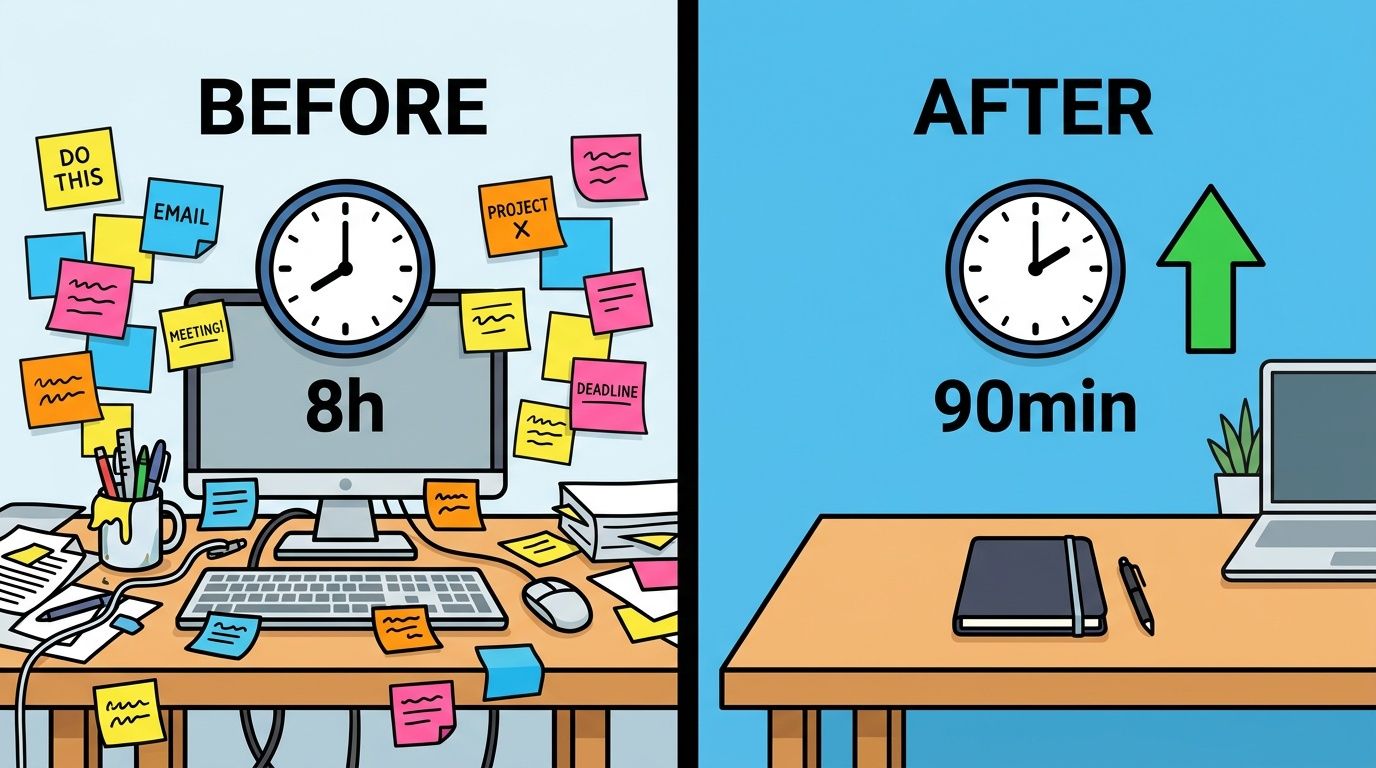
Show the shift, then ask for theirs
A practical format looks like this:
Before: Posting whenever drafts happened to be ready.
After: Working from a simple weekly calendar.
Question: Which stage are you in right now?
Or this:
Before: Using broad prompts like “What are you building?”
After: Using narrower questions that attract people with actual buying intent.
Question: Which kind of post gets better replies for you?
The key is credibility. The contrast has to feel believable and useful, not like a made-up glow-up story. Since precise performance claims aren't available here unless verified, the smarter move is to focus on operational change. “From scattered drafting to one batched writing block” is stronger than a suspicious growth boast.
A good thread structure is simple:
Tweet one: State the contrast clearly.
Tweet two: Name the one change that mattered most.
Tweet three: Ask the audience which stage they're in.
That's also where SupaBird's calendar and X-GPT become practical. The calendar helps creators operationalize the “after” state, and X-GPT can reshape a rough comparison into a cleaner hook. The conversation starter isn't just the contrast. It's the invitation for others to diagnose their current state in public.
4. The Curiosity Gap Prompt
Curiosity is easy to misuse. Most creators turn it into clickbait, then wonder why replies dry up. A good curiosity gap prompt creates an information gap that feels worth closing, then rewards the audience for participating.
On X, the best version is a partial reveal with a clear payoff. The audience should know why the answer matters before they decide to guess.

Withhold the answer, not the value
Useful examples:
“The post format that sparked the best customer conversations this month wasn't a thread. What do you think it was?”
“The content task most creators should stop automating first isn't drafting. Any guesses?”
“One reply pattern consistently leads to stronger relationships on X. What's your bet?”
These work because the answer affects strategy. A shallow teaser with no practical consequence doesn't.
One important trade-off applies here. If the reveal is obvious, the audience feels manipulated. If it's too obscure, they won't bother answering. The sweet spot is “logical but not predictable.”
For stronger hooks, creators can study how to write hooks for social posts. The same principle applies to curiosity-driven openers. The hook promises a useful insight. The replies become part of the reveal.
Curiosity should buy attention for a real lesson, not rent attention for a cheap trick.
Timing matters too. If a creator promises an answer, they should deliver it quickly enough that the thread still feels alive. The best replies in these threads don't just say “wrong.” They explain why a guess made sense, then show what the audience missed. That preserves momentum and keeps the conversation from collapsing after the reveal.
5. The Choice Architecture Prompt
Open-ended questions often fail because they ask for too much thinking. The choice architecture prompt reduces the mental load. It gives people two viable options and asks them to choose.
That's effective because choices create commitment. A person who picks a side is more likely to explain why. That explanation is where the useful replies live.
Force a real trade-off
Examples for X:
Creator prompt: “For the next month, would you rather write one polished thread a day or five niche tweets a day? You can't do both.”
Founder prompt: “Would you spend your three weekly hours replying thoroughly to a small set of people, or replying briefly across a much wider network?”
Coach prompt: “Would you batch content once a week or draft daily in real time if consistency was the priority?”
The phrase “you can't do both” does a lot of work. Without it, people escape the decision. Once the trade-off is real, the answers become more revealing.
This format also mirrors how people naturally make strategic decisions. Menlo Ventures' 2025 survey of over 5,000 U.S. adults reported that AI penetration for writing activities leads at 51 percent, showing how central AI-assisted writing choices have become in consumer behavior, according to Menlo Ventures' State of Consumer AI 2025. For creators on X, that means prompts around workflow decisions, writing process, and content trade-offs are close to the audience's actual behavior.
A useful follow-up is, “What would make you pick the other option?” That question uncovers constraints, not just preferences. Sometimes the audience doesn't need a better tactic. They need a format that fits their schedule, confidence level, or team structure.
6. The Permission-Seeking Reversal
Some of the best meaningful conversation starters don't ask for opinions first. They remove hesitation first.
The permission-seeking reversal works by validating an impulse your audience already has but feels slightly embarrassed to admit. On X, that often means giving people room to say what they've wanted to do but thought would look unprofessional, off-brand, or risky.
Validate the hidden instinct
Strong examples look like this:
“Thinking about posting more personality and fewer polished insights? That instinct is probably right. What's stopping you?”
“Worried that narrowing the niche will shrink the audience? It probably will. That can be a good thing. Have you been resisting it?”
“Thinking about building in public even though it feels messy? Messy is often more believable. What part still feels risky?”
This framework works because people don't only want tactics. They want social permission. A prompt that says “You're not crazy for thinking this” lowers the barrier to an honest reply.
One practical version comes from therapy-oriented advice. Wondermind highlighted a therapist-recommended question, “What's one thing you've overcome that you feel really proud of?” and suggested “How did you do it?” as an effective follow-up in order to humanize the exchange and avoid obvious conversational danger zones, as described in Wondermind's deep conversation starters article. That same structure works on X. The first question grants permission to share something real. The follow-up deepens it.
Some prompts don't need to be bold. They need to make honesty feel safe.
This is also where creators often overplay inspiration. “You can do anything” doesn't start a conversation. “You don't need to sound like a brand every time you post. What are you holding back?” often does.
7. The Systems and Playbook Reveal
A creator who only posts opinions is easy to forget. A creator who posts systems becomes useful.
The systems and playbook reveal works because it gives the audience a mechanism they can react to. Instead of asking abstractly how people work, it shows a repeatable process first, then asks others what version they use.
Show the repeatable mechanism
A strong post might look like this:
Content workflow: “Monday and Tuesday for idea capture. Wednesday for outlines. Thursday for drafting. Friday for scheduling. What does your weekly content system look like?”
Engagement workflow: “Find a small set of high-signal accounts. Leave thoughtful replies. Track who responds consistently. Build from there. What's missing from that playbook?”
Launch workflow: “Tease. Explain. Answer objections. Share behind the scenes. Invite questions. What order works best for you?”
The value comes from specificity. “I have a system” is useless. “These are the steps and this is the order” gives people something concrete to respond to.
For creators refining a repeatable content engine, social media content strategy guidance from SupaBird can help turn these systems into a weekly publishing rhythm.
A video can also make the playbook feel more tangible:
In work settings, the “How might we” structure is especially strong because it redirects discussion away from complaint loops and toward possibility framing, as described in the IDEO-style explanation of the How might we question structure. That means a creator can post, “How might we turn weekly posting into a repeatable system without losing voice?” and invite better replies than a flat “How do you stay consistent?”
8. The Assumption Challenge
Every niche has beliefs people repeat without checking. Those beliefs are conversation fuel.
The assumption challenge starts by naming the accepted idea plainly, then presenting a competing observation. The point isn't to be edgy. The point is to help the audience test whether the usual advice fits their context.
Challenge the belief, not the audience
Examples that work:
“We're told bigger followings create more influence. But niche trust often matters more than broad attention. Where have you seen that play out?”
“People assume brand polish builds authority. In a lot of creator-led businesses, a more casual voice builds more trust. What's your experience?”
“Many marketers act like mentioning competitors is a mistake. In some cases, naming them respectfully makes a post more credible. Have you seen that?”
What makes this format useful is nuance. The prompt should leave room for exceptions. “This probably breaks when…” is often the sentence that makes the thread smarter.
This is also a good place to avoid the worst habit on X. Don't challenge the audience's intelligence. Challenge the assumption they inherited. That keeps people open instead of defensive.
The best assumption challenges sound like field notes, not courtroom arguments.
SupaBird's Ideas Lab can help creators identify which assumptions dominate a niche by surfacing recurring post themes. From there, the strongest prompt usually pairs the challenged belief with one concrete context. “Consistency matters less for creators with high-signal replies than for creators relying on cold discovery” is more discussion-worthy than a blanket “consistency is fake.”
9. The Metric Reflection Prompt
Many creators track what's visible, not what matters. The metric reflection prompt asks people to examine whether the number they celebrate is tied to the outcome they want.
That question lands well on X because the platform puts surface metrics in front of everyone all day. Followers, likes, reposts, impressions. Those numbers are easy to compare and easy to chase.
Pick the metric behind the metric
Prompts that work:
“If follower growth is the headline metric, what's the quality check behind it?”
“If a post gets wide reach but no serious replies, was it a win?”
“Are you measuring impressions because they matter, or because they're easy to see?”
This format is stronger when the poster gives an alternative lens. A founder can ask, “Would a smaller number of engaged buyers matter more than a bigger number of passive viewers?” A consultant can ask, “Which metric best reflects trust, replies, inbound questions, or profile visits from the right people?”
For creators who want a tighter feedback loop, SupaBird X Coach performance tracking is built around reviewing what improved performance and why. That makes it easier to turn a metric reflection prompt into a process change instead of a philosophical debate.
This framework is also a quiet authority-builder. It signals that the creator thinks beyond vanity metrics without needing to posture about it. The best replies usually come from people who've already felt the pain of optimizing the wrong number and are ready to say so publicly.
10. The Failure Permission and Learning Share
Success posts get attention. Failure posts get trust, if they're handled well.
The failure permission and learning share works because it breaks perfection theater. A creator shares a specific mistake, names what changed afterward, and asks the audience what they learned from something similar. That turns a confession into a useful exchange.
Share the miss, then extract the lesson
Examples:
“Spent months chasing visible engagement instead of meaningful replies. The posts looked healthy, but the relationships were weak. What did you optimize for that turned out to be the wrong target?”
“Built content around what sounded smart instead of what customers kept asking. What mistake taught you to listen earlier?”
“Tried to post at a pace that looked impressive and ended up resenting the platform. What did burnout teach you about your real cadence?”
What usually fails is dumping a mistake with no lesson. Audiences don't need self-flagellation. They need a pattern they can recognize in themselves.
A practical version of this framework is building in public around setbacks, not just wins. Creators exploring that style can use this guide to building in public on X for indie hackers to structure honest updates without making them rambling or self-indulgent.
The best follow-up question is rarely “Can anyone relate?” It's “What changed in your process after that?” That moves the thread from empathy into applied learning, which is where stronger communities form.
Comparison of 10 Meaningful Conversation Starters
Approach | Implementation complexity | Resource requirements | Expected outcomes | Ideal use cases | Key advantages |
|---|---|---|---|---|---|
The Problem-First Opener | Low–Medium, needs audience insight | Low, research and monitoring time | High reply rate and authentic engagement | B2B and creator posts seeking practical input | Immediate relevance; builds empathy and authority |
The Contrarian Take Prompt | Medium–High, requires solid reasoning | Moderate, data/case study and moderation | High engagement, polarized debate, viral visibility | Thought leadership and positioning for growth | Memorable positioning; drives quote-tweets and reach |
The Before-and-After Comparison | Medium, requires verifiable results | Moderate, collect metrics and visuals | Tangible credibility, transformation stories, saves | Product case studies, education, conversion-focused posts | Makes benefits concrete and easy to visualize |
The Curiosity Gap Prompt | Low–Medium, craft a strong hook and payoff | Low, idea, timing, and planned reveal | Very high reply and share rate driven by guessing | Teasers, hooks for threads, audience growth experiments | Triggers strong curiosity and rapid engagement |
The Choice Architecture Prompt | Low, design clear mutually exclusive options | Low, framing and response analysis | High-quality, decisive replies and easy segmentation | Preference research, decisions that force a side | Forces clarity and reveals audience preferences |
The Permission-Seeking Reversal | Medium, needs authentic, sensitive framing | Low–Moderate, emotional follow-up and validation | Deep, vulnerable replies and community bonding | Community-building, encouraging unconventional moves | Creates psychological safety and loyal followers |
The Systems and Playbook Reveal | High, must present a repeatable system | Moderate–High, document steps, examples, visuals | High-value saves, authority, practical adoption | Teaching methods, onboarding, process-driven audiences | Demonstrates competence and enables immediate action |
The Assumption Challenge | Medium, needs evidence and careful nuance | Moderate, examples/data and debate management | Nuanced discussion, attracts intellectually curious followers | Challenging industry norms and fostering deep debate | Positions you as a critical thinker; elicits rich context |
The Metric Reflection Prompt | Medium, requires reframing common metrics | Low–Moderate, examples and suggested alternatives | Thoughtful replies, strategic recalibration, saves | Strategy reviews, growth teams, founders re-evaluating KPIs | Helps align metrics with real outcomes and goals |
The Failure Permission and Learning Share | Medium, requires careful, constructive storytelling | Low–Moderate, honest examples and follow-up | Deep trust-building replies and long-term memorability | Authenticity-driven growth, building vulnerability-based communities | Normalizes failure, fosters trust and meaningful connection |
From Prompts to Playbooks Your System for Conversation
Ten frameworks are useful. A repeatable system is better.
Creators who get steady engagement from meaningful conversation starters usually don't improvise every day. They rotate formats based on audience psychology and platform rhythm. A problem-first opener early in the week can surface pain points people are dealing with in real time. A contrarian take in the middle of the week can trigger discussion once the account has some momentum. A systems reveal later in the week can convert attention into authority because it gives people something practical to borrow.
That matters because meaningful conversations rarely come from one magical question. They come from a sequence. The opener earns the reply. The follow-up deepens it. The thread underneath the post becomes the proof that the creator listens, thinks clearly, and knows how to guide discussion without flattening it into engagement bait.
The platform dynamic matters too. X rewards posts that generate active exchange, but not all exchange is equal. Argument without substance attracts noise. Broad prompts attract low-effort answers. The frameworks in this playbook work because each one creates structure. They narrow the topic, increase emotional relevance, and make it easier for the right people to answer with something specific.
The other key shift is operational. Creators don't need to wait for inspiration to start better conversations. They can schedule a problem prompt for Monday, prepare a choice prompt for Wednesday, and line up a failure lesson for Friday. They can keep a simple list of follow-up questions ready, especially ones that push beyond the first answer. That reflects what conversation research has already made clear earlier in this article. The follow-up is often where genuine connection happens.
SupaBird fits well into that system because the parts map cleanly to the job. Ideas Lab helps creators spot themes worth turning into prompts. Engage helps them enter active discussions instead of broadcasting into empty space. X Coach helps them review which frameworks produced thoughtful replies rather than empty reach. The calendar gives the whole process a rhythm so conversations don't depend on mood.
Creators trying to grow on X don't need more generic questions. They need a stack of prompts that repeatedly attract the right people, surface real beliefs, and turn posting into dialogue. That's how meaningful conversation starters stop being a writing trick and become a growth system.
SupaBird gives creators a practical way to turn these conversation frameworks into a repeatable X growth system. With SupaBird, creators can generate sharper prompt ideas in Ideas Lab, find live threads worth joining through Engage, rewrite rough drafts into stronger formats with X-GPT, schedule consistently with the calendar, and use X Coach to learn which posts sparked real discussion instead of empty impressions.

The Reply Guy Strategy: A Growth Guide for X

Why New X Accounts Get Less Reach

ClimbX Review (2026): Features, Pricing, Pros and Cons

How Developer Startups Build a Brand on X Before Launch

30-Day Starting Plan for New X (Twitter) Accounts

How Often Should You Tweet for Maximum Growth?

What Should Your First 10 Tweets Be About?

How to Run X for Ten Clients: The Agency Workflow

How to write a bio that gets people to follow you
