You're staring at a blank compose box again, trying to turn one decent thought into something people will stop for. The draft starts strong, then you add context, then a second point, then one more clarification, and by the time you hit publish it feels safe, polished, and invisible. That's usually the problem with tweet writing, the post isn't just weak, it's buried.
Good tweets rarely happen by accident. They come from a system that shapes the idea, the format, the hook, the timing, and the follow-up, then uses feedback to improve the next post. If you want to know how to write tweets that earn attention in 2026, treat every post like a small experiment with a clear purpose, not a one-off burst of inspiration.
Table of Contents
Choosing the Right Format Single Tweets, Threads, and Replies
Crafting Your Content Templates, Examples, and the Hook Formula
The Tweet Writing System Most People Miss
A lot of people write tweets the same way they send text messages, they think of something, type fast, and hope the platform does the rest. Then they wonder why the post gets ignored, even when the idea was good. The issue usually isn't the idea, it's the packaging.
Strong tweet writing starts before the first sentence. You need a source of ideas, a format that fits the idea, and a repeatable way to pressure-test the draft before it goes live. If you're still collecting raw thoughts, the content idea workflow matters just as much as the final copy, because no hook can rescue a weak angle.
Start With one idea, not five
The fastest way to weaken a tweet is to make it do too much. One post can share a lesson, a reaction, a result, or a prompt. It can't do all four without losing shape.
Practical rule: if you can't say the tweet's purpose in one short sentence, the draft needs another pass.
Think about the last time you scrolled past a post because the first line felt like setup. That happens when the writer is still finding the point while the reader is already gone. The better move is to compress the idea until the post has one obvious payoff.
A founder writing about a product launch might start with, “We shipped a feature customers kept asking for.” That's cleaner than three lines about the team's internal process, the roadmap, and why launch day was exciting. The reader doesn't need the backstage tour before they know what matters.
Write for the feed, not the document
Tweets live in a stream. That means the reader isn't arriving with patience, they're scanning for relevance. The best tweet copy earns attention immediately, then gives just enough context to keep the swipe from happening.
That's why front-loading matters so much in how to write tweets. Put the most important words first, remove setup that delays the payoff, and make every opening line carry weight. If the value is in the second sentence, readers never see it.
The practical habit is simple. Draft the full thought first, then cut until the first line carries the post. That compression step is where a decent post turns into a clickable one.
The Anatomy of a High-Engagement Tweet
A tweet that performs well usually has three jobs. It has to stop the scroll, deliver a clear payoff, and point the reader to a next action. Even when the finished post feels casual, that structure sits underneath it.
The clearest advice on social posts comes back to the same idea, keep it short, active, and front-loaded with the meaningful part. Ohio State University's health literacy guide says tweets should be short, written in active voice, and front-loaded with relevant information so readers can understand the message quickly, and it also suggests testing the message on a cold reader to see whether they can “get it” in less than 2 seconds, which is a useful clarity check for any draft (Ohio State University social media writing guide).

The hook earns the stop
Your hook is the first decision point. It can be a bold statement, a sharp question, a useful number, or a line that creates curiosity without sounding fake. If the opening feels generic, the rest of the post usually never gets a fair read.
A practical hook is specific enough to sound lived-in. “I wasted a week writing the wrong thread format” feels more human than “Here are my thoughts on growth.” The first line gives the reader a reason to keep moving because it signals that a real lesson is coming.
For more on crafting stronger openers, see our guide on how to write hooks. When the tweet covers research or a public takeaway, the APA recommends distilling the essential finding or implication into a concise message and including a link to the study so the post works as a hook that encourages clicks for more detail. It also says the post should be brief, use proper grammar, avoid all-caps and text speak, and use up to 2 relevant hashtags (APA social media guidance).
The body should carry one clear payoff
The body is not the place to prove everything you know. It is the place to deliver the single thing the hook promised. That might be one insight, one step, one example, or one lesson from experience.
If the hook says the tweet will explain a mistake, the body should show the mistake and the fix. If the hook promises a result, the body should make the result understandable. Readers do not need the full whitepaper, they need the point.
A good body sounds tight and specific. “We moved the launch announcement earlier, cut the extra setup, and the reply quality improved” works because it shows action and consequence without oversharing. The reader can map the logic quickly.
The CTA gives the post direction
The CTA does not have to be loud. It just needs to tell the reader what happens next. That might be a follow, a reply, a click, a retweet, or a bookmark.
For example, “Reply with the format you use most” is cleaner than a generic “thoughts?” because it gives the reader a task. “Follow for more tweet breakdowns” works when the post already delivered value and earned trust. The post feels complete when the CTA matches the purpose.
Choosing the Right Format Single Tweets, Threads, and Replies
A tweet can fail even when the idea is strong, because the format does not fit the job. A single tweet hits fast. A thread gives a point room to develop. A reply can place your thinking inside a conversation that already has attention.
Format choice changes the pressure on the copy. A sharp opinion needs less setup. A tutorial needs steps. A conversation needs a response that feels timely and specific. Match the shape to the goal and you stop forcing every idea into the same mold.
Single tweets work best for speed
Use a single tweet when the idea is small, sharp, or opinionated. A one-line insight, a quick lesson, or a clean reaction usually lands better in a compact form because the reader gets it right away. That matters when you want fast engagement and do not want the post to ask for extra effort.
Single tweets also fit moments where the point should stand alone. If you have a surprising observation about a product, a bug, a lesson, or a habit, do not bury it in a thread just because you can. Give the line enough space to work on its own, then test whether the market responds to that angle.
Threads need structure, not rambling
Threads make sense when the idea has steps, layers, or a narrative arc. Tutorials, breakdowns, and build logs fit well here because the thread gives you room to show how the thinking develops. The trade-off is attention. If the opening does not promise a clear payoff, people will not expand it.
A strong thread opener makes the value obvious. “I spent months learning how this works, here's the simple version” gives the reader a reason to continue. “Some thoughts” does not. If you want a wider set of opener patterns, these hook examples are useful because they show how different angles change what the reader expects.
Replies are quieter, but often underrated
Replies work differently from posts you publish on your own feed. They do not ask the timeline to stop for you, they let you enter a conversation that already has momentum. That makes them useful for discovery, relationship-building, and showing judgment in public without needing to build the entire setup yourself.
A useful reply adds substance, not filler. If someone posts a framework, replying with your own experience or a clear counterpoint gives people a reason to click your profile. Replies can be a powerful growth lever, and if you want a closer look at the mechanics, read how replying to tweets grows your account faster. When the reply is relevant and specific, it often does more for visibility than a standalone post that never finds the right audience.
Crafting Your Content Templates, Examples, and the Hook Formula
Writer's block shows up fastest when you need to post consistently. Templates help because they cut the blank-page problem without making your feed sound robotic. The job is to use a template as a starting frame, then bend it to your voice and the response you want to study.
A few patterns hold up in practice. The story-teaching format starts with something that happened, then ends with the lesson. The contrarian take format challenges a common belief with a reasoned angle. The behind-the-scenes format shows process, decision-making, or a real constraint, which gives the post more substance than a generic opinion.
Three reusable tweet templates
Story-teaching: “I did X, ran into Y, and learned Z.” This works because the reader gets a mini-arc and a takeaway without needing a long setup.
Contrarian take: “Common wisdom suggests X, but the issue is Y.” Use this only when you can defend the point and explain it without sounding combative.
Behind-the-scenes: “We changed X because Y kept happening.” This works especially well for product, creator, and startup accounts because it feels concrete and grounded in a real decision.
The strongest hooks usually come from a simple pattern, a bold claim, a useful question, or a detail that makes the reader curious. If you're writing about a study, the APA social media guidance fits this use case well. Distill the implication, keep the post brief, and send readers to the source when they need more depth.
Prompt AI for angles, not finished copy
A lot of AI tweet writing fails because people ask for finished copy too early. A better move is to ask for multiple angles first, then choose the one that sounds worth testing. That keeps control in your hands before the wording gets polished.
The most useful prompts ask for audience-specific angles, not a generic “write me a tweet.” Then you edit the strongest version with real numbers, personal details, and natural vocabulary so the result sounds like a person, not a template. A practical workflow is to generate a few variations, choose one, and spend the final minutes cutting filler and tightening the first line.
If you want more structure to work from, these Twitter post templates show how different patterns can frame the same idea without making the feed feel repetitive.
A tweet should feel like the cleaned-up version of a thought you'd say out loud, not a polished brochure.
Timing, Scheduling, and Visual Strategy
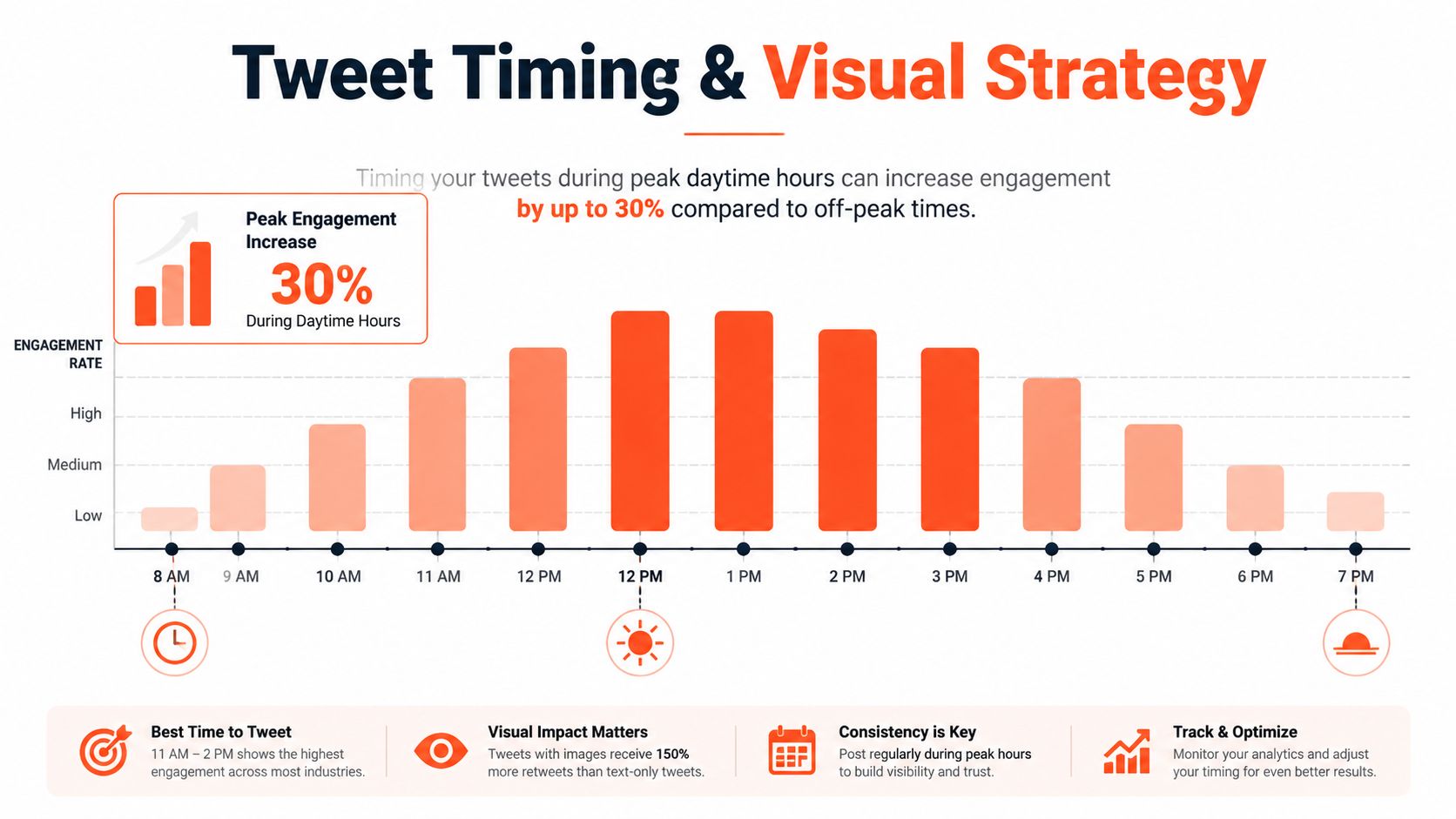
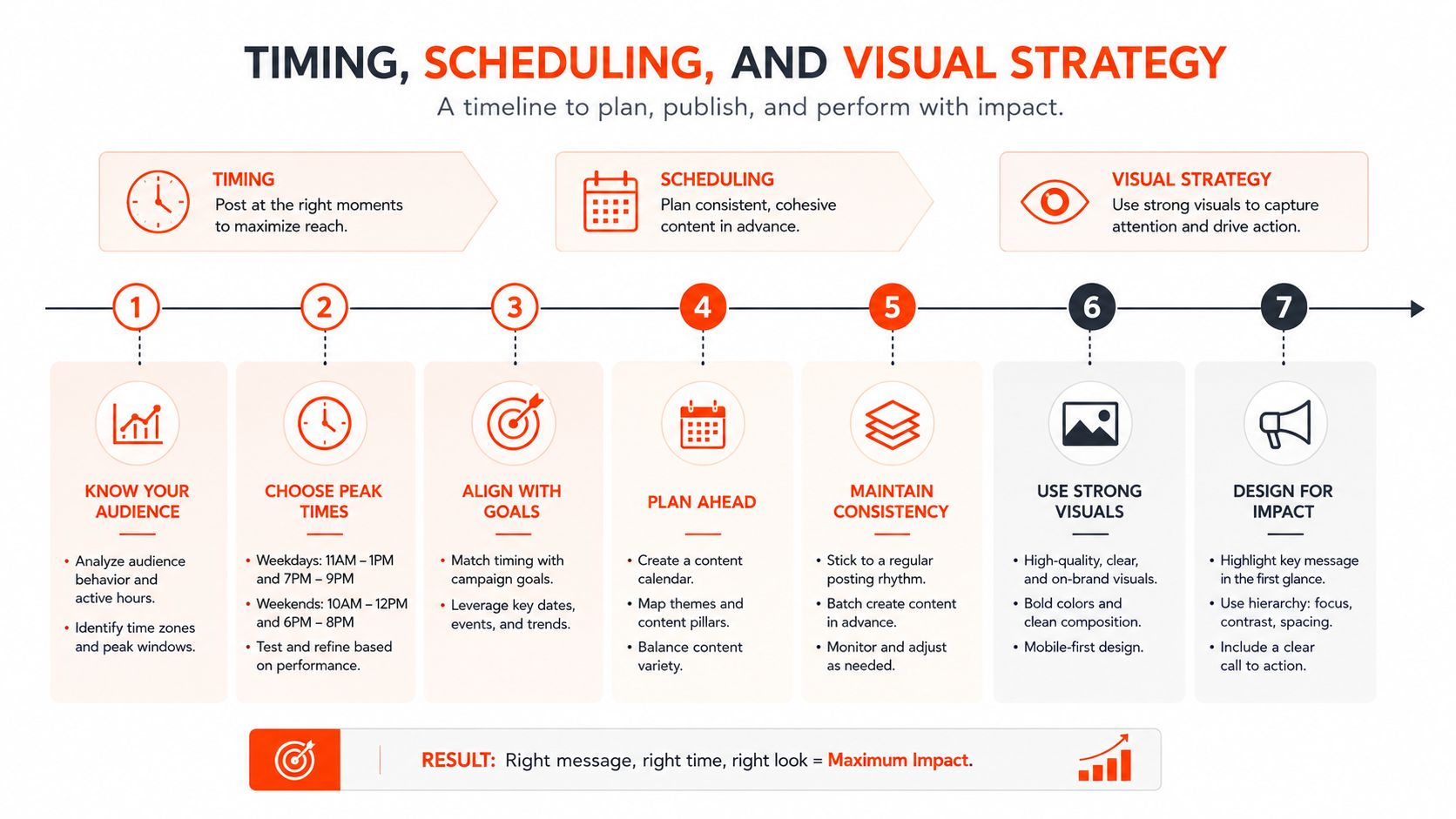
Publishing time isn't a side issue. It changes how many people are awake, scanning, and ready to interact. Buffer reported a 30% greater engagement rate for tweets published during the day, specifically between 8 a.m. and 7 p.m., with afternoon and early evening tending to perform well (Buffer timing guidance).
Another industry guide says tweets posted during busy hours from 8 a.m. to 7 p.m. get higher engagement than those posted outside that window, with 1 to 3 p.m. called out as the strongest afternoon period and posting after 8 p.m. discouraged (effective tweet timing tips). The point isn't to treat timing like magic, it's to stop wasting strong copy at weak moments.
Schedule with intent, not habit
If you post whenever you remember, your results will be noisy. If you schedule with a pattern, you can see which ideas work and when they work best. That's why a calendar matters, because it lets you separate writing from publishing.
The same guidance that recommends busy hours also suggests pacing at four tweets per day or less and concentrating more frequency on the days when your audience performs best (effective tweet timing tips). In practice, that means your output should feel deliberate, not frantic.
Visuals change the scan pattern
Text-only tweets still matter, but visuals can help when the post needs a faster read. Images, screenshots, video, and polls all change how people pause in feed. The right choice depends on the goal.
Use an image when the point is simple and visual. Use video when the motion or personality matters. Use a poll when you want participation more than explanation. The point is not to decorate the tweet, it's to make the post easier to engage with.
One useful habit is pairing the content type with the message type. A tutorial thread may need screenshots, while a quick opinion often works better as text alone. The more the format supports the idea, the less you need to overexplain it.
Testing, Metrics, and Workflow Tips
Tweet writing gets more practical once analytics is part of the process. X analytics tracks impressions, engagements, engagement rate, replies, retweets, mentions, favorites, profile visits, and link clicks, so you can stop guessing what works and start comparing actual post behavior.
That same guide defines engagement as replies plus retweets plus mentions plus favorites, and engagement rate as engagements divided by impressions. It also notes that the dashboard compares the last 28 days with the previous period, which makes it easier to spot whether a new pattern is moving in the right direction.
Read the numbers like a writer
The most useful question is not which tweet “won.” It is what pattern won. Did the hook, format, topic, media, or CTA do the heavy lifting? Once you know that, you can write the next tweet with intent instead of hope.
A post that gets replies but no clicks usually means the hook is working while the CTA needs work. A tweet that gets impressions but not engagements often has an opening that is too soft. The analytics dashboard turns those guesses into something you can test, compare, and keep refining.
Use a drafting workflow that removes friction
Start with the full idea, then compress it into one core claim. After that, front-load the hook and cut any setup that delays the payoff. That approach keeps the tweet readable in feed and keeps the writer from overexplaining.
Workflow rule: write messy first, then edit for one idea, one hook, one action.
AI helps when it works as a drafting partner rather than a replacement. SupaBird's X-GPT rewrites drafts into stronger hook structures, IdeasLab generates niche-specific post ideas, the calendar helps with scheduling, and the AI Coach explains why a post worked or flopped. That mix matters because tweet writing gets easier when ideas, revision, and timing live in the same system.
Consistency is the key win. You stop rebuilding the process every day, and you start iterating on what the audience already told you works.
Your Next Steps From Learning to Doing
You do not need a new theory of X. You need a habit that makes publishing easier to repeat. Start with the anatomy of the tweet, choose the right format, use templates when the blank page gets noisy, and use timing and analytics to sharpen what you publish.
A simple month of practice is enough to see the shift. Spend the first week writing one tweet a day with a clean hook-body-CTA structure. In the second week, alternate between single tweets, threads, and replies so you can see which format fits each idea. In the third week, test different posting windows. In the fourth, review your analytics and keep only the patterns that earned attention.
Consistency matters more than chasing one viral spike. When your writing process is clear, posts get easier to produce, feedback gets cleaner, and your voice starts to feel natural instead of forced.
If you want a tighter system for tweet ideas, hooks, rewriting, and scheduling, SupaBird gives you a practical way to keep that loop moving without starting from zero every day. Use it to turn rough thoughts into publishable tweets, then keep refining based on what your audience responds to.

How Often Should You Tweet for Maximum Growth?

What Should Your First 10 Tweets Be About?

How to Run X for Ten Clients: The Agency Workflow

How to write a bio that gets people to follow you

Digital Product Launch Strategy

Best Twitter Growth Service for Creators in 2026
From X to Every Platform: Repurpose Without Flopping

How to Get Cited by Grok: Winning X’s AI Search in 2026

5 X (Twitter) Growth Metrics Every Serious Creator Should Track — and How to Get the Data